

 5 hours ago
3
5 hours ago
3
ARTICLE AD BOX
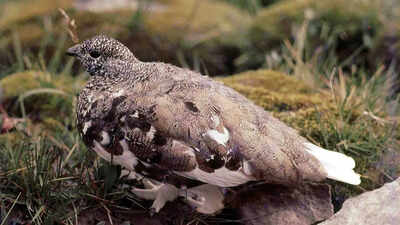
High above the tree line, where snow can linger well into summer and temperatures shift quickly between day and night, the white-tailed ptarmigan survives by blending almost completely into its surroundings.
For much of the year, the bird is difficult to spot, even at close range. In winter, it disappears into snowfields beneath a coat of white feathers. By the warmer months, the same bird takes on mottled brown and grey tones that match exposed rock and alpine vegetation.The species lives in mountain regions across western North America and spends nearly its entire life in harsh alpine terrain. Despite weighing only around half a kilogram, it remains active through conditions that force many other birds to migrate elsewhere.
Its changing plumage is only one part of a larger set of adaptations shaped by cold, wind and thin mountain air.
How the white-tailed ptarmigan adapts to harsh alpine environments
The white-tailed ptarmigan belongs to the grouse family and is the smallest ptarmigan species in North America. According to the study of the Centre for Biological Diversity, the bird spends its life almost entirely above or near the alpine tree line, where rocky slopes and tundra vegetation dominate the landscape.Its body is compact and heavily insulated. Even the legs and toes are covered in feathers, which help reduce heat loss while also spreading the bird’s weight more evenly across the snow.
During winter, these feathered feet act almost like natural snowshoes, allowing movement across soft surfaces without sinking deeply.Unlike many mountain birds, the white-tailed ptarmigan does not undertake long migrations. Small seasonal shifts in elevation are more common. Some populations move slightly downhill during periods of severe weather, though many remain in exposed alpine zones throughout the year.
How seasonal camouflage helps the white-tailed ptarmigan survive in the snow
The bird’s seasonal transformation is tied closely to camouflage. White plumage during snowy months makes the ptarmigan far less visible to predators such as foxes, raptors and coyotes. Once snow begins to retreat, remaining white becomes a disadvantage. The bird gradually moults into darker, patterned feathers better suited to bare rock, grasses and alpine shrubs.As per a study published in the journal Biological Reviews, titled “ Function and underlying mechanisms of seasonal colour moulting in mammals and birds: what keeps them changing in a warming world,” seasonal colour moulting appears in several cold-region species and is strongly linked to predator avoidance in environments where snow cover changes dramatically across the year.
The study on seasonal colour moult. The process is controlled by changing daylight length rather than temperature alone, which means timing can sometimes become mismatched if snowfall patterns shift unexpectedly.That mismatch has drawn growing scientific attention. Birds that remain white after the snow has melted become easier for predators to detect. In areas where winters are shortening or snow cover is less predictable, camouflage may no longer line up neatly with seasonal conditions.
Why the white-tailed ptarmigan depends on fragile mountain ecosystems
Food availability in alpine habitats changes quickly with weather and elevation. During summer, the ptarmigan feeds on buds, leaves, flowers, seeds and insects found among tundra plants. Winter diets are narrower, relying more heavily on willow twigs and other hardy vegetation that remains accessible above snow.Shelter is limited in these exposed regions. Strong winds and rapid temperature drops are common even outside the winter months.
The bird often uses shallow depressions in snow or ground cover for protection, conserving warmth wherever possible.According to research published through the US National Library of Medicine, titled “Environmental gradients of selection for an alpine-obligate bird, the white-tailed ptarmigan (Lagopus leucura)”, alpine species such as the white-tailed ptarmigan are especially sensitive to environmental shifts because their habitat already exists near the upper limits of available elevation. As temperatures rise, there is often little higher ground left to move into.The study examined environmental pressures affecting alpine-obligate species and suggested that fragmented mountain habitats may create isolated populations over time. In practical terms, birds living on separate mountain ranges can become increasingly cut off from one another.
Why the white-tailed ptarmigan struggles to survive in changing alpine habitats
Few birds are as visually linked to seasonal snow as the white-tailed ptarmigan. The colour change tends to attract most attention, though it reflects a broader dependence on alpine conditions that remain cold for much of the year.Its survival strategy is based less on speed or aggression and more on remaining unnoticed. Often,n the bird stays motionless when approached, relying on camouflage instead of escape. Against snow or stone, the outline nearly disappears.That approach has worked for thousands of years in mountain environments shaped by long winters and relatively stable seasonal cycles. Whether those same patterns continue to hold in the future is becoming a larger question for scientists studying alpine wildlife.









 English (US) ·