

 4 days ago
9
4 days ago
9
ARTICLE AD BOX
Long tables laden with rice, dahl, at least five types of vegetable dishes, and five types of desserts, lined the feast area of the Kalyani Niwas complex in Darbhanga on Thursday. Visitors helped themselves to the food — brinjal, aloo-mattar, aloo-gobhi, and two types of rasgollahs, white and black. They then sat to eat under the sombre white pandals, on neatly arranged chairs and sofas.
“The food was very good. The rasgollahs, too,” said Raj Kishore Jha, who travelled from Madhubani to be there on the occasion. “I came to pay my respects to the Queen. Darbhanga Raj is still the pride of the region.”
Like Jha, more than 25,000 people arrived in Kalyani Niwas on Thursday, the last day of rituals following the death of Maharani Kamsundari Devi, also known as Kalyani Devi, the last queen of Darbhanga Raj.
Her death in the early hours of January 12 marked the end of an era. She was the third wife of Maharaja Kameshwar Singh, the last ruler of Darbhanga Raj — one of the most illustrious Zamindari estates established during Mughal rule. The last Maharaja, who died in 1962, did not have any children with any of his three wives.
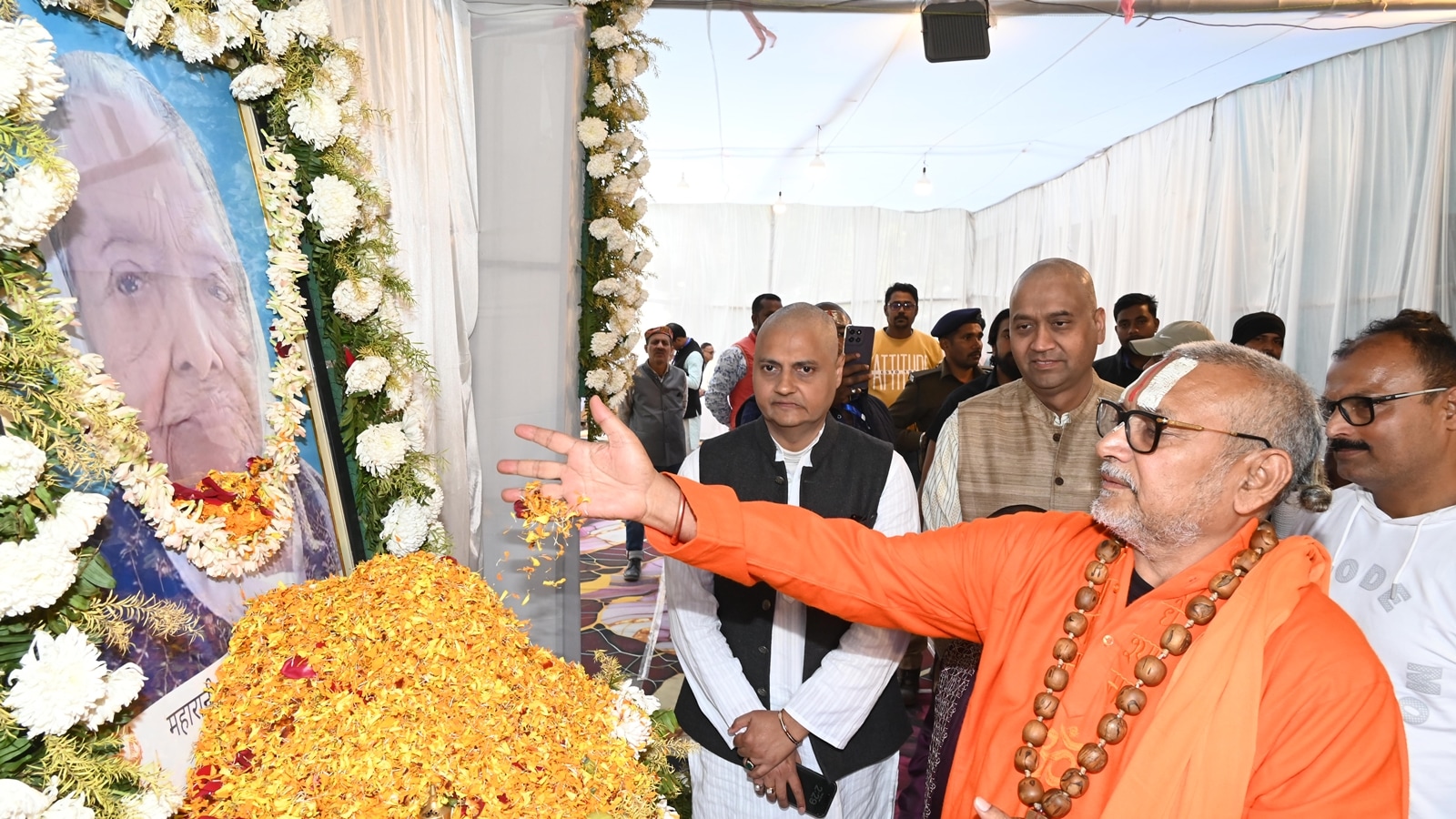 The Darbhanga royal family, saints, public representatives, and dignitaries are paying their respects. (Express photo by Rahul Sharma)
Born in 1932 in Mangrauli village of Madhubani, Kamsundari Devi got married to Kameshwar Singh in 1943. His first wife, Maharani Rajlakshmi Devi, died in 1976, and his second wife, Maharani Kameshwari Priya, died in 1940.
It was Kamsundari Devi who had been in charge of Maharaja Kameshwar Singh Religious Trust, which has 108 temples, several with land plots, across the country and also in Pakistan and Bangladesh. She also founded the Maharajadhiraj Kameshwar Singh Kalyani Foundation, which organises a major seminar every year, inviting renowned scholars from across the country. The foundation’s library in Darbhanga has over 15,000 books.
Bihar Governor Arif Mohammed Khan was among several dignitaries to attend the last day of rituals. He recalled the “great contribution of the family to nation building”, particularly towards the “cause of education”. Darbhanga BJP MP Gopal Ji Thakur, BJP state president Sanjay Saraogi, former BJP president Dilip Jaiswal, Bihar minister and state government representative Madan Sahani, senior RJD leader Abdul Bari Siddiqui and former Bihar Congress president Madan Mohan Jha were also present.
Story continues below this ad
Greeting the guests were Kumar Rajeshwar Singh and Kumar Kapileshwar Singh, the grandsons of Maharaja Kameshwar Singh’s brother. According to the Maharaja’s will, they become automatic trustees of the family’s religious trust after the last queen’s death.
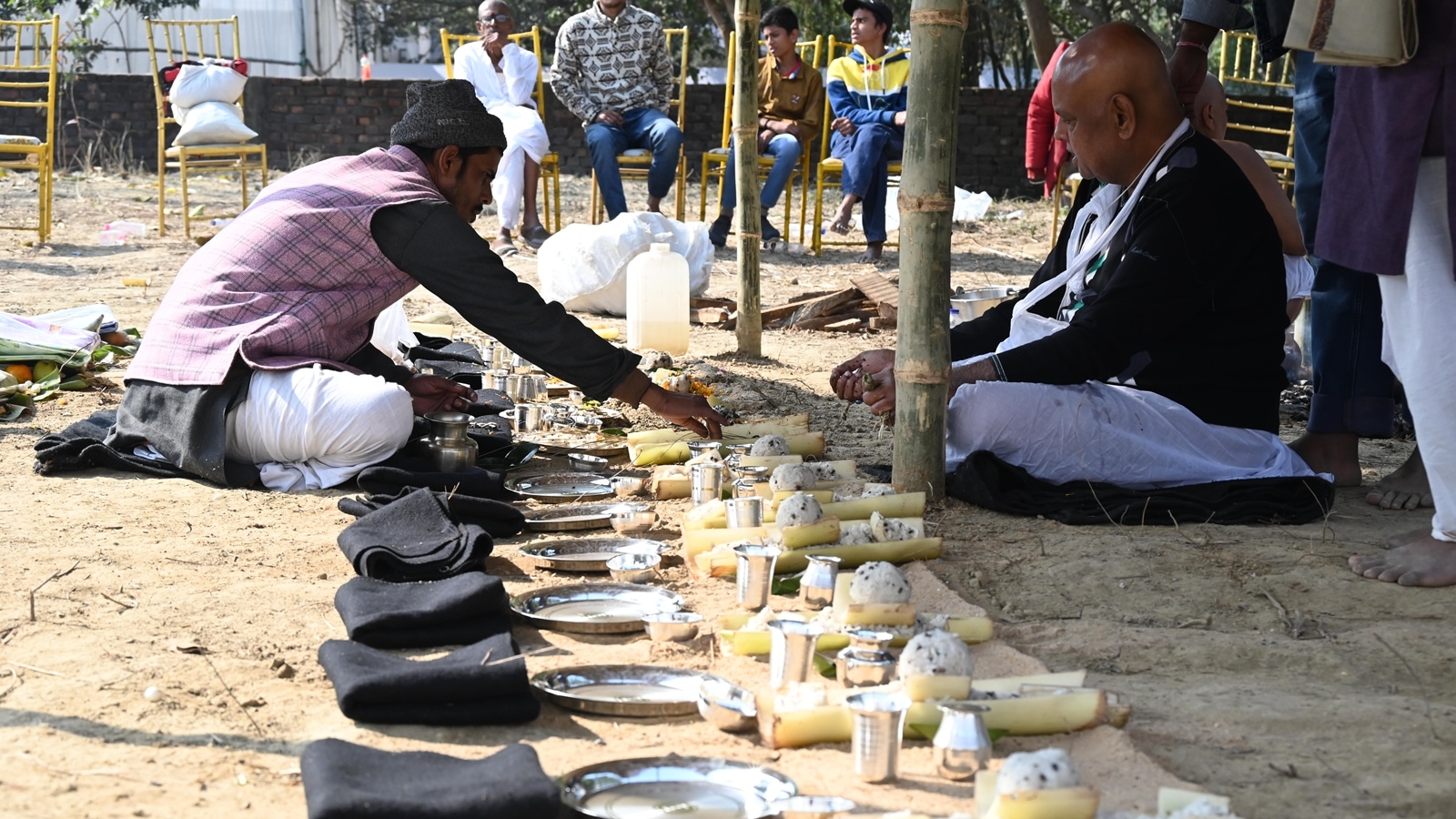 The Shraddha ceremony for Mahadhirani Kamsundari Devi is being performed with rituals at Kalyani Niwas in Darbhanga, Bihar on Thursday. (Express photo by Rahul Sharma)
Kapileshwar lives in Delhi and Rajeshwar in the United States. “We have to first get full details of the temples and the land attached to them. We will first renovate some temples. We also want to develop religious and historical tourism around the Darbhanga Raj temples and buildings in Darbhanga. We may even collaborate with the state government,” said Kapileshwar on their plans. As he spoke to The Indian Express, former Bihar DGP Gupteshwar Pandey arrived, and both brothers rose to greet him.
Historic dynasty
The nearly 500-year-old Darbhanga Raj’s grandeur can still be made out from the high sandstone fort walls and other royal structures that line the Lalbagh area of Darbhanga.
The Darbhanga Fort, also known as Rambagh Fort, is spread over 85 acres of land and contains several palaces, some of which house educational institutions. The design of the fort was inspired by the one in Fatehpur Sikri, which was established by Mughal Emperor Akbar as the capital of his empire in the 1500s.
Story continues below this ad
The beginning of Darbhanga Raj also dates back to the 16th century. It was founded by Mahesh Thakur of the Khandvala dynasty from present-day Jabalpur (in Madhya Pradesh). His descendants later bore the Singh surname, with Lakhmishwar Singh and Kameshwar Singh being two of the most prominent rulers of Darbhanga Raj. It was once spread over 6,200 km in united Bengal and some parts of Nepal. The Raj at one point collected revenue from 4,495 villages.
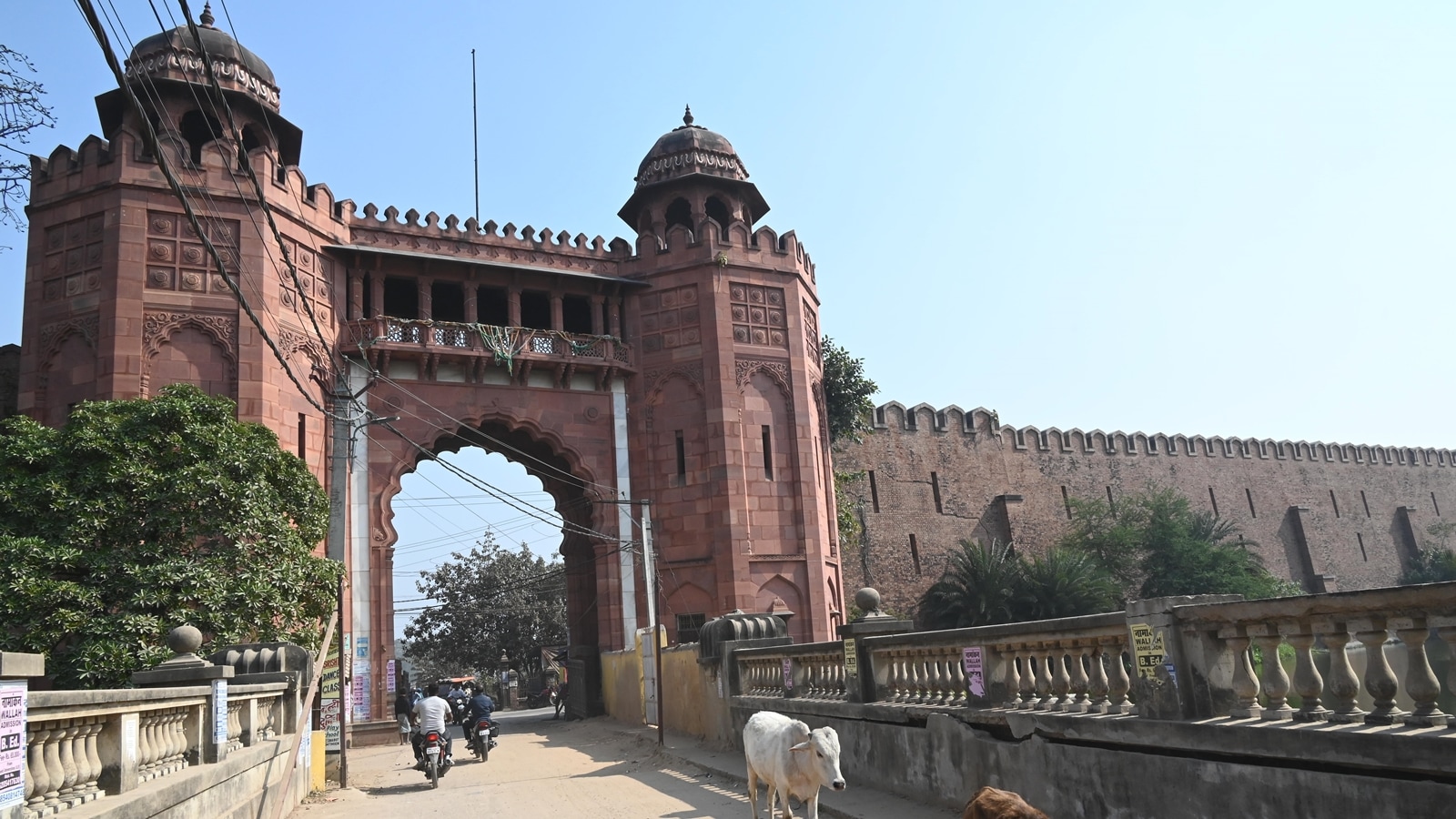 The Darbhanga Fort, also known as Rambagh Fort, is spread over 85 acres of land and contains several palaces, some of which house educational institutions. (Express photo by Rahul Sharma)
One of the most popular stories about Darbhanga Raj, however, comes from the 20th century, when the family donated 600 kg of gold to the Indian government to support the armed forces during the war with China in 1962.
The book, ‘Biography of an Indian Patriot: Maharaja Lakshmishwar Singh of Darbhanga’, written by Jata Shankar Jha and edited by Vijay Deo Jha, mentions the then Darbhanga Raj ruler making Lowther Castle in Allahabad available for the Indian National Congress’s historic convention in 1892. As per the book, the Maharaja Lakshmishwar Singh had said, “It is a source of the greatest pleasure to me that the first use of this property, since my acquiring it, has been for Congress purposes.”
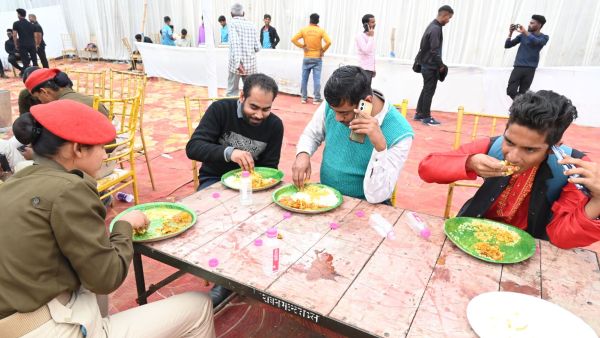 Visitors helped themselves to the food — brinjal, aloo-mattar, aloo-gobhi, and two types of rasgollahs, white and black. (Express photo by Rahul Sharma)
There are now several leading institutions that are being run from the many properties of the Darbhanga Raj. These include the Lalit Narayan Mithila University in Darbhanga, which has its head office and some postgraduate departments located in Nargona Palace. Moreover, the Kameshwar Singh Darbhanga Sanskrit University is located in the Darbhanga Raj’s Lakshminivas Palace; the Darbhanga Medical College and Hospital is located in 300 acres of land donated by the Raj; and the Postal Training College in Darbhanga is housed in a Raj building. The estate also donated 90 acres of land for the Darbhanga airport, and Darbhanga House, a part of Patna University, was also donated by it.
Story continues below this ad
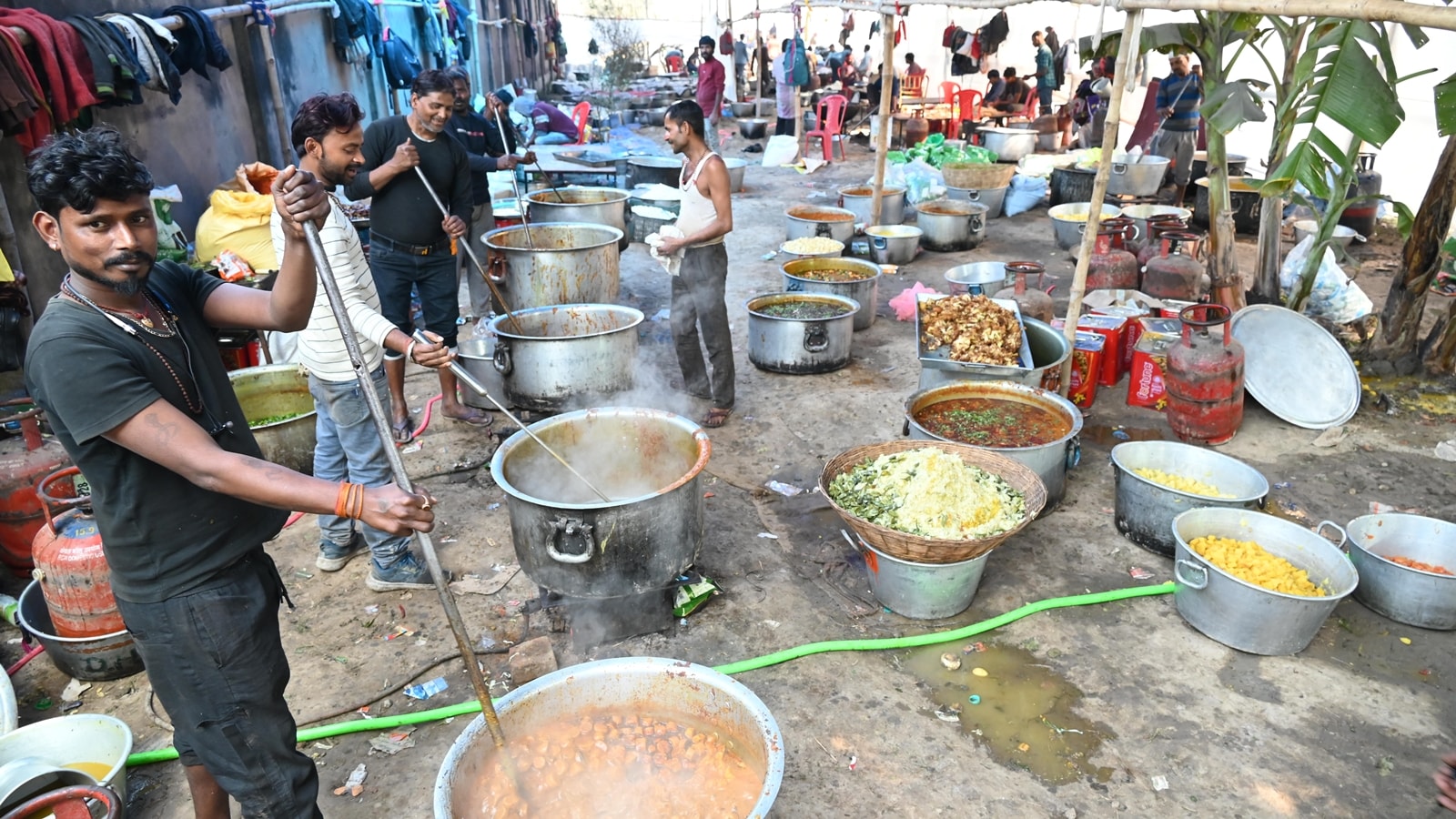 25,000 people who showed up, as many 1,500 were close relatives and friends of the family. (Express photo by Rahul Sharma)
Open for all
In Kalyani Niwas, where Maharani Kamsundari Devi lived until her death, the feast on the last day of her death was open for all on Thursday. There was a big police presence due to intermittent VIP movement.
Ishnath Jha, a functionary with the religious trust of Darbhanga Raj, said, “There are two types of invitations, a special one for close family and relatives from 40 villages, and another verbal one for everyone else. Word was spread through microphones, and with the help of social media. It is open to all, and the feast goes on throughout the day.”
On Thursday, of the 25,000 people who showed up, as many 1,500 were close relatives and friends of the family.
Story continues below this ad
Raj Kishore Jha, one of the visitors, explained the traditional feast. “As per our tradition, we first serve saag (of any leafy edible plants, including mustard). We also have over a dozen varieties of pickles, including those made of dry fruits,” he said.
He had just one gripe about the arrangement: “The buffet system is not good in terms of hospitality.”
Darbhanga Raj’s Kulpurohit, Mahoday Jha from Jitwar village of Madhubani, recalled how the family used to donate seven cows, seven calves, some goats and buffaloes, gold, silver and land plots to priests during the last rites of Maharajas until the death of Maharaja Kameshwar Singh. “Now, it is just one cow, one goat… Silver utensils are the best we get now,” he said, as he recalled stories told by his father and grandfather, who he said used to regale them with tales of the Raj’s bounty.




 English (US) ·