

 1 day ago
4
1 day ago
4
ARTICLE AD BOX
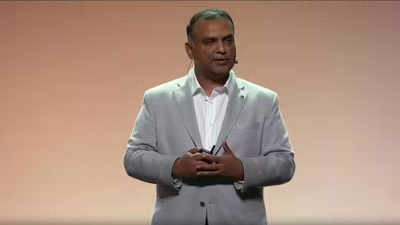
TOI correspondent from Washington: Long before AI upstart Anthropic spooked the software services market and bled billions in market value from companies ranging from Accenture and Adobe to Infosys and TCS this week, Elon Musk noted the irony of its name, suggesting Misanthropic—disliking humankind and human society—may have been a better fit.
But the man who’s at the center of the breathtaking jolt to the software-as-a-service (SaaS) industry is anything but a misanthrope. Rahul Patil, CTO of Anthropic, is an earthy, cricket-loving, dosa-chowing Bengaluru huduga (lad) whose head is not in the clouds, but whose career, spanning Microsoft to Amazon to Oracle, certainly has been.That stratospheric arc has now placed Patil at the heart of what market analysts are calling the “SaaSpocalypse.”
In the first week of February 2026, global technology stocks shuddered after Anthropic unveiled its most ambitious version of Claude yet. The result was swift and brutal: more than $285 billion in market value was erased across enterprise software, legal technology and IT services firms worldwide. Salesforce, Intuit and Adobe slid sharply.
Legal information giants such as Thomson Reuters and RELX fell by double digits.
Indian IT bellwethers Infosys and TCS lost around 7%, underscoring how deeply the shock rippled through global markets.What rattled investors was not just a better chatbot. Anthropic’s latest Claude release marked a clear break from the prevailing AI business model. Instead of merely offering APIs—building blocks that other software companies use to create their own products—Anthropic rolled out a suite of 11 industry-specific plugins that allow Claude to perform entire workflows on its own.
These included tools that can review contracts, triage legal documents, write and manage code, and coordinate tasks across teams for hours without human supervision.In simple terms, Claude is no longer just helping software companies do their jobs faster. It is beginning to do the jobs itself. For investors, the implications were stark. If an AI agent can handle legal review, financial analysis or internal IT work end to end, why pay thousands of dollars per employee each year for specialised software—or millions for consulting engagements? Behind this shift is Patil’s focus on what insiders call the “unsexy” side of artificial intelligence: infrastructure, reliability and cost.
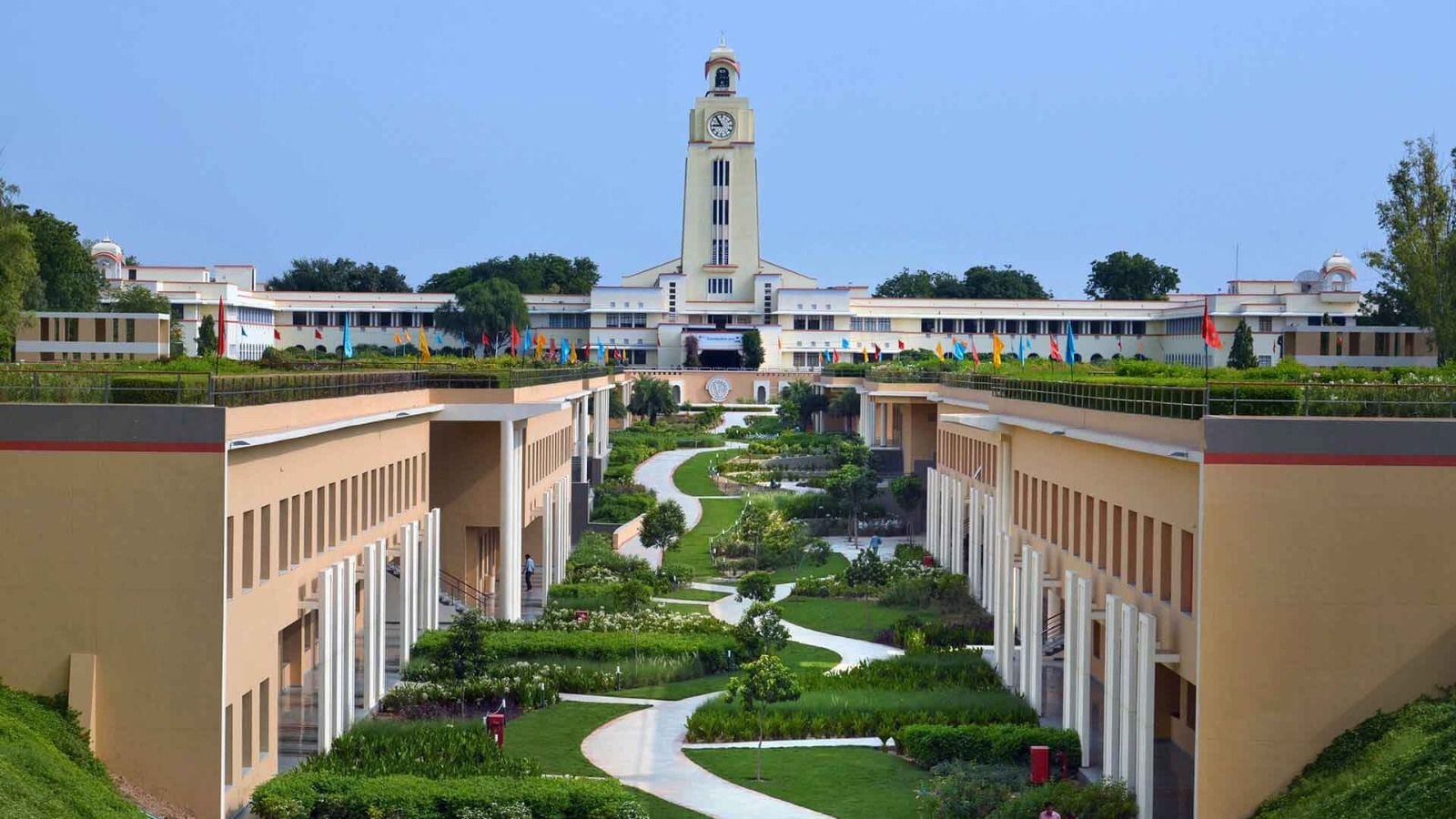
Appointed CTO in October 2025, succeeding co-founder Sam McCandlish, Patil was brought in to make Claude enterprise-ready at massive scale. His mandate was to ensure that Anthropic’s models were not only intelligent, but cheap, fast and dependable enough to be embedded deep inside corporate operations.Patil’s background reads like a manual on how to build systems that do not fail. Born and raised in Bengaluru, he studied at Baldwin Boys’ High School and St Joseph’s PU College before earning a computer science degree from PES Institute of Technology—an ascent often cited as proof that elite tech leadership in India is not confined to the IITs.
His dad, Dr Viswanath Patil is a physician and his mom Neelam Patil, ran a neighborhood computer tutoring center.
He moved to the US for a master’s degree at Arizona State University and later added an MBA from the University of Washington.Professionally, he is a veteran of the cloud wars. He spent nearly a decade at Microsoft, built large-scale data streaming services at Amazon Web Services, and later ran major parts of Oracle Cloud Infrastructure as a senior vice-president.
Before joining Anthropic, he served as CTO of Stripe, overseeing the engineering and operations behind a payments platform that processes more than a trillion dollars annually.At Anthropic, Patil has applied the same playbook. He has pushed aggressive optimisation of how Claude runs on expensive GPUs, squeezing more output from the same hardware. Techniques such as speculative decoding and smarter reuse of memory caches have cut the “cost per token”—the basic unit of AI output—dramatically.
Just as importantly, he reorganised teams so that product designers, infrastructure engineers and inference specialists work in lockstep.
The payoff is that Anthropic can now afford to offer powerful, always-on AI agents directly to enterprises, rather than leaving that layer to SaaS companies built on top of its models. On Wall Street, this has become shorthand for the “Patil effect”: cheaper inference enabling Anthropic to bypass the software middlemen altogether. That ambition now extends forcefully to India. Anthropic is opening a global office in Bengaluru, only the second after Tokyo, tapping local engineering talent to build what it describes as “sovereign” and localised AI infrastructure. India is the second-largest user base for Claude AI. In October, CEO Dario Amodei met Prime Minister Narendra Modi, who is all in on tech, to discuss deploying AI across education, healthcare and agriculture, noting that usage of Claude Code in India had risen five-fold in recent months.
For Patil, the expansion is both strategic and personal. The “Namma Bengaluru huduga” is helping steer one of the world’s most influential AI companies from his hometown, even as his work reshapes the global software industry. Whether the SaaSpocalypse proves to be a lasting reset or a knee-jerk correction remains to be seen. But as Anthropic turns Claude into a digital worker rather than a digital assistant, the question haunting software and services firms, some in his old hometown, is growing louder: if AI can own the workflow, what is left for the software services industry?








 English (US) ·