

 1 hour ago
4
1 hour ago
4
ARTICLE AD BOX
Justice B V Nagarathna said Article 17 cannot be applied selectively, rejecting the idea of "temporary untouchability" for women. She was responding to SG Tushar Mehta, who objected to observations in the 2018 Sabarimala verdict equating the exclusion of menstruating women with treating them as "untouchables."
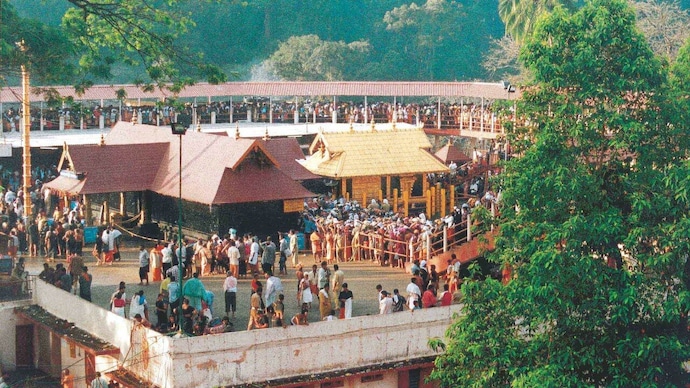
Justice Nagarathna questions menstrual exclusion in temples, says Article 17 can't apply selectively to women
New Delhi,UPDATED: Apr 7, 2026 20:12 IST
Justice BV Nagarathna, the lone woman judge on the nine-judge Constitution Bench hearing the Sabarimala matter, on Tuesday observed that Article 17 cannot apply to women for three days and then cease on the fourth, raising concerns over menstrual-based exclusion from temples.
“Speaking as a woman, there can’t be a three-day untouchability every month and on the fourth day, there is no untouchability,” she said, adding that Article 17 cannot be applied selectively for a few days when it comes to women's entry in temples.
Justice BV Nagarathna was responding to Solicitor General Tushar Mehta, who expressed strong objections to a set of observations on the 2018 Sabarimala judgement that excluding women of menstruating age is akin to teaching them as “untouchables," which is violative of Article 17.
“One opinion in Sabarimala says Article 17 applies to women --you are treating them as untouchables -- I have very strong objections to it,” the SG said.
In the 2018 Sabarimala judgement, Justice DY Chandrachud had held that ban on women's entry based on menstrual impurity was a kind of untouchability.
Responding to Justice Nagarathna, the SG clarified, “I am not on menstruation.”
Mehta further argued that he would defend Sabarimala on a different footing, stressing that the restriction was not about four days but about a particular age group.
Tushar Mehta added that Lord Ayyappa temples across the country are open to all women, except for one temple, which he described as a sui generis case, noting that even in Delhi, Ayyappa temples allow entry to all sections of women.
A nine-judge bench of the Supreme Court began hearing constitutional questions today, referred by a five-judge bench in 2019. These questions arose during the review petitions against the 2018 verdict that allowed women to enter the Sabarimala temple.
The bench clarified that it would not examine the merits of the Sabarimala judgment itself. Instead, it will focus solely on the wider constitutional issues involved.
Solicitor General Tushar Mehta opened the arguments by discussing the Constituent Assembly Debates related to Articles 25 and 26 of the Constitution. He contended that the judiciary’s development of the ‘essential religious practices’ test was incorrect.
He further stated that courts should not decide what constitutes an essential religious practice. According to the Constitution, any reform in religion is a matter for the legislature under Article 25(2)(b), the Centre’s law officer added.
The hearing marks a significant step in addressing the constitutional questions linked to religious freedom and legislative authority. The Supreme Court’s approach will clarify the separation of powers regarding religious practices and legal reform.
Earlier, the five-judge bench had referred these broader questions to the larger bench while reviewing petitions challenging the earlier verdict. The 2018 ruling had allowed women of all ages to enter the Sabarimala temple, ending a long-standing restriction.
The nine-judge bench will examine the constitutional validity of the judicially created tests and the role of the legislature in religious reforms. This hearing is expected to define the limits of judicial intervention in religious matters.
The Supreme Court’s decision in this matter will have implications for similar cases involving religious freedoms and legislative powers across India.
- Ends
Published By:
Sayan Ganguly
Published On:
Apr 7, 2026 20:12 IST




 English (US) ·