

 1 hour ago
4
1 hour ago
4
ARTICLE AD BOX
TOI TimesPoints
HOW TO EARNMY ACTIVITYFAQs
DAILY CHECK-INS: 0/5 completed
Lifetime
0
Expired
0
Redeemed
0
* TimesPoints expire in 1 year from the day of credit
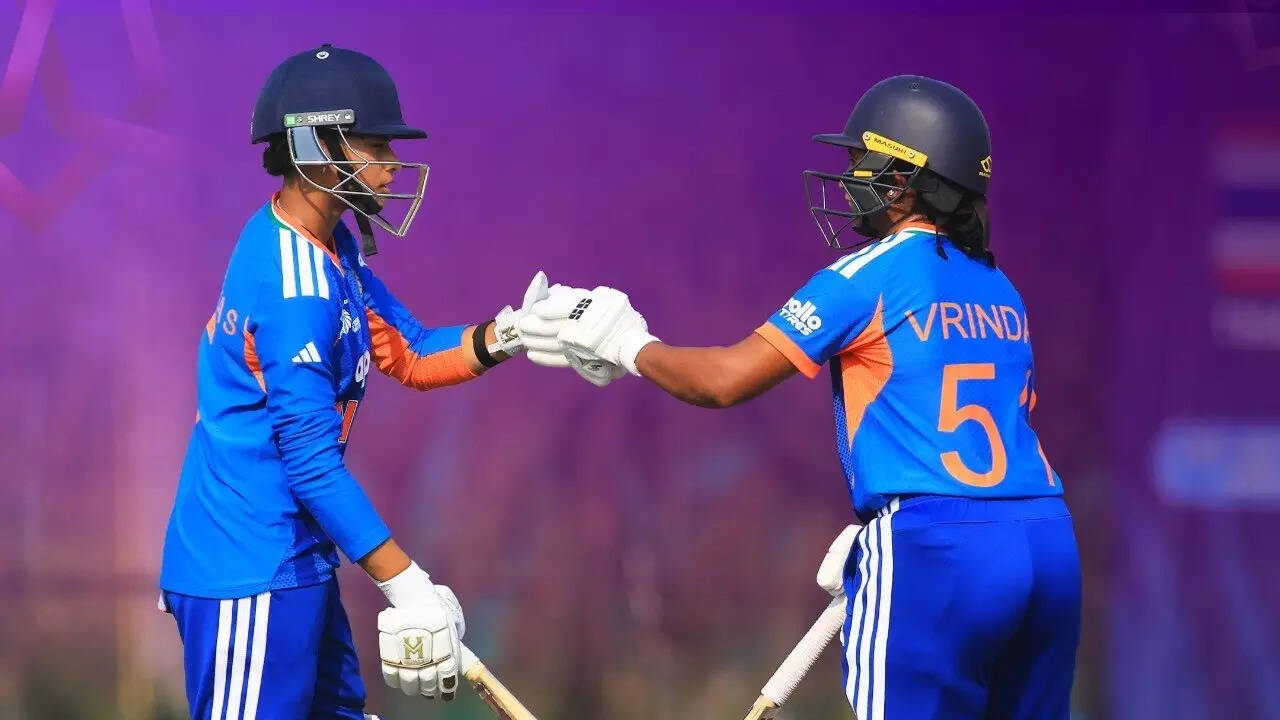 Photo credit: X/@ACCMedia1
India A Women secured their first win in the Women’s Asia Cup Rising Stars tournament with an eight-wicket victory over Pakistan A Women on Sunday, led by captain Radha Yadav and a half-century from Dinesh Vrinda.
The result came after India A had lost their opening match by seven wickets to UAE A Women on Friday. With this win, India A moved to second place in Group A, behind UAE.
Congratulations!
You have successfully cast your vote
India’s spinners kept Pakistan under control and shared five wickets as Pakistan were bowled out for 93 in 18.5 overs. Radha led the effort with figures of 2 for 11 in three overs. Prema Rawat took 2 for 16 in three overs, while Minnu Mani claimed 1 for 10 in 2.5 overs.
Pacer Saima Thakor also played her part, taking two wickets for 14 runs in four overs.
In reply to the target of 94, India lost Humaira Kazi off the first ball of the innings. Vrinda then shifted momentum with an attacking approach. She remained unbeaten on 55 from 29 balls, hitting 12 boundaries.
Vrinda was supported by Anushka Sharma, who scored 24 from 26 balls. The pair added 78 runs for the second wicket to take India close to victory.
After Anushka was dismissed, Tejal Hasabnis scored 12 from five balls to complete the chase. India reached the target in 10.1 overs with 59 balls remaining.
Download
The Times of India News App for Latest Sports News
Subscribe
Start Your Daily Mornings with Times of India Newspaper! Order Now
more from times of india Sports
trending videos / Cricket
 Abhishek Sharma is back and India to unravel a mystery slinger15 Feb, 2026, 0153 hrs IST04:54
- India Playing XI: Suryakumar Yadav drops big hints on Abhishek Sharma and Kuldeep Yadav14 Feb, 2026, 2330 hrs IST04:21
- T20 World Cup: Suryakumar Yadav press conference ahead of India vs Pakistan14 Feb, 2026, 2135 hrs IST22:25
- T20 World Cup: Salman Ali Agha press conference ahead of India vs Pakistan14 Feb, 2026, 1637 hrs IST14:11
- Salman Agha press conference: Pakistan captain on hand shake, India and Playing XI14 Feb, 2026, 1528 hrs IST03:36
- Dance, drums and fun! Team India land in Colombo | Hardik Pandya with Mahieka Sharmaindia arrival-14 Feb, 2026, 1340 hrs IST03:08
- What will be India’s playing XI against Pakistan?14 Feb, 2026, 0205 hrs IST04:11
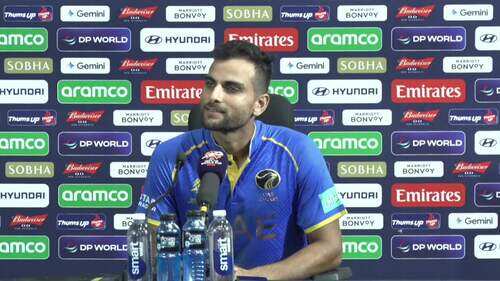
- Sohaib Khan's press conference after UAE's win over Canada in T20 World Cup13 Feb, 2026, 2050 hrs IST06:24
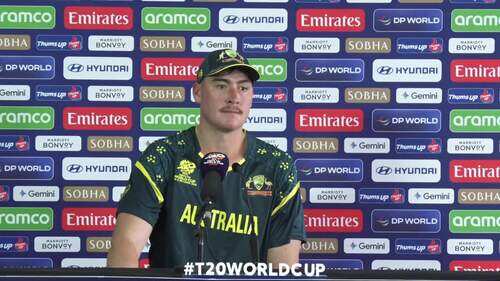
- 'We weren't good enough,' says Australia's Matt Renshaw after 23-run defeat to Zimbabwe in T20 World Cup13 Feb, 2026, 2040 hrs IST07:58
- When will Team India reach Colombo, update about Abhisek Sharma13 Feb, 2026, 1541 hrs IST03:18





Successfully logged in to The Times Of India, Enjoy reading...
Some might call the game of cricket a bat-and-ball game. While the definition may have worked back in the 16th century when it was first played in South-East England, it may receive unfavourable support now. We are now living in the 21 st century, and as things have undergone changes, evolution so to speak, the gentleman’s game too has evolved into becoming something bigger. Though initially stated to be a children’s game by historians, the game has only gone on to become sophisticated and technical, and hence no longer just a game of bat-and-ball. In order to celebrate what we have currently, we ought to honour the past as well. And to take a little walk down the line in regard to the game of cricket, we go to England in the old days. Although cricket now attracts money from all corners, it started its journey as a low-profile sport not pursued by many. Slowly and gradually, the game started getting its recognition. Since then, cricket has also been able to create a junction where different category of people could compete, but most importantly enjoy the same sport. The same movement was triggered in India, when the East India Company introduced to game to the Indian masses. The revered Bombay Quadrangular (held from 1912 to 1936) is one such example. The longest format of the game, Test cricket, has continued to exist even after so many years. In the early 1960s, and once again the story moves to England and its counties, the need for a limited overs format was discussed. The changes were duly made, both domestically and internationally. This meant that the sport would now have a World Cup of its own. When we talk about limited overs format, we are only talking about One day internationals right now since the very popular T20 cricket comes much later in the timeline. The main reason why One Day internationals became a popular choice was because by the end of the game, you surely had just one winner. This paved way for the cricket world cup, which has been played every four years since 1975, with few exceptions in between. During this time, there was a rise in cricket governing bodies. With a new format, there were new teams. The figures were only to increase, with the entry of the shortest format of the game, T20s. Originally introduced by the England and Wales Cricket Board (ECB), T20 games were introduced in 2003 for the inter-county competition. The first men's international T20 match was played between Australia and New Zealand in February 2005 in Auckland. The newest format, the shortest one on the list, provided astonishing moments. One can think about India’s win in the inaugural T20 World Cup in 2007, a campaign which included remarkable moments. The game of cricket, whenever altered to provide something new, always leads to a new option. With T20, cricket’s own club competition system was introduced. Twenty-twenty gave birth to franchise T20 leagues around the world. The Indian Premier League (IPL), one of the flagship T20 leagues, is probably the best example. This gave fans a chance to watch thrillers on the ground more often than usual. Franchise based T20 cricket tournaments also became huge money spinners, with sponsors jumping onto the T20 franchise cricket bandwagon






 English (US) ·