

 1 day ago
1
1 day ago
1
ARTICLE AD BOX
4 min readHyderabadUpdated: May 11, 2026 08:38 AM IST
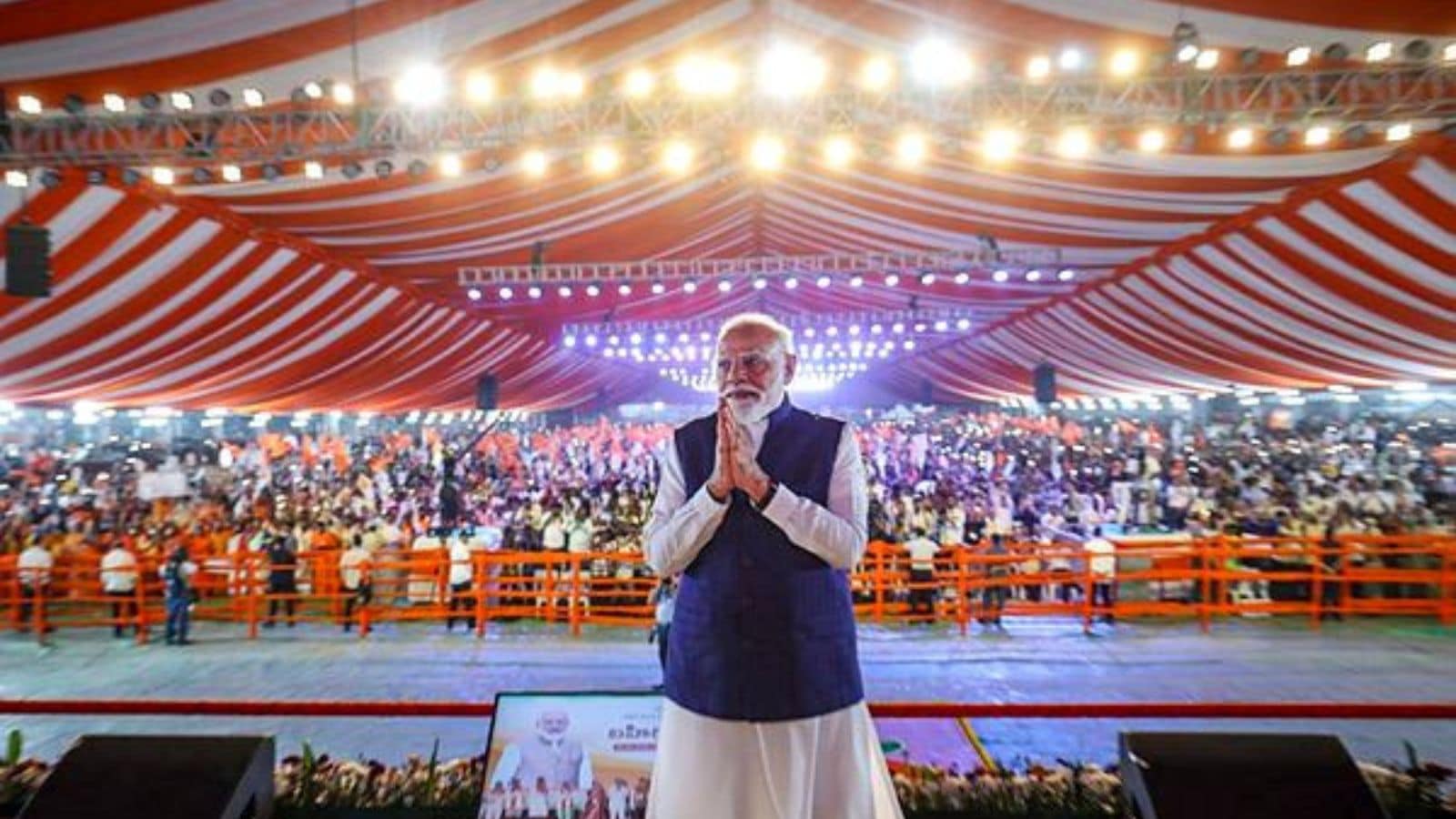 Prime Minister Narendra Modi during a public meeting in Hyderabad, Telangana. (PTI Photo)
Prime Minister Narendra Modi on Sunday appealed for collective participation of the people to help the country face global disruptions and challenges, urging measures to reduce the consumption of petroleum products and conserve foreign exchange reserves.
Addressing a public meeting in Hyderabad, the PM asked citizens to use public transport as much as possible, increase the use of electric vehicles (EVs), revive Covid-era measures such as work-from-home arrangements and virtual meetings, avoid non-essential foreign travel and gold purchases for a year, and prioritise local goods, among other measures.
“Use metros wherever metros are available. Use carpooling to go to places, and use the Railways if you have to transport goods. All of this will reduce dependency on petrol and diesel, and thereby cut the dependence on foreign currency,” he said.
During a global crisis, such as the one caused by the conflict in West Asia, he said, “We have to take resolutions, keeping the country above all else.”
Referring to measures adopted during the Covid-19 pandemic period, Modi said, “We have developed work from home, virtual meetings, video conferencing and many other methods during corona. We got habituated to it. The need of the hour is to resume those methods.”
He stressed the need to conserve foreign exchange, and said, “The growing culture of weddings abroad, travelling abroad, and vacationing abroad is becoming prevalent among the middle class. We must decide that during this time of crisis, we should postpone travelling abroad for at least a year…” He urged people to refrain from the practice of buying gold during festivals for a year.
The PM also asked people to reduce the use of cooking oil. “I have been saying, reduce the use of cooking oil by 10%. This will not only help the nation during these times but also improve the health of your family,” Modi said.
Story continues below this ad
Pushing the theme of self-reliance, the PM said, “Make a list of things which you use daily and find out what is foreign.” This does not mean that people should throw away foreign goods, he said, adding, “But efforts should be on to build self-reliance as soon as possible.” He said that he had raised the “vocal for local” slogan during the Covid-19 pandemic, too.
He also called for reducing the use of chemical fertilisers and promoting natural farming to make the country more self-reliant.
On elections
Regarding the recent Assembly election results in several states, he said, “Yesterday I was in Bengal. There, for the first time, a BJP CM has taken oath… Spurred by that victory, even workers in Telangana are in high spirits. In Assam, the BJP has achieved a hat-trick victory, and in Puducherry, the NDA has come to power once again. People of the country are putting their faith in the good governance of the BJP.”
He said the BJP’s win in Bengal was being celebrated across the country and discussed across the world. “The TMC had learnt the worst practices of dynasty politics from the Congress. From the Left, it had learnt all its bad practices. Based on this, the TMC developed a dangerous model. And this model was defeated by the people of Bengal,” Modi said.
Story continues below this ad
Telangana will also aspire to bring the BJP to power, he said. “People are tired of Congress-BRS politics. People of Telangana want change.”
Coming down heavily on the Congress, Modi said that the party has become more Left than the Leftists and more Muslim than the Muslim League. “Congress is being called MMC — Muslim League, Maoist Congress,” Modi quipped. Now that Maoism has come to an end in the country, the Congress is trying to save the Naxalites, he alleged. “BJP government should come to power in Telangana for a developed Telangana to become reality,” Modi said.

Nikhila Henry is an Assistant Editor at The Indian Express, based in Hyderabad. With a career spanning 17 years, she has established herself as an authoritative voice on South Indian affairs, specialising in the complex intersections of politics, education, and social justice. Experience & Career: Nikhila commenced her journalism career in 2007 as an education correspondent for The Times of India in Hyderabad,where she gained recognition for her coverage of student politics. Her professional trajectory includes a four-year tenure at The Hindu, where she focused on minority affairs and social welfare. In 2019, she took on a leadership role as the South Bureau Chief for The Quint, where she directed regional coverage across all five South Indian states. Her expansive career also includes a tenure at the BBC in New Delhi and contributions to prestigious international outlets such as The Sunday Times (London) and HuffPost India. Expertise & Focus Areas Nikhila’s reportage is marked by a deep-seated understanding of grassroots movements and institutional policy. Her core focus areas include: Regional Politics: Comprehensive analysis of the socio-political dynamics across South India. Education & Student Movements: Chronicling the evolution of Indian academics and the rise of youth activism. Minority Affairs: Rigorous reporting on the welfare, rights, and challenges facing marginalized communities. National Beat: Elevating regional stories to national prominence through investigative and on-ground reporting. Authoritativeness & Trust A respected figure in Indian media, Nikhila is not only a seasoned reporter but also an accomplished author and editor. She authored the critically acclaimed book The Ferment: Youth Unrest in India and edited Caste is Not a Rumour, a collection of writings by Rohith Vemula. Her dual background in daily news reporting and long-form authorship allows her to provide readers with a nuanced, historically-informed perspective on contemporary Indian society. Find all stories by Nikhila Henry here. ... Read More
Stay updated with the latest - Click here to follow us on Instagram
© The Indian Express Pvt Ltd

 English (US) ·