

 5 days ago
4
5 days ago
4
ARTICLE AD BOX
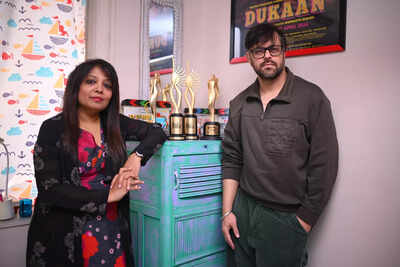
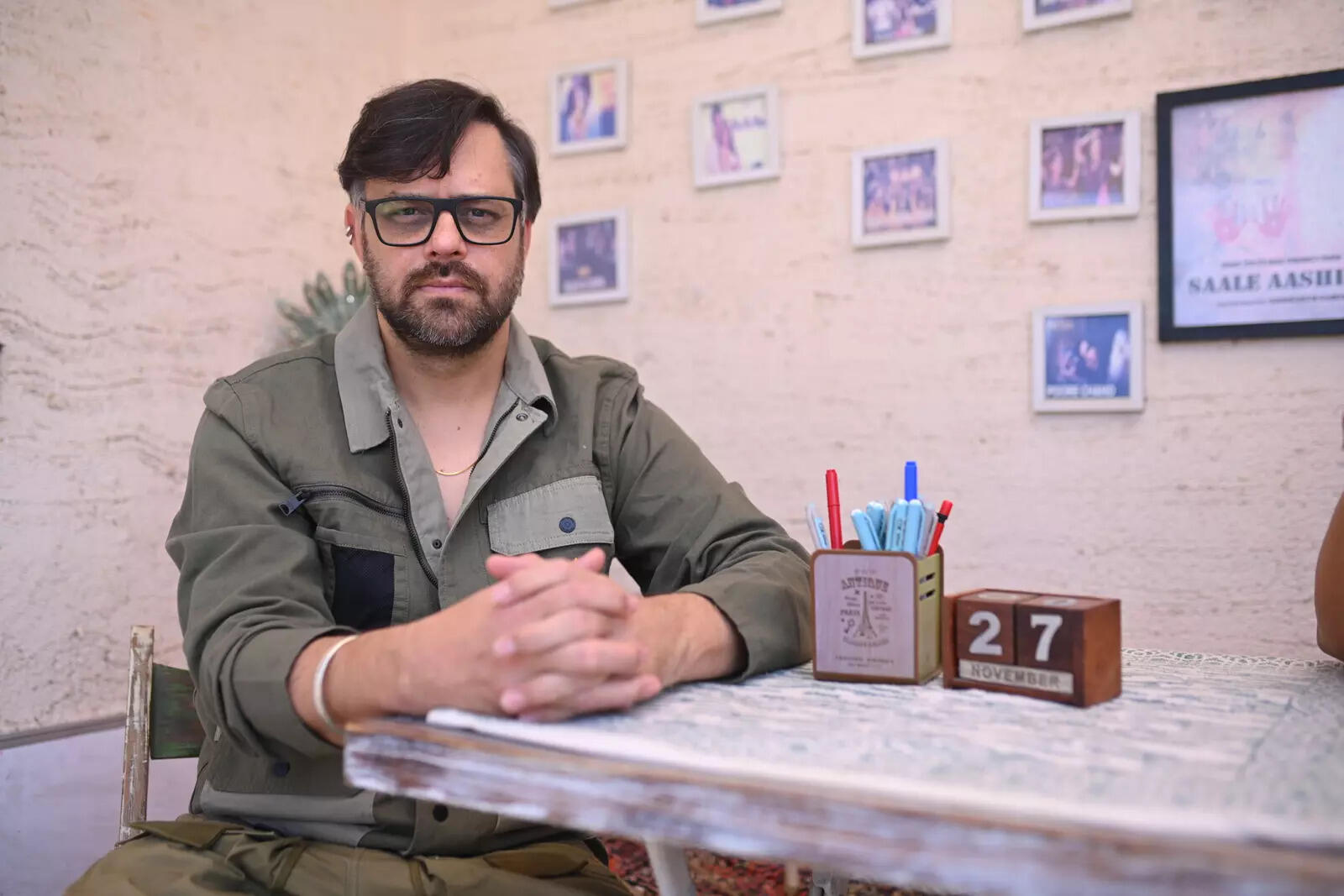
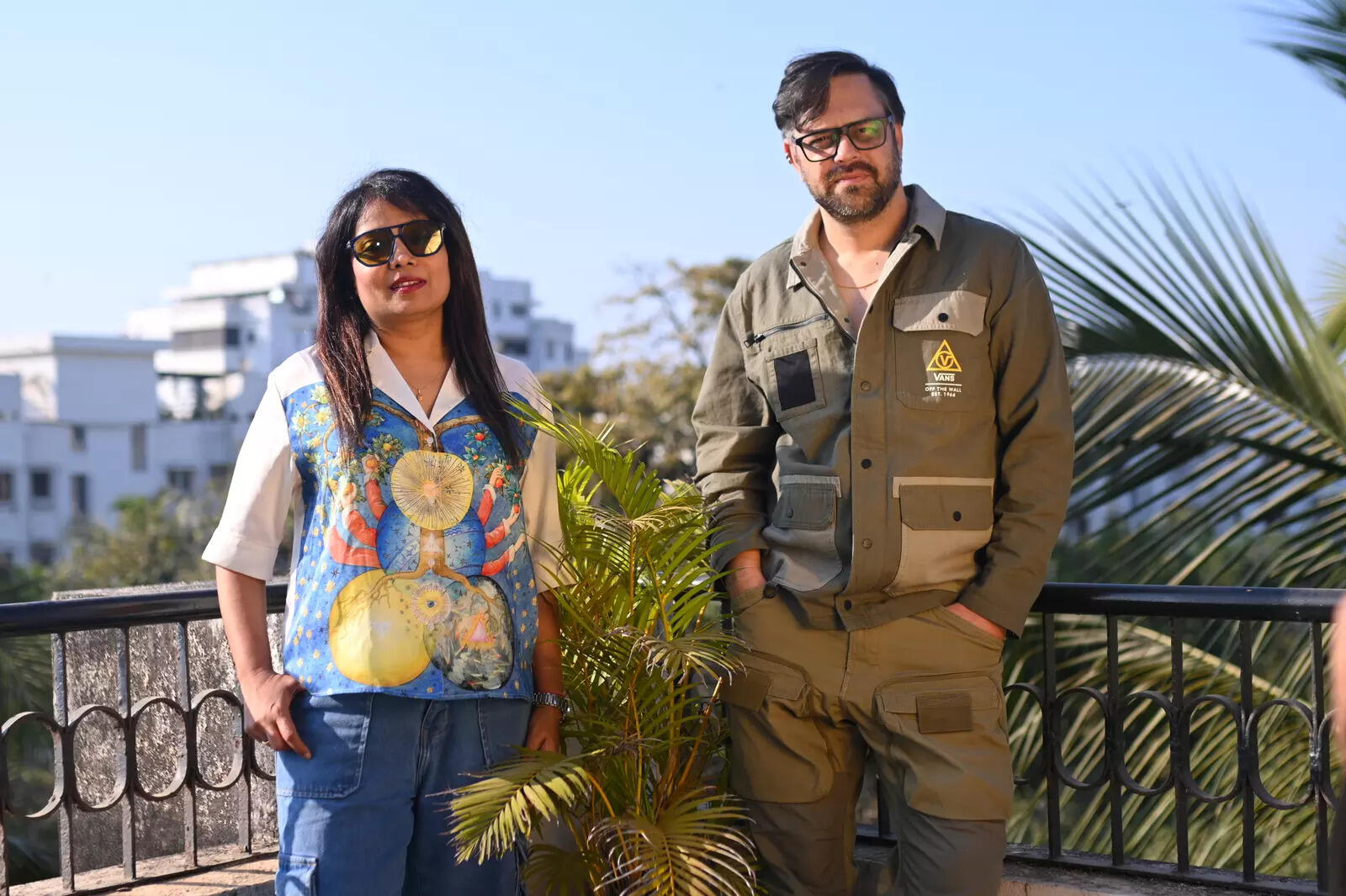
Garima Wahal and Siddharth Singh, the filmmaker duo, known as Siddharth-Garima, began their Bollywood journey as writers and lyricists on Sanjay Leela Bhansali’s 2013 blockbuster Goliyon Ki Raasleela Ram-Leela, have since evolved into directors with their own films, Dukaan and Saale Aashiq. We recently had the privilege of sitting down with them to discuss their cinematic journey, creative repertoire, and their candid views on the current state of the entertainment industry.
Excerpts:
Q. You often explore serious topics in your films like Dukaan and Saale Aashiq. What draws you to such taboo subjects?
Garima: What we are trying to do is experiment with something right now. I am sure it will take time, but we are trying to blend realism and research with commerce. This is a different genre we are attempting with cinema. Who says that a ‘rural idea only has to be made in a rural setting or turn it into an arthouse film?’ You can still attempt something commercial with it. This is where Dukaan comes in, which is a very personal topic of surrogacy.
So this subject we had to do and wanted it to be as commercial as possible, which is why it has six songs, vibrant colours, dance, and everything that makes it a theatrical film. However, the only thing missing here is a mainstream star, but our actors still managed to pull off a wonder. Siddharth: We tend to make films on the wounds of society, because they need healing. Topics like honour killing or the umbrella ban on surrogacy need a touch of a fresh perspective.
We try to do just that, of course, not at the cost of entertainment. Now this is the scope of our filmography; it is up to us as to how to use what we have learned. Garima: We often get asked if you guys were planning something as commercial as this, why not go for a big star? But they don’t know that we have been to all the big stars of the industry, and nobody wanted to be a part of something like this, mainly because it is different.
The film needs a young girl to play a pregnant woman. So, more than a star, we would need a solid actor who can do justice to the script.
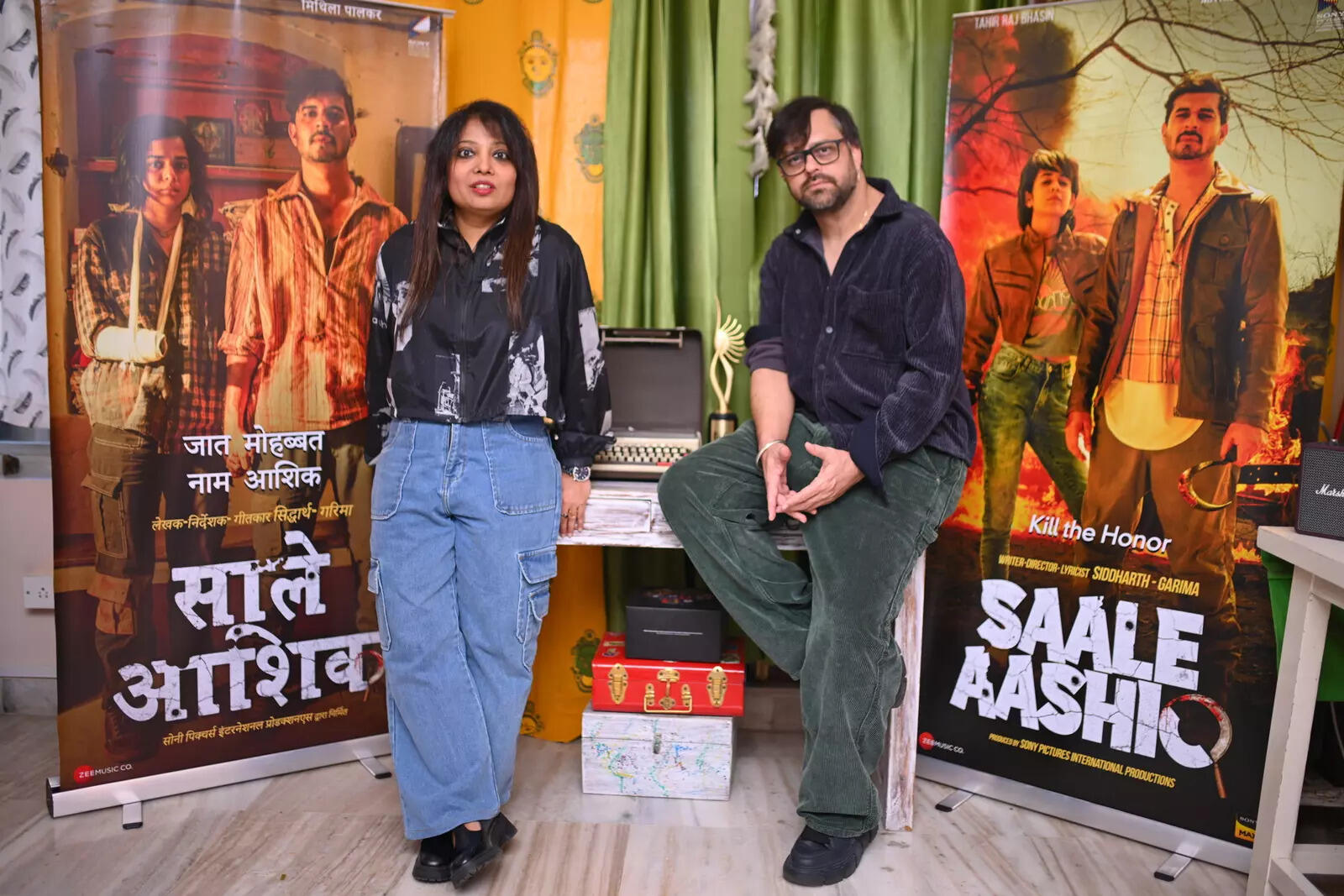
Q. Your recent film, Saale Aashiq, faced numerous difficulties in finding an OTT platform for release. Do you think the entire release debacle could have been smoother if you had a bigger star in the cast?
Garima: When we started out with Saale Aashiq, both (Tahir Raj Bhasin and Mithila Palkar) were OTT sweethearts. They were doing a lot of things on Netflix and Amazon, which is why they came with a minimum guarantee, and the studio had actually promised us that ‘if these guys are there, then the film can be released easily.’
But the scenario flipped on its head once the movie was finished. Suddenly, there were no takers for them on OTT.
Now the OTTs were demanding even bigger stars, like Varun Dhawan and Janhvi Kapoor, otherwise they won’t even watch the film. For a 2-hour film, that cannot be the only criterion, at least see the film and think for yourself whether it is entertaining or not. Siddharth: But it is not an OTT that is at fault here because we never had a guarantee of an OTT release.
Since when has OTT release become a bench mark? Nowadays, producers want to sell their films to an OTT first and then start shooting. Earlier, there used to be a vision behind a movie. When we were working on Toilet, even that movie took three years for us to mount because nobody wanted to do it. Everybody called it ‘documentary-like’. Even after listening to the script, they would call it ‘entertaining, but nobody wants to see a toilet story since it is not a problem in the cities.’
But eventually, a producer came in and took it upon himself to tell the story without waiting for the OTT. These OTTs come with their own school of thought.
They all come from international markets and have very little knowledge of Indian markets. The difference between foreign films and Indian cinema is undeniably huge, so using the same scale to judge the content is not right. It is OTT that started labeling stars as A-listers, B-listers, or C-listers and prioritising the cast over the story. Garima: Toilet: Ek Prem Katha was our first experiment in realism meets cinema, and it turned successful because there was no thing as an OTT deal. Now, producers have options. Suddenly, my studio will turn around and tell me that these stars are not profitable or bankable, so I may not release the film in the theatres. Then we go to the OTT, but they will not accept those movies. So what happens to the films and filmmakers? Siddharth: The mid-budget films in today’s generation are dead. Garima: It’s not just about the hard work and efforts of a team of 250 people, but the basis of a story to be told. It is already made, at least let it be heard.
Q. Aamir Khan recently criticised OTT releases with his film Sitaare Zameen Par, which he released on YouTube. Do you think a star like Aamir, with significant influence, taking a stand against OTT might bring about change?
Garima: Absolutely, it could bring change if more stars like Aamir step up. At last, someone has recognised that this trend is harming the industry. That realisation is vital. Aamir was the first, and we’ve felt the same for a long time.
I wonder why more producers haven’t spoken out. OTT leaders mainly come from TV backgrounds, and what Aamir did was on behalf of the entire industry. We stand firmly behind him.
Q. Deepika recently withdrew from two of Prabhas’ films, Spirit and Kalki 2, citing her lack of commitment to the projects. Do you think actors today have become overly arrogant, or are producers and studios too intolerant?
Siddharth: I feel this goes both ways. A wise man once said, ‘With great power comes great responsibility,’ but not everyone lives by it. Success is something that people are taking for granted. For a filmmaker, the film is their child. If your child is important to you, then my child is important to me.
You cannot say that you will only work for eight hours, out of which two hours are for getting ready. So, the maker has only six hours to shoot.
If you are not willing to understand because it’s not your baby, then how do you expect the other person to compromise for your baby? Garima: Also, it is a personal decision. If tomorrow I decide to get married and have children, it’s my decision. Why do we bring up actors and their babies? If a woman is working in an organisation and gets pregnant, she will only get a certain number of leaves for herself.
If this rule applies to the entire world, then why is one single industry immune to it? When an actor is struggling to make it big, at that time they’d willingly work 18-hour shifts.
But if you are successful today, then it is because somebody supported your dreams. And no filmmaker is unreasonable nowadays. We are not in the 70s, 80s, or 90s, we are in 2025, and nobody today will force you to keep working. There is a mutual understanding.
But there was a larger thing that was blown out of proportion in Deepika’s case by the media. It was created because it was never the topic. The topic of the eight-hour shift was actually a distraction, it is doing exactly that because everyone is talking about that. Garima: Everybody was so focused on the eight-hour work shift that nobody spoke about the breach of trust between the actor and the director, or slut shaming another actor, saying, ‘she can do it because she has done this kind of stuff.’
By that logic, she was doing the exact same thing in Gehraiyaan.
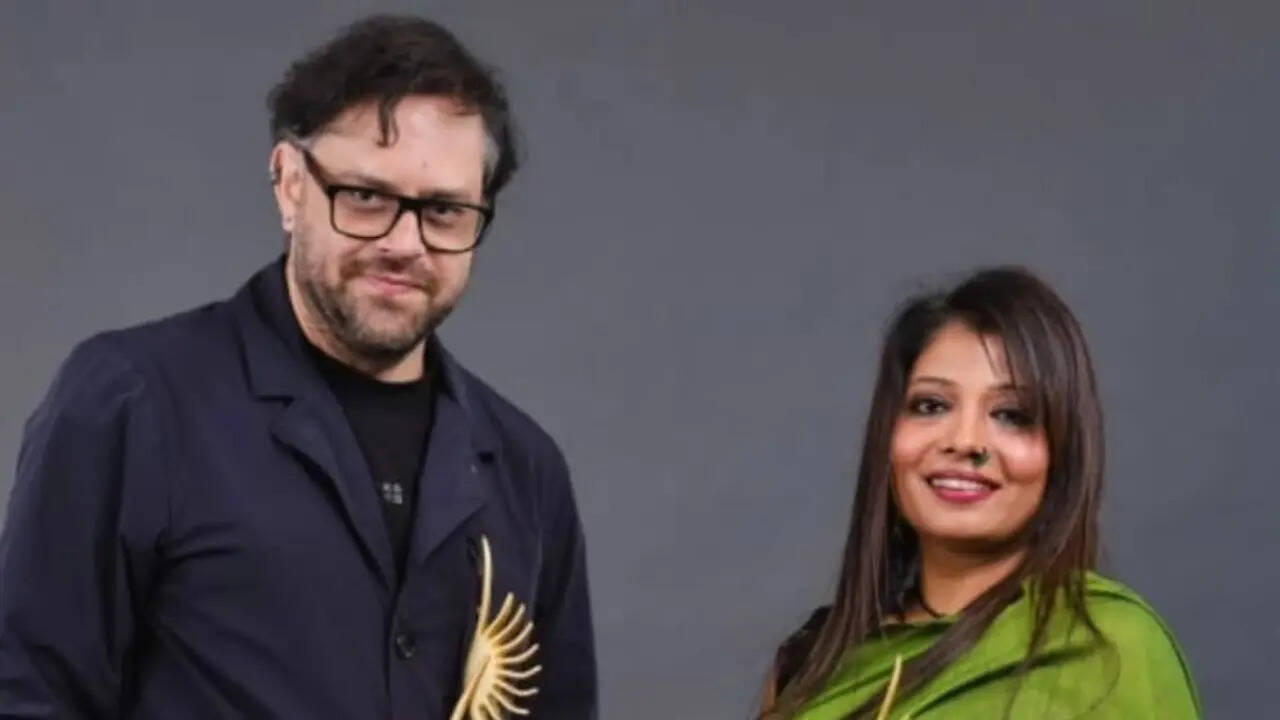
Q. Your journey in the industry has been remarkable—from lyricists to writers and now directors. Do you feel writers are finally getting the recognition they deserve?
Garima: The writers have not got their due! On that note, I would say that writers are like the farmers of this industry. We hear about farmer suicides because we, as a country, are extremely unfair to people who feed us. Similarly, the entertainment industry, be it TV or films, or OTT, is run by the writers. What is the butt of a script without the writers? A blank page! And not everyone is capable of filling that blank page beautifully and making it make sense on the big screen.
Writers are the ones who are giving us that, and yet we are killing them. Forget respect, we are not even paying them for the hard work, and credit is a different story. Some writers have made a home in different camps, and they are still flourishing. Siddharth: You might know who is starring in the film, who made the film, but how often are you aware of who wrote the film? A producer should include their writers in events and promotions around the film, the trailer launches, and more.
I challenge you to open any song, and check the main description of the song without digging deep, you will rarely ever find out who the lyricist is. Garima: Screenwriters’ should be called filmmakers. There are many different kinds of writers: a novelist, a journalist, a blog writer, and every writer has their own perks. Writing for films is equivalent to ‘riding a tiger.’ Siddharth: Payment for a writer is another big issue, because writers are the first ones to be hired for a project.
At the time, there was no actor, no studio, no director, so no one to pay. Just 10% of the signing amount is paid, and then they have no clue when the remainder of the amount is going to come. Garima: It is designed to make a writer starve. The fee is divided into so many installments that they never get the full amount. However, there are very few producers and production houses that are fair enough to pay you by the time the filming has come to an end. A major problem that writers are facing these days is directors who cannot write, but love hogging credits. They talk as if they are the main writers, saying, ‘you know, when I was writing the film with my writers.’ What do they mean they were writing? They did not put their pens to the paper. It should have been ‘my writers were writing, and I was listening to them.’ But every director loves saying, “I wrote this.” Siddharth: Often in credits, you will see “Written and directed by ‘so and so’” and different credits to individuals for “screenplay,” “story,” and “dialogues.” So if there are people for who have written screenplay, script, and dialogues, then what did that director write?
Q. Many nowadays believe directors, producers, and sometimes even actors take liberties to modify scripts without informing the writers. Do you think this practice is acceptable?
Garima: If Sanjay Leela Bhansali, the GOAT filmmaker of our time, makes us write a script or a song for him, he calls us to consult even before changing the tense of a word. That is the definition of a great filmmaker. He is conscious of a writer’s contribution to the project. Siddharth: That is why he is where he is. Not many directors reach the level he is at, mainly because they don’t value the talents around them. They tell us, ‘tum nahin the set toh humne kaafi kuch change kar diya’ and we reply ‘very good sir, box office pe sab kuch change jayega tab hum milenge.’ Garima: Filmmaking is not a one-man job. Everyone comes in with an equal contribution, an actor’s performance, a writer’s script, a producer’s resourcefulness, a director’s vision, then why undermine one person’s efforts to make the other look bigger or better? And a script is a very dicey thing, just changing a word can change the meaning of the entire film.
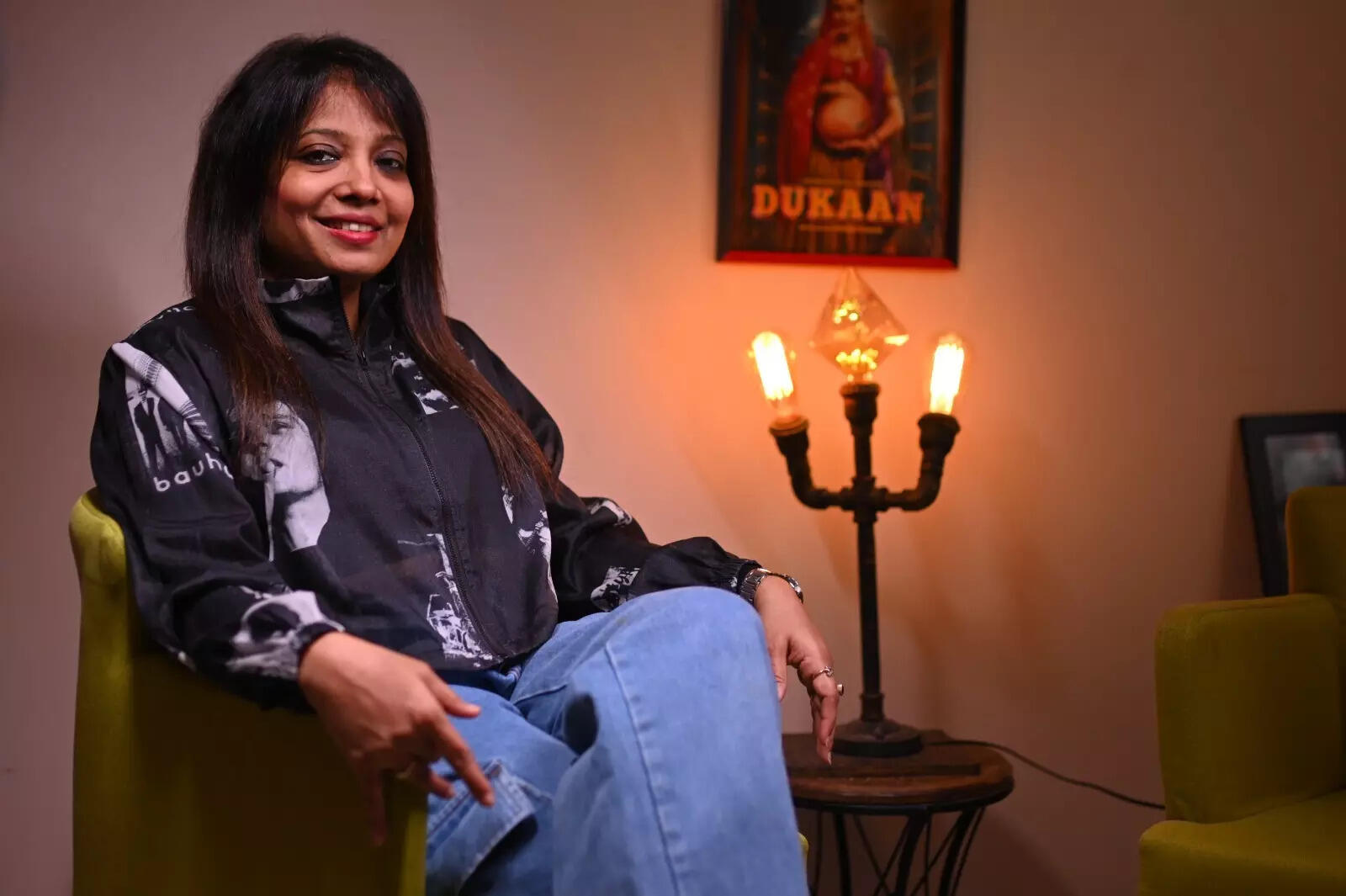
Q. Dukaan, at its release, was often compared to Kriti Sanon’s Mimi. Has this comparison helped generate attention for you, or has it discouraged viewers?
Siddharth: I don’t think it got us any traction because Mimi wasn’t a legendary film like Sholay, and being compared to it brought us numbers.
Just because Kriti won a national award for it, so people started calling it a great film, but Mimi was an OTT release, so there is no way to determine whether it was a hit or a flop. Garima: Honestly, we don’t think it is a great film. Although Dukaan was written and registered before Mimi, we didn’t have someone like Dinesh Vijan on our side. So he ended up making it before us. And also, they had a bigger star as their lead, and that did not really matter, as we were aware that these two are distinctly different films.
They were remaking a Marathi film, Mala Aai Vhhaychy!, whereas we were working on our original story.
A remake will always be different from an original. But for the larger audience, it will be two films about surrogacy. So it did us more harm than good. People made comparisons, calling it a second Mimi. But whoever saw this film was convinced that it was nothing like Mimi. Before this surrogacy, as an industry, was refered to as Chori Chori Chupke Chupke.
Q. Monica Panwar, the lead in Dukaan, is now a bigger star than when the film was made. How does having a larger star affect the film’s commercial success, marketing, and social media presence?
Garima: This might sound blasphemous, but the reality is that a bigger star takes a lot more responsibility for themselves in terms of marketing the film. Someone who is yet to make it big will make the most out of what you are doing for them, while a bigger star will lend their star power to the film. That is something that Dukaan could have profited from. Monica has immensely benefited from Dukaan; she got a character-driven role, her hoardings were all over the city, and Anurag Kashyap became interested in her after her performance in Dukaan.
Of course, she was brilliant in Jamtara, but when we had cast her for Dukaan, nobody had imagined her in that light. The first hoarding that we put up in Juhu Circle with our own money was us putting her out there. Siddharth: A bigger star also comes with an audience perception, it increases the chances of the film being sold to an OTT. When we were working with Sachet-Parampara, they did not have a single track out in the market, but today, they are a household name.
We believe it is our duty to showcase a talent if it is out there. It is a filmmaker’s, especially those who are at the level of SS Rajamouli, responsibility to work with newer talents.
Why is everyone only looking to work with Alia Bhatt or another big name? They don’t need this push; they are already big enough. For this reason, we respect Karan Johar a lot. If it wasn’t for KJo, we wouldn’t have
Sidharth Malhotra
, Alia Bhatt, Varun Dhawan, and, more recently, Lakshya. But even they go back to big names when they make a film these days.
He should have cast a new Rocky and a new Rani in Rocky Aur Rani Kii Prem Kahaani, or Bhansali sir should have cast a new girl as Gangubai. Since they are not doing that, this responsibility falls on new filmmakers like us. Garima: When Akshay Kumar came into Toilet: Ek Prem Katha, he took it upon himself to tell that story. He said, “Main toh leke jaunga iss film ko aage.” The way he did the film, he had completely surrendered himself to us, the writers.
That was so amazing, he did not let anyone spoil the music of the film, he was heavily involved because he knew that he was adding a star value to a rural Indian subject, and that amplified it’s impact. This is a quality that newcomers lack.
Q. There’s a rumour that many studios and producers steal ideas from writers and make changes to create their own stories without involving or paying the original creator. Do you believe such practices are widespread?
Garima: Not just the producers, but there are some actors as well who would listen to your idea and seek another producer/director to make the same film with. This happened with us on an important subject of ‘hair.’
We narrated it to an actor, who later went to another production house and made the movie with them. Honestly, we are not sure if this practice will ever stop because this happens despite registering our scripts.
Q. There’s talk of actors demanding multiple vanities—up to six or seven—and Aamir Khan recently criticised this trend. Why do you think this has become so common?
Siddharth: It started with the corporates entering the movie business. There was too much money when the entire film industry got corporate rights, and everybody started paying for everything. If you start doing that, then you cannot crib about it 10 years down the line.
It was them who started this practice, they wanted their stars to have everything, so why back out now that your budgets are inflating. Garima: We recently met Javed (Akhtar) saab, and he told us a beautiful thing. We asked him, ‘Why do you think this industry is going in the direction it is?’ He replied, ‘paisa bahut hai.’ That’s the problem of too much money. Sometimes a film doesn’t need that much money, but you are anyway spending billions on it because they think they are making a magnum opus, the stars should get what they want, the world should know there are 36 vanities on my set.
But when you have limited money and even a smaller window of budget inflation, then you make a film that is rich in the sense of a movie. We made Dukaan as our first film as a director, we did not exceed a single day of shooting. Our total budget was not even two figures (crores). Saale Aashiq was a little higher in budget, and we want to stick to these budgets because we feel the tighter you are, the better controlled everything is.
Tomorrow, even if we work with stars, we will tell them that we are frugal filmmakers, and this is how we intend to wrap things up. Siddharth: Whatever a producer is spending on a film should be seen on the screen. Nobody will get to see a vanity, only for the sake of making friends in the industry, so a particular actor will only work with you.
Q. It’s said that an increasing number of biopics are being made, often about people who aren’t very old. Do you think this trend is spiralling out of control?
Siddharth: I think it’s the audience’s perception. This happens a lot with Bollywood. It is the people’s thinking that there are too many biopics nowadays. The problem is not with making a biopic, because if it is a story worth telling, then why not? Garima: The problem is not making a biopic as it should be made, they are making a Wikipedia entry and not a film. Why are you making a Wikipedia page, tell me something that I don’t know. In today’s time, everything is on the internet and people are aware. If the biopic is about a sportsperson and the makers want to narrate their story, then present it in a way that I don’t realise it was a biopic until the very end. But this bandwagon is done and dusted.
Now, nobody wants to ride the biopic wave unless it is a story of a hero, a guy/girl who struggled against odds and made it. Siddharth: But the category of ‘biopics’ is created by the audience. For example, if we are doing a film on a boxer, we don’t call it a biopic. For us, it’s a story, right now, we are writing a film on Chatrapati Shivaji Maharaj, even though it is a biopic, but we never call it a biopic amongst ourselves. It is a term coined by the audience.
A movie is more than that, even if a biopic. Like how Bhansali made Gangubai, of course it was a biopic, but it was made so differently that it can also be a story of a girl marred by consequences.
Q. The music industry has evolved dramatically over the past decade. Many say current songs lack the excitement and quality of those from before. What’s your view on the new wave of music?
Siddharth: Undeniably, there is a change. I wouldn’t call it good or bad; I don’t like being judgmental about it. Because the evolution happens according to the ongoing trend. I agree that songs of the past are more exciting and lovable, but back then, the total amount of songs coming out in a year was less. When Dilip Kumar’s Naya Daur (1957) came out, back then, the number of films that would be released in an entire year was less than what we get in a month.
So there is a problem with many. Then the quality will obviously not be the same.





 English (US) ·