

 1 day ago
5
1 day ago
5
ARTICLE AD BOX
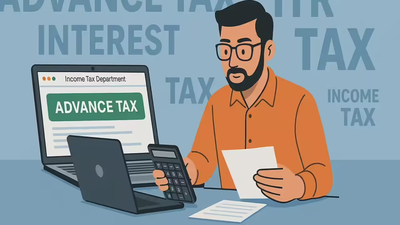
If you earn income beyond a fixed salary or have multiple income streams, December 15, 2025, is a tax deadline you cannot afford to overlook. Missing or underpaying advance tax does not trigger a one-time fine, but monthly interest penalties that continue to accumulate quietly until assessment.Under India’s “pay as you earn” framework, advance tax ensures that individuals and businesses pay tax during the year in which income is earned, rather than settling the entire liability at year-end. Understanding who must pay, how much is due, and the cost of delay can help taxpayers avoid unnecessary interest outgo and compliance stress, according to ET report.
What is advance tax and why it applies
Advance tax requires taxpayers to estimate their annual income in advance and pay tax in installments during the financial year if the total tax liability exceeds the prescribed threshold.Because tax is paid as income accrues, the system is also referred to as the “Pay As You Earn” scheme.
Who is required to pay advance tax
According to Abhishek Soni, CEO and co-founder of Tax2win, any taxpayer whose total tax liability for the year is Rs 10,000 or more after TDS must pay advance tax, as quoted ET.This includes:
- Salaried individuals with income beyond salary (interest, capital gains, rental income)
- Freelancers and professionals
- Business owners and self-employed individuals
December 15: Why this deadline matters
December 15, 2025, is the due date for the third instalment of advance tax for Assessment Year 2026–27. By this date, taxpayers are required to have paid at least 75% of their total estimated tax liability.
Advance tax can be paid using Challan ITNS 280, either online or offline. However:
- Companies, and
- Individuals subject to tax audit under Section 44AB
must pay advance tax only through online mode.
Advance tax payment schedule
| Instalment | Due date | Minimum tax payable |
| First | On or before June 15 | At least 15% |
| Second | On or before September 15 | At least 45% (after earlier payments) |
| Third | On or before December 15 | At least 75% (after earlier payments) |
| Fourth | On or before March 15 | 100% (after earlier payments) |
Any tax paid on or before March 31 is also treated as advance tax.For taxpayers opting for presumptive taxation under Sections 44AD or 44ADA, the entire advance tax liability can be paid in a single instalment by March 15, as per the Income Tax Department.
What happens if you miss or underpay advance tax
Failure to pay advance tax, or paying less than required, attracts interest—not a flat penalty—under Sections 234B and 234C of the Income Tax Act.
- Section 234C applies if an instalment is short-paid or skipped
- Section 234B applies if less than 90% of total tax liability is paid by the end of the financial year
In both cases, simple interest at 1% per month (or part of a month) is charged.Abhishek Soni explains that interest under Section 234B is calculated from April 1 of the assessment year until the date of tax determination under Section 143(1) or completion of regular assessment.
Why interest costs can add up
Because interest is calculated monthly and continues until assessment, even small shortfalls can result in meaningful additional tax outgo, particularly for taxpayers with capital gains, foreign income, or volatile earnings.
How to pay advance tax
Advance tax can be deposited:
- Online via net banking or debit card on the Income Tax e-filing portal
- By selecting Challan ITNS 280 and choosing “Advance Tax (100)”
Taxpayers can download:
- A blank ITNS-280 challan for offline payment, or
- A challan receipt (CRN) after completing online payment
Key takeaway
If your estimated tax liability exceeds Rs 10,000 after TDS, ensuring that 75% of advance tax is paid by December 15 is critical to avoid accumulating interest. With penalties structured as monthly interest, delays can quietly increase your tax bill well beyond expectations.









 English (US) ·