

 1 hour ago
5
1 hour ago
5
ARTICLE AD BOX
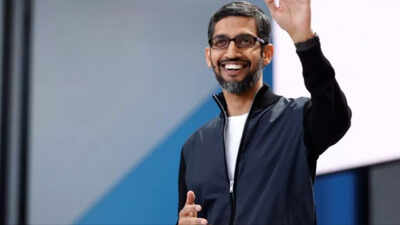
As concerns mount among graduates about AI replacing job roles, Google CEO Sundar Pichai sought to reassure Stanford’s Class of 2026 during his recent commencement speech. Pichai acknowledged the uncertainty that many young professionals feel as automation reshaping industries, but he also emphasised that not every decision or moment in life is ‘make or break’.
Pichai also shared a lighthearted anecdote from his students days at Stanford. He recalled skip[ping class for the first time to take a spontaneous road trip to Las Vegas with a friend. Experiencing snow for the first time and learning blackjack, he realized that missing a class wasn’t catastrophic. “For the first time, I realized the world won’t end if I relaxed a little,” he said.
Google CEO Sundar Pichai shares ‘a little secret’ for graduates
During his commencement address, Pichai also told students, “I’m going to let you in on a little secret: While these things matter in the moment, they are much less consequential than you might think.
You could have failed that biology test, skipped a class, never learned to play the tuba. And you’d still probably be here today.” He also asked the graduates to distinguish between truly pivotal life choices such as choosing a partner, starting a family, or making a major career pivot and the thousands of smaller decisions that only seem consequential in the moment.
Sundar Pichai’s advice beyond technology
Addressing graduates, Pichai said timeless advice is not tied to any single technology.
"I know today is about giving you all advice. But people have also been giving me a lot of advice on what to say. Actually, it's been the same advice, and it's about what not to say," he said. "In all honesty, that topic is truly immaterial to what I want to share with you. The most timeless advice, I've learned, is technology agnostic.
" Pichai told students that every generation faces challenges and uncertainty. "We don't get to choose the world we graduate into; but we do get to choose how we frame our circumstances," he said.
Drawing on his childhood in Chennai, India, he said optimism helped him navigate major life decisions, including leaving his PhD program and entering the technology industry.
Do what excites you
Finally, Pichai told the graduates to follow their excitement rather than yielding to the expectations of parents, friends, or society. For Pichai, that excitement has always been expanding access to technology. He recalled his awe upon arriving at Stanford in 1993 and seeing rows of computers he could use freely.Decades later, that same passion brought him full circle when he witnessed women in rural India using Android smartphones to learn new trades, and students in Pittsburgh utilising Google products.







 English (US) ·