

 1 week ago
11
1 week ago
11
ARTICLE AD BOX
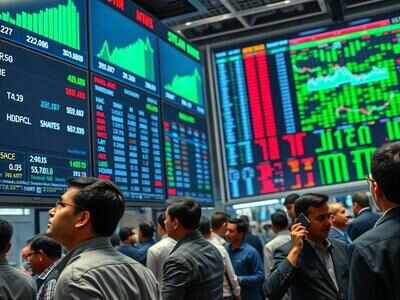
Markets across Asia mostly rose on Monday as investors were calculating the impact of the removal of Venezuela's president Nicolas Maduro by US forces. The rally came as traders turned towards the long-running artificial intelligence boom and hopes for more US interest rate cuts.Nikkei soared over 1,419 points or 2.8% to reach at 51, 759. In South Korea, Kospi was up 2.66% to trade at 4,424 at 8:30 AM IST. Shanghai and Shenzhen were up 0.9% and 1.77%, respectively. Hong Kong's HSI was flat with 0.16% gains at 26,381. Equity markets continued their upward momentum from last year, driven by strong demand for artificial intelligence-related stocks. Japan’s Nikkei was led by gains in technology heavyweights, with SoftBank rising about four percent and Tokyo Electron advancing five percent.At the same time, gold prices moved higher, while oil prices, which had slipped earlier in the session, managed to recover some ground. The market moves followed a dramatic US military operation in Caracas early on Saturday, during which American forces struck military installations and transported Maduro and his wife to New York to face federal narcotrafficking charges. The situation has sharpened focus on Venezuela’s energy sector.
As the holder of the world’s largest proven oil reserves, Venezuela’s potential return to higher output levels has raised concerns that additional crude supply could worsen global oversupply and further weigh on oil prices. Crude benchmarks also recovered after early weakness in Asian trade. Brent crude rose 0.28% to $60.92 a barrel, while US benchmark West Texas Intermediate edged up 0.16% to $57.41. US President Donald Trump said Washington would now “run” Venezuela, with American companies expected to step in to repair the country’s heavily degraded oil infrastructure.
Analysts, however, have warned that restoring output will be a long and costly process, clouded by broader uncertainty about the country’s future. Years of sanctions and under-investment have sharply reduced Venezuela’s oil production, which now stands at around one million barrels per day, compared with approximately 3.5 million barrels per day in 1999. “Any recovery in production would require substantial investment given the crumbling infrastructure resulting from years of mismanagement and underinvestment,” UBS analyst Giovanni Staunovo told AFP. The outlook for fresh investment remains challenging. Oil prices have been under pressure from a global supply glut and fell in 2025, even as the market grappled with major growth headwinds including Trump’s tariff war and the war in Ukraine. Safe-haven gold also attracted buying interest, rising 1.28% to $4,388 per ounce.






 English (US) ·