

 1 week ago
11
1 week ago
11
ARTICLE AD BOX
The surge began as a trickle as six patients were admitted at Bhagirathpura’s Urban Primary Health Centre on December 28. Within 48 hours, that trickle became a deluge as outpatient clinics saw numbers jump from 129 to over 300 in a single day.
Within a week, a hurriedly mobilised army of health workers had screened 66,107 people across nearly 13,000 households.
 These were the scenes playing out in a densely populated neighbourhood in Indore, which has time and again topped the rankings of Indian cities for its cleanliness and management. Except this time, the contamination of drinking water by waste from a toilet had exposed the faultlines and put the civic infrastructure under unprecedented strain.
Story continues below this ad
At the centre of this unfolding crisis were doctors who helped set up effective treatments and healthcare officials who screened panicked families door-to-door to ensure the damage was contained as a deluge of patients reported symptoms ranging from mild diarrhoea to complete renal shutdown.
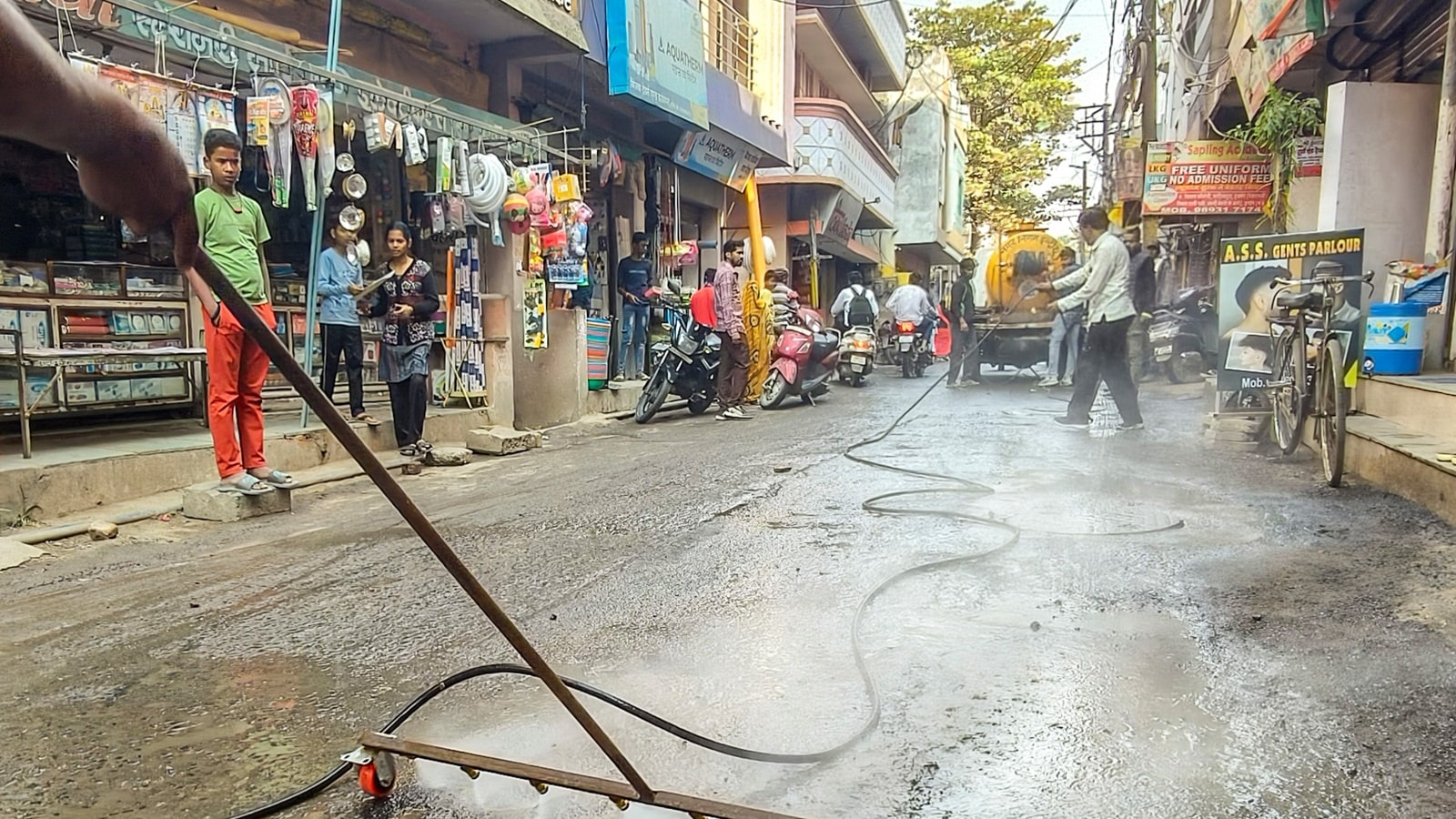 Indore Municipal Corporation workers conduct a cleanliness drive after several people were affected due to consumption of contaminated water at Bhagirathpura area, in Indore, Madhya Pradesh, Wednesday, Dec. 31, 2025. (PTI Photo)
The Indian Express spoke to several doctors on the frontlines, including Dr Nitin Ojha, who was deployed to monitor health conditions in the East zone. “In the initial days of the infection,” he recalled, “we had to understand where it began from and then track these patients from a large area.”
Story continues below this ad
The challenge was immediate and multifaceted. Contaminated water had been flowing through Bhagirathpura’s pipes for days before the first deaths forced authorities to acknowledge the crisis. As reported by The Indian Express on Friday, residents had been raising red flags since October. By the time health teams mobilised on December 29, when the first group of 17 medical personnel was deployed, the infection had already spread across the neighbourhood.
“Since there was a deluge of infections in a large-scale area, people went into panic,” Dr Ojha said. “By the time advice to boil water and other precautionary measures had been disseminated, it was too late.”
The outbreak
The data on outpatient attendance tells a story. At the Primary Health Centre in Bhagirathpura, daily visits were stable through most of December – 96 on December 25; 110 on December 26; 70 on December 27. On December 29, however, attendance spiked to 129. It was 240 on December 30, and on December 31, it peaked at 310.
Story continues below this ad
The health department argued that rising OPD attendance was followed by stabilisation and a subsequent decline after intervention. The outpatient data supports this claim: Attendance at the Bhagirathpura health centre dropped to 137 on January 1. But the damage was done.
One of the first obstacles health officials encountered was the lack of medical infrastructure in the area, especially since many patients had already sought treatment at small private clinics and nursing homes before the government response mobilised.
“Many of the patients had gone to private nursing homes or small clinics as per their financial capabilities,” Dr Ojha said. “However, in many of these facilities, they could not get proper treatment. Many of these small facilities lacked specialists who could help in dealing with the complications arising from dehydration. The staff were not trained in handling fluid treatments and dehydration measures.”
Story continues below this ad
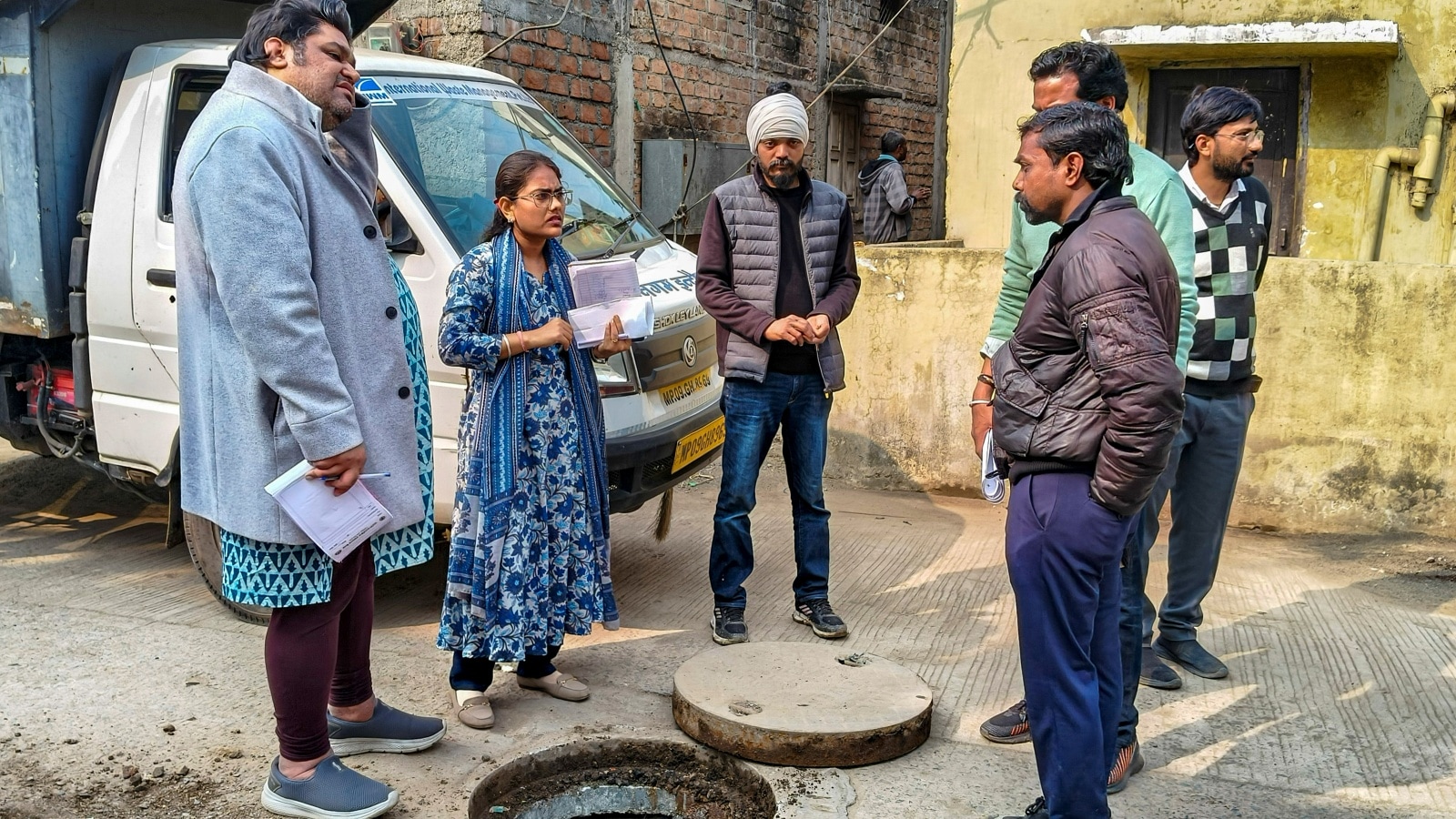 Officials conduct inspection of drains and pipelines following a diarrhoea outbreak caused by contaminated water, at Bhagirathpura area, in Indore, Madhya Pradesh, Friday, Jan. 2, 2026. Chief Medical and Health Officer (CMHO) Dr Madhav Prasad Hasani said on Thursday that laboratory test reports from a city medical college had confirmed that the drinking water from the locality was contaminated due to a leakage in a pipeline. (PTI Photo)
For simple cases like a patient exhibiting diarrhoea but no severe dehydration, a small clinic with oral rehydration salts and basic monitoring can suffice. But these weren’t simple cases.
“Training in providing IV fluids and managing dehydration was a key skill,” Dr Ojha explained. “However, it is ideal that in such cases, the patients are taken to the city’s medical college, which has multispecialists. This is because many of the elderly patients had suffered multiple health complications arising from the contamination. Some already had diabetes, heart-related problems and kidney-related issues, and you need a range of multi-speciality treatments to effectively manage them.”
By the time the health department’s coordination system was fully operational on December 30, with senior health officers assigned clear responsibilities for inter-departmental coordination, on-site supervision, data compilation, and continuous reporting, the challenge was clear: Scattered patients, scattered facilities, and a need for centralised triage and referral.
Story continues below this ad
The challenge
Dr Omesh Nandwar, overseeing the West zone, encountered a demographic pattern that was both striking and medically significant.
“In many of the hospitals which I had overseen, 95 per cent of the patients were women, almost all of them suffering severe dehydration,” he said. “Of this, 70 to 80 per cent had renal shutdown.”
According to the health department data, a total of 310 patients had been admitted to hospitals since December 24. Of those, 203 remained hospitalised, 107 had been discharged, and 25 are in intensive care units.
Story continues below this ad
“The patients who were in critical conditions were those who had other diseases,” Dr Nandwar noted. “The youngest patient was 10 years old.”
Dr Abhishek Nigam, MD, Medicine, was assigned to oversee operations across three hospitals simultaneously – a logistical challenge that required rapid protocol development and resource allocation.
“Within days, we had chalked out the treatment plan based on the symptoms,” he said. “Most of the patients had loose stool followed by abdominal pain, so we knew the fluids, painkillers and antibiotics which had to be administered.”
Story continues below this ad
For straightforward cases of diarrhoea, dehydration, and abdominal pain, the treatment protocol was clear and effective. But as Dr Ojha and Dr Nandwar had already discovered, contaminated water produces complex cases.
“When it came to the patients with comorbidities of diabetes, hypertension, diabetes and other issues, specialists were the need of the hour,” Dr Nigam said.
His three hospitals had a crucial advantage: multidisciplinary teams. “In the three hospitals that I managed, thankfully, we had an MD Medicine, a gastroenterologist and an endocrinologist managing the comorbidities, and that really helped. We had managed to mobilise ourselves really fast, which helped in overcoming the challenges.”
Story continues below this ad
Vinod Neem, a 59-year-old health department official from Mahu, was among the countless workers called in to help manage the crisis.
“I love my work, and I am just glad that in the few years I have before my retirement, I managed to be of some service,” he said.
Every morning, Neem leaves his home at 6 am to reach Aurobindo Hospital in Indore by 8 am. His job is part of the massive door-to-door screening operation that has become the backbone of containment efforts.
Story continues below this ad
“From 8 am till 2 pm, I help in tracing out the patients. I go with the team of an ASHA worker and an anganwadi worker. I interact with the patients and look for signs of dehydration or any other symptoms. It takes 10 minutes to screen a family inside a home and fill a form,” he said.
As of January 1, teams had screened 48,112 individuals, and ORS packets were distributed to 2,714 patients. On December 31 alone, the health department secured 62,500 strips of Dicyclomine tablets, 50,000 zinc tablets, and around 22,500 ORS packets, among other medicines.
Dr Sachin Garg, a paediatrician, spoke in the middle of a 12-hour shift as he focused on a young patient. “The issue with children facing these cases is that the severity of the infection rises rapidly,” he said. “Children also get infected very quickly by drinking contaminated water, so time is of the essence in treating them.” The youngest victim of the contamination was six months old.
“The main issue in this area is that it is a highly congested neighbourhood, and access to healthcare is very bad. They only have a handful of clinics which are equipped to handle the crisis,” he said.






 English (US) ·