

 1 week ago
5
1 week ago
5
ARTICLE AD BOX
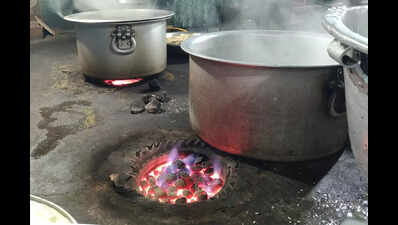
Food being cooked over a charcoal chullah at a dhaba in Bhubaneswar
Bhubaneswar: The capital’s air quality index shooting beyond the hazardous level intermittently has prompted Bhubaneswar Municipal Corporation to decide on sealing hotels and dhabas using charcoal chullahs, identifying them as one of the primary contributors to rising pollution.On Monday, though the air quality index (AQI) dropped marginally to settle at 266, chullahs for cooking and baking rotis were found to generate fine particulate matter (PM 2.5) that cause pulmonary complications.“It has been decided that strict action would be taken for the closure of hotels, dhabas, kalyan mandaps and picnic spots using charcoal or wood as fuel for the chullahs, except for religious institutions, where such practices are part of tradition.
The sealing of such cooking areas of the establishments will be carried out with immediate effect,” said the BMC advisory.The BMC also issued an advisory to Capital Region Urban Transport (CRUT), which handles Ama Bus, to use water sprinklers regularly, as frequent movement of buses in the depot causes dust to rise above ground and stay suspended for a longer time in ambient air, causing suffocation among people in nearby areas.
“We also asked block education officers to use clean fuel for preparation of mid-day meals. Picnic spots would be inspected to check if picnickers are using wood as fuel. Odisha Industrial Infrastructure Development Corporation (IDCO) was intimated to improve condition of roads under its control and take steps to reduce generation of dust,” said BMC deputy commissioner N Ganesh Babu.The BMC, on its part, also decided to improve enforcement of construction and demolition waste rules, as their transportation and stacking generate dust.Odisha State Pollution Control Board (OSPCB) officials said certain areas of the city, where vehicular movement and congestion are more owing to habitation and markets, and where construction work is in progress, carry more PM2.5 in ambient air. This is apart from the particles being generated by chullahs.Doctors said while PM10 can be blocked by natural barriers in nasal cavities, PM2.5 can travel inside and be deposited in the lungs, causing moderate to severe pulmonary issues.“The AQI in Bhubaneswar remains close to 300 in the peak of winter. Over the next week, it will come down to the moderate category,” said OSPCB senior environmental scientist Niranjan Mallick.








 English (US) ·