

 1 hour ago
2
1 hour ago
2
ARTICLE AD BOX
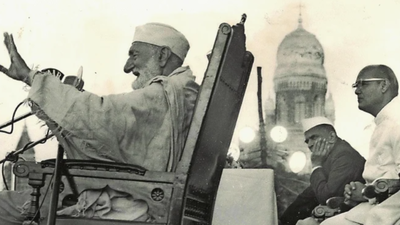
On the afternoon of Sep 4, 1873, a few dozen Englishmen, Hindus, Muslims and Parsis gathered inside the municipal building in Fort, north of today’s BMC headquarters. Their shared aim was to create an effective system of local self-government for Bombay’s 6.5 lakh residents between Colaba and Tardeo.
Over 160 years later, the BMC is India’s richest civic body, with a budget nearing Rs 75,000cr. Before BMC1669 | Bombay transferred to the East India Company; administered by the governor and senior officials, with no formal civic authority1803-1845 | City governed by a Court of Petty Sessions1845 | Court replaced by a Board of Conservancy, controlled by justices1858 | Administration handed to a triumvirate of commissionersMinutes of First MeetingThe minutes of the 1873 meeting (one Major Baker RE was voted to chair it) were meticulously written down by then municipal secretary H Winford Barrow. The business was to elect the chairman and members of the town council. He recorded :
- The advertisement governing the meeting was read
- The honourable Narayan Tasudeojee proposed that Captain George F Henry be elected chairman of the municipal corporation of Bombay. The motion was seconded by Byramjee Jeejeebhoy esquire
Patriotic CorporatorsThey made the mighty British Empire quake :Dadabhai Naoroji | Pherozshah Mehta | Badrudin Tayebji | HP Mody | Jamnadas Mehta | SS Mirajkar | Yusuf Meherally | Sarojini NaiduBMC’s Formation & Aftermath1865 | Bombay Municipal Corporation created; Arthur Crawford appointed municipal commissioner for five years. Municipal Act vests full executive power in the municipal commissioner1873 | First meeting of the democratic civic body held1888 | Present Municipal Act enacted, later amended multiple times1889 | Construction of BMC headquarters at CST begins; earlier offices were in Girgaum and later near Kalaghoda1931 | Designation of ‘president’ changed to ‘mayor’; JB Boman-Behram becomes the first mayor1950 | Suburbs merged with the corporation1952 | Corporation becomes a fully elected body1956 | First woman mayor (Sulochana M Modi) appointed; extended suburbs merged1957 | Vaitarna scheme conceived, planned & executed1963 | 140 constituencies introduced1968 | First elections held1972 | Marathi adopted as the official language of the corporation1996 | Bombay renamed Mumbai




 English (US) ·