

 1 week ago
13
1 week ago
13
ARTICLE AD BOX
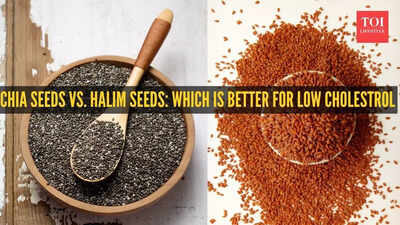
Tiny by size, seeds do outsized work for health. They concentrate fiber, plant fats, minerals and phytochemicals in a pocket-sized form that’s easy to add to meals, and those nutrients interact with digestion, blood lipids and metabolism in ways whole grains or vegetables alone often don’t.For people worried about cholesterol and heart disease, the right seed added regularly can modestly shift risk factors: fiber helps trap and remove bile-derived cholesterol; plant omega-3s and polyphenols lower inflammation; and protein and texture can reduce calorie intake by improving fullness.
A viral moment for tiny seeds
Both chia and halim (garden cress) seeds have ridden health-trend waves. Chia exploded globally as a “super-seed”.
Halim seeds, sold in South Asia as garden-cress or “halim,” have resurfaced recently in wellness circles and social feeds for their traditional uses (iron, lactation, postpartum recovery) and dense nutrient profile.And the internet loves a simple, visual ritual (soak a seed, watch it swell), and that viral visibility has driven new research interest and mainstream curiosity. Let us look at how the two contribute to our health
Chia seeds
Gel-forming soluble fiber and ALA slow absorption and improve triglycerides/LDL
Chia contains high soluble fiber that forms a viscous gel in the gut, which can reduce intestinal re-absorption of bile (a route by which the body recycles cholesterol). Chia is also a rich plant source of alpha-linolenic acid (ALA, an omega-3) that can modestly improve triglycerides and influence hepatic lipid metabolism. A randomized study found that components of chia seeds reduce heart diseases by controlling bad cholesterol, hypertension, and platelet aggregation.
Chia seeds provide context-dependent lipid benefits
The soluble fiber and plant omega-3 fats (ALA), combo can slow how quickly you absorb carbohydrates and fats after a meal, which may influence triglycerides and other blood lipids over time. Studies back this up, but the results aren’t perfectly uniform. Longer clinical trials that added Salba-chia to routine care for people with diabetes or metabolic risks found improvements in some cardiovascular markers, especially triglycerides and other mid-pathway lipid measures, compared with control diets.
Halim (garden cress) seeds
Phytosterols, fiber and antioxidant compounds produce hypolipidemic effects (plausible biological route)
Garden cress is rich in soluble fiber, plant sterols and polyphenols, a combination that can reduce cholesterol absorption, modulate hepatic lipid synthesis and blunt oxidative stress in the liver. A 2022 study summarizes that Lepidium sativum’s nutrient composition and reports multiple studies (in-vitro and animal) showing hypolipidemic, antioxidant and hepatoprotective effects, supporting the mechanistic basis for cholesterol lowering, though human trials are limited.
Reproducible hypolipidemic effects in animal models
A 2015 study saw that halim seeds showed improvement in cholesterol levels. The study also found that people who ate the seeds showed fasting blood sugar and HbA1c went down, and their total cholesterol, triglycerides, LDL and VLDL levels also dropped. At the same time, their HDL (“good cholesterol”) went up. The seed powder also reduced markers of oxidative stress and restored important antioxidants like GSH and key antioxidant enzymes.
Which is better?
Both seeds bring real strengths but serve different roles. Chia has stronger human trial data (including randomized trials and meta-analyses) showing modest improvements in triglycerides and other markers in at-risk groups; it’s rich in soluble fiber and ALA and is extremely easy to dose (soaked or sprinkled). Garden cress packs more iron, protein and certain micronutrients and shows consistent hypolipidemic effects in animal models, but high-quality human evidence is limited.Note: The information provided in this article is for educational purposes only and is not intended as medical advice. Always consult with a qualified healthcare professional before starting any new medication or treatment and before changing your diet or supplement regimen.








 English (US) ·