

 1 hour ago
5
1 hour ago
5
ARTICLE AD BOX
Referring to the Mines and Minerals (Development and Regulation) Act, 1957, he said, it requires a person applying for mining lease to be a citizen of India. “So when somebody applies, the authority will certainly examine whether he is a citizen or not,” he said.
 The hearing will continue on January 15.
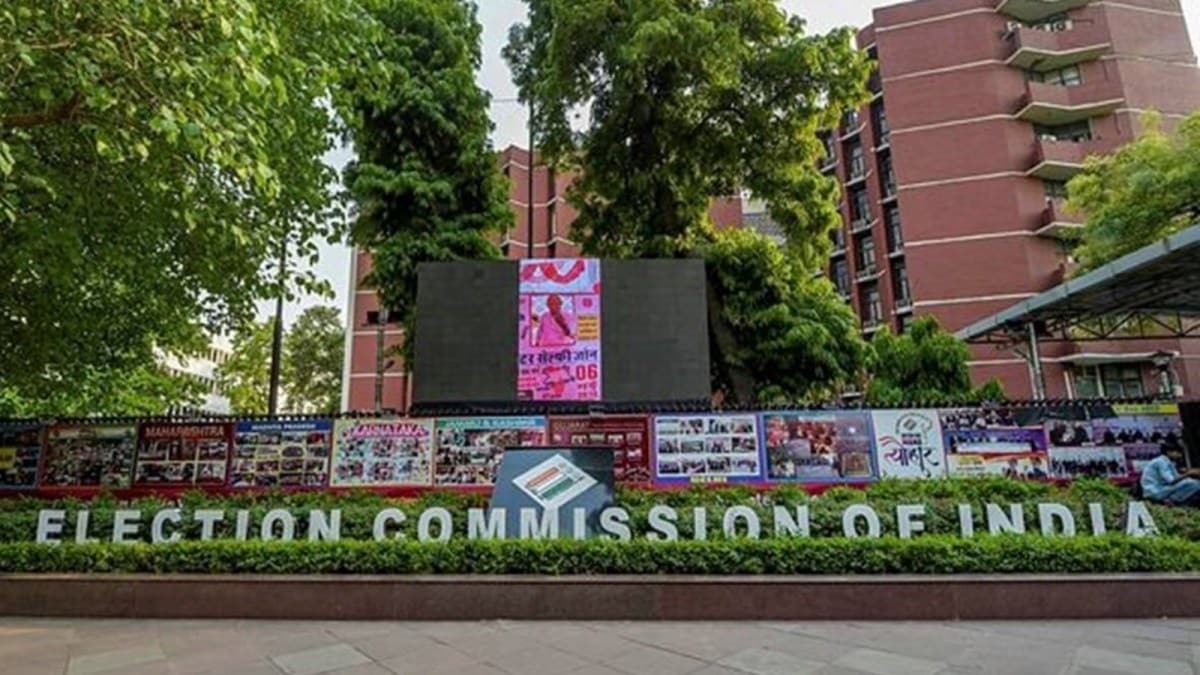
The Election Commission of India (ECI) reiterated Tuesday that it is entitled to examine the citizenship of a person for the purpose of inclusion or exclusion from the voters’ list.
Story continues below this ad
“Under Article 326 and also The Representation of People Act, 1950, and The Registration of Electors Rules, 1960, all taken together, the EC, of course not (by) itself but through the officer who is designated… the Electoral Registration Officer (ERO) is competent to take a view,” Senior Advocate Rakesh Dwivedi appearing for the poll body told a bench of CJI Surya Kant and Justice Joymalya Bagchi.
The bench is hearing petitions challenging the constitutional validity of the SIR exercise being undertaken in various states.
Story continues below this ad
“An inquisitorial enquiry about citizenship can happen…for specific purposes, (it can) enquire into citizenship,” he said.
Referring to the Mines and Minerals (Development and Regulation) Act, 1957, he said, it requires a person applying for mining lease to be a citizen of India. “So when somebody applies, the authority will certainly examine whether he is a citizen or not,” he said.
Story continues below this ad
Justice Bagchi sought to know whether it is within the scheme of the Citizenship Act to refer the ERO’s finding that a person is not a citizen to the Central government and strip him off voting rights even before the Centre takes a decision.
Dwivedi said the decision by the government “would be for the purpose of examining whether he is entitled to stay in India or should be deported or not” and “as far as electoral roll is concerned”, it’s the EC which has the power.
“That’s enough to strike him off the electoral roll,” he added.
Story continues below this ad
“Reference may happen. Sometimes reference (may) go in favour of the person concerned. Then he will be again included,” the senior counsel said. Dwivedi pointed out that there were enough safeguards for an aggrieved person.
He said “the consequence of taking the other view would be that even though the electoral registration officer has found that he is not a citizen yet he will still include him in the electoral roll and he will vote.
So, once a shadow is cast on his citizenship as long as it’s not perverse and arbitrary, he needs to stand out.”
Story continues below this ad
Dwivedi said “one question still remains. Article 326 does not tell us how to decide citizenship. And we are no more in the stage of the 1950s because the Constitution does tell us how we are going to decide citizenship post the enforcement of the constitution”.
Dwivedi pointed out that Article 5 of the Constitution speaks about who shall be the citizen of India at the commencement of the Constitution.
“But what is to happen (after), because this is a continuous process of people coming into being and passing out of being, it does not say.”
Story continues below this ad
The CJI said the “expression used in Articles 5, 6 and 7 are transitional in nature” as at the time of creation of the country, the people needed to take a final decision as to where they would finally settle down.
“So… these sections do not help us in deciding citizenship. They furnish no criteria for deciding how, but it does tell us two things that domicile, residence and birth in India are important. The most important is birth,” said Dwivedi.
Justice Bagchi, however, said: “Article 5 extends the constitutional rate of citizenship and does not phase it to the commencement because of Clause B which speaks of parents born. Therefore children of those persons also get their citizenship from Article 5.”
Dwivedi said “that’s one way of looking at it”. “Section 3 of the citizenship extends the very same criteria for the future. And subsequently there are vital modifications, which are very significant and need to be borne in mind,” he said.
The hearing will continue on January 15.





 English (US) ·