

 1 hour ago
2
1 hour ago
2
ARTICLE AD BOX
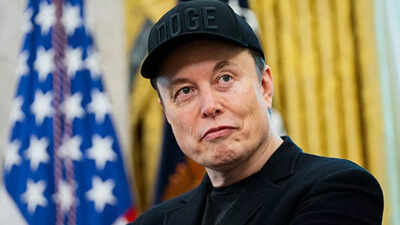
Elon Musk, currently the world’s richest person with an estimated net worth of over $700 billion, says the very idea of saving for retirement could become outdated within the next two decades.Speaking on the Moonshots with Peter Diamandis podcast, Musk argued that rapid progress in artificial intelligence, robotics, and energy could change how the global economy works at a fundamental level. If those changes play out the way he expects, the old logic behind retirement planning may simply stop applying.“My suggestion is not to stress about putting money aside for retirement over the next decade or two. It simply won’t be relevant,” Musk said during the conversation.
Elon Musk on why saving for retirement could lose relevance
At the core of Musk’s argument is productivity. He believes technology is approaching a point where machines can do most work better, faster, and cheaper than humans. Not just factory jobs or physical labour, but thinking work too.If that happens, the cost of producing goods and services drops sharply. When costs fall far enough, the fear of not being able to afford basic needs in old age fades with it. Retirement savings exist because people expect scarcity later in life.
Musk is betting on a future where scarcity is no longer the default.“If our predictions come true, then saving for retirement will lose its importance,” he said, repeating the point later in the podcast.It is a simple idea, really. If everything becomes cheap and widely available, what exactly are you saving for
Artificial intelligence and robotics driving economic abundance
Musk sees artificial intelligence and robotics as the main engines behind this shift. AI systems already write code, diagnose diseases, and manage logistics.
Robots are improving quickly, both in factories and in more unpredictable environments.According to Musk, once these systems scale properly, productivity across industries could surge. Machines do not get tired. They do not ask for raises. They do not retire.He also links this progress to energy. Cheap, clean energy makes automation far more powerful. With enough energy and enough machines, production limits start to disappear.
In Musk’s view, that is when the logic of saving, investing, and planning decades ahead starts to look outdated.In that kind of world, survival stops being the main economic question.
Universal high income replacing traditional retirement savings
Instead of wages and retirement funds, Musk talks about something he calls a “universal high income.” It is similar to a universal basic income, but more generous in scope.The idea is that if machines create most of the value, society will need new ways to distribute that value.
People would still have access to housing, food, healthcare, and education, regardless of whether they hold a traditional job.Musk argues that once machines outperform humans at nearly everything, income becomes less about work and more about access. Who gets what, and why, becomes a policy choice rather than a market outcome.This is still theoretical. Musk admits that. But he presents it as a likely outcome if automation continues on its current path.
Healthcare and education could change within five years
Musk also shared timelines, which is where his optimism becomes more concrete. He claimed healthcare could improve dramatically within five years. AI-driven diagnostics, robotic surgery, and automated treatment systems could make high-quality care widely available.Education, he said, is also ripe for disruption. AI tutors could adapt to each student, making learning cheaper, faster, and accessible from anywhere.
In that scenario, education stops being a lifelong financial burden.Together, healthcare and education are two of the biggest expenses people plan for over a lifetime. If those costs shrink or disappear, the need for long-term savings shrinks with them.
The psychological cost of a world without traditional work
Musk did not pretend this future would be perfect. In fact, he sounded uneasy at times. Work, he noted, gives people structure and meaning. If machines do everything, humans may struggle to find purpose.“If you truly have access to everything you want, is that the kind of future you desire?” he asked.This is the part of his prediction that feels less technical and more human. Even if money stops being a problem, meaning does not automatically appear. Musk admitted that society may find this transition difficult, even painful.
A bumpy transition away from retirement planning
Musk described the path forward as “bumpy,” and that may be an understatement. Automation could disrupt jobs, industries, and governments long before any universal income system is ready.In the short term, uncertainty could increase. People may still need savings, safety nets, and fallback plans while systems catch up to technology.Musk’s vision is speculative, but it reflects a larger debate already underway. AI and automation are changing how people work and think about the future. Whether retirement savings truly become irrelevant or not, the assumptions behind them are clearly being challenged.For now, Musk’s comments serve less as advice and more as a glimpse into how some of the most powerful figures in tech imagine the world ahead. A world where work, money, and retirement may not mean what they once did.





 English (US) ·