

 1 week ago
13
1 week ago
13
ARTICLE AD BOX
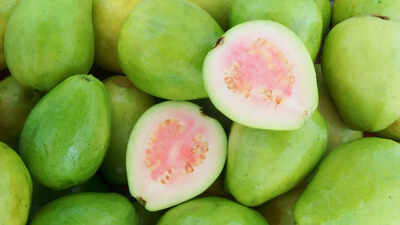
Guava is a seasonal fruit that comes into circulation when food availability, storage conditions, and physiological exposure are changing. It is a climacteric fruit, which means that it is a fruit that continues to ripen after being detached from the plant and its respiration and ethylene production increase.
Guava is grown in a wide range of tropical and subtropical areas, and the large harvests are mainly during the cooler months. Reduced ambient temperatures slow respiration, enzymatic breakdown, and microbial activity, allowing guava to reach markets with less deterioration than during warmer periods. Scientific attention on Psidium guajava L. has centred on its dense nutritional composition and the wide range of phytochemicals identified in its fruit, peel, seeds, and leaves. A study published in Annals of Phytomedicine: An International Journal documents high concentrations of ascorbic acid, dietary fibre, potassium, carotenoids, and flavonoids, alongside measurable biological activity in respiratory, gastrointestinal, metabolic, and microbial systems.
These observations are drawn from controlled assays and animal models rather than population-based dietary research, but they explain why guava is repeatedly examined in winter-related health literature.
When guava peaks and what its composition reveals
Guava fruits are round, ovoid, or pear-shaped, generally measuring five to ten centimetres in length and weighing between 50 and 200 grams. Guava with white or pink flesh are the most popular and is eaten fresh or made into juices, jams, jellies, pastries, and fermented products.
Being a climacteric fruit, guava has a high respiration rate post, which causes the fruit to soften quickly and lose moisture if kept under warm conditions.
The lower temperatures of the season help slow down this process, thus the fruit can be kept for a short time, and the cellular structure is preserved. This seasonal stability has been the basis for the in-depth nutritional profiling of fresh guava pulp, which has been done using standard food composition and mineral analysis methods.
Results describe a fruit with high water content, moderate carbohydrate levels, low fat, and a concentrated supply of vitamins, fibre, and minerals within a relatively low energy matrix. The nutrient profile has been documented through analytical measurement rather than inferred dietary effects.
Nutritional profile per 100 grams of fresh guava fruit:
- Water content of approximately 80.8 grams, which indicates very high moisture retention in the edible portion of the fruit.
- Energy value of about 68 kilocalories, indicating low lipid content and moderate carbohydrate contribution.
- Total carbohydrate content of 14.32 grams, composed of naturally occurring sugars and non-digestible fibre.
- Total dietary fibre measured at 5.4 grams, including both soluble and insoluble fractions, which were quantified through laboratory analysis.
- Protein content of around 2.55 grams, which is higher than that of many commonly consumed fruits.
- Potassium concentration of roughly 417 milligrams, representing the dominant mineral present in guava pulp.
- Calcium content of 18 milligrams and magnesium at 22 milligrams, measured through mineral profiling.
- Iron content of 0.26 milligrams, present alongside organic acids and ascorbic acid.
- Ascorbic acid concentration of 228.3 milligrams, several times higher than levels reported for citrus fruits.
- Presence of B group vitamins, including niacin, thiamine, pyridoxine, and cyanocobalamin, in trace but measurable quantities
Seven health benefits linked to guava fruit and leaf extracts
Scientific studies on guava have examined fruit pulp, peel, seeds, bark, and leaves using biochemical assays, microbial cultures, and animal models. The effects described below are reported observations from controlled experimental conditions rather than clinical or dietary recommendations
- Helps with cold and cough
Hydroalcoholic extracts of guava leaves have been demonstrated to decrease the frequency of cough in capsaicin induced experimental models.
The astringent compounds responsible for the effects are considered to be those which interact with the respiratory mucosa and smooth muscle.
- Supports antioxidant activity
Ethanolic and methanolic extracts of guava fruit and leaves have been proven to perform hydroxyl radical scavenging and lipid peroxidation inhibition in vitro. These effects have been attributed to flavonoids, polyphenols, and carotenoids, which were identified through phytochemical analysis.
- Influences gastric acidity and ulcer formation
Guava leaves methanolic extracts showed antacid and ulcer protective activities in ethanol-induced gastric ulcer studies on Wistar rats. The reduced ulcer indices were measured at specific dosage ranges.
- Affects glucose metabolism
Experimental research of diabetic and diet-induced obese rat models revealed that guava leaf extracts not only lowered blood glucose levels but also changed the activity of enzymes that are involved in carbohydrate digestion and gluconeogenesis.
- Demonstrates antimicrobial action
Antimicrobial effectiveness of guava seed, leaf, and bark extracts against bacterial species (Escherichia coli, Salmonella typhimurium, and Pasteurella multocida) have been very well documented through in vitro assays. These inhibitory effects were evaluated by growth suppression and zone inhibition methods.
- Contributes to mineral-associated physiological processes
Analytical studies have quantified potassium, magnesium, calcium, phosphorus, and iron in guava pulp, minerals examined in experimental contexts related to electrolyte balance, neuromuscular signalling, and vascular activity.
- Provides carotenoid-related biochemical activity
Carotenoids such as lycopene, beta carotene, and beta cryptoxanthin identified in guava pulp have demonstrated antioxidant capacity in controlled laboratory assays, with measurable effects on oxidative stress markers under experimental conditionsAlso Read | What sugarcane juice contains and how it affects the body: Nutrition, benefits, and the need for caution









 English (US) ·