

 7 hours ago
3
7 hours ago
3
ARTICLE AD BOX
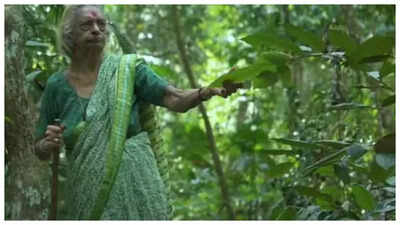
The heart of Alappuzha in Kerala, houses a unique green wonder which spreads throughout its endless backwaters, and paddy fields. The five-acre forest known as Tapovanam exists today, because Devaki Amma, now 92, planted each sapling by hand, to create this forest.
She has dedicated more than forty years to nurturing trees which she planted and maintained on what used to be an empty and barren piece of land. The present-day Tapovanam exists as a thriving natural environment, which supports numerous trees, medicinal plants, fish and bird populations to demonstrate how personal devotion to nature can transform the planet. (pic: Manorama Online)A life shaped by loss and painDevaki Amma started her relationship with Tapovanam through enduring severe suffering.
Forty-four years ago, she was in a serious accident that left her physically and emotionally broken, according to onmanorama.com. She needed to relearn walking with a stick for support before she could walk independently by taking small steps at a time. The accident brought total destruction to all aspects of her life. The paddy farming and other agricultural work that once supported her family came to an end.Devaki Amma spent numerous years in confusion, experiencing both powerlessness and frustration.
She dedicated her entire existence to farming the land, until she lost her ability to perform the activities she enjoyed most. She decided to fight the situation using her own methods instead of giving up. She surveyed the abandoned land surrounding her Kollaykkal residence, before deciding to establish a tree plantation since farming remained out of her reach.
The basic idea developed into the foundation which became Tapovanam.The first sapling and a new purposeDevaki Amma started planting her first tree on the deserted piece of ground. She remained unsure about the number of trees to plant and the duration, which the entire process would require. She discovered that observing the small plant develop from seed to bloom, became her purpose for surviving. She made planting her daily practice, doing it every day. She started a daily routine which involved planting one sapling for each following day.The five-acre Kollaykkal tharavadu (ancestral home) began to change its eastern and western yards (kalams) through a slow process. The area which used to be open sandy terrain, transformed into a thick green forest over time. The environment evolved into a verdant area which supported trees to their maximum height, while shrubs spread out to fill every available spot, creating a cool environment with lower temperatures.
Devaki Amma continued her work by planting and caring for the plants as if she were a mother caring for her offspring. She spent the next 4 decades developing a daily routine which transformed a barren area into a special green oasis because this region lacks natural forests.Tapovanam: A forest grown by handThe woodland area of Tapovanam exists as a lively forest containing various species of trees, shrubs and medicinal plants.
Among its special trees is the kamandalu, also known as the calabash tree. The ancient wisdom of sages employed its fruit to create water containers, while they used its sturdy limbs for support during meditation practice. The forest contains two special plant species, including the peacock plant (Calathea makoyana), whose leaves resemble peacock feathers.There are many kinds of fig trees, Indian blackberry (kureepazham), jackfruit, mango, and wild berries.
The Buddha tree (Ficus religiosa), which sheds its leaves in summer, also grows here. In the middle of this greenery is a small pond full of fish like catfish, and snakehead murrel. Birds that feed on these fish, and even birds of prey like eagles, now visit Tapovanam regularly. The forest now functions as a fully independent ecosystem, because of this development.The area features green vegetation which thrives in its white sandy terrain, while being located near backwaters and the ocean.
Many visitors are surprised to see such a dense forest in such conditions. Devaki Amma believes this is a blessing from Mother Earth. She maintains that she never kills any plant because she believes all new plants that emerge from the earth, possess healing properties and should exist.A free medicine garden for the peopleThe forest area of Tapovanam serves as both a natural forest and a free medicinal plant garden, providing local residents with their medical needs.
People from all ages groups visit the forest daily to find medicinal plants. They are free to identify the plants they need and take them home. Nothing is sold for money. Devaki Amma believes that nature’s gifts should be shared freely, not turned into business.Visitors sometimes demand to give money because they believe taking plants without payment will result in negative outcomes. Devaki Amma accepts such offerings only when people press them on her.
She achieves her highest sense of satisfaction through observing patients heal from their diseases because of the medicinal plants she grows.A living classroom for children and adultsTapovanam has evolved into an operational educational space which serves as a living classroom. People from all age groups including school children, college students and adults, come to the forest to observe it and conduct research and educational activities.
The group follows the narrow forest trails to discover plant species, while learning about the forest ecosystem, which provides habitat for birds and insects and animals.Devaki Amma provides the same basic instruction to all visitors: people should at least plant a tree to help it survive. Her existence demonstrates that an elderly woman with physical disabilities and emotional pain, can develop something valuable which benefits all members of her community.The woman behind the forestDevaki Amma does not hold a scientific title, nor does she possess wealth from land ownership. She turns her regular daily tasks into meaningful work through her daily routine activities. Her life story shows her dedication to regular work and her enduring commitment and love for nature. She worked for 44 years without asking for recognition or public acknowledgement during her entire career.
Her accomplishments produced a greater impact than any words she could have spoken.She shows us that forests can exist in any size or state while maintaining their importance. Land that receives proper maintenance will develop into an ecosystem, which provides habitat for all existing life forms. Her forest serves as more than trees because it provides clean air, fresh water, medical resources and peaceful environments to the surrounding population.A message for our timesThe story of Devaki Amma serves as a strong example, because forests continue to disappear while air pollution intensifies and environmental shifts endanger human existence. The story demonstrates that individual initiative can create major beneficial changes. The beginning of every project requires two essential elements: your commitment to begin work and your dedication to finish what you start.Her life demonstrates three basic principles she learned throughout her existence.Life's challenges allow you to recover through the process of healing the natural world.Daily sapling planting as a small action, will create major changes which will emerge after multiple years.Nature exists beyond financial value because it serves as a resource which people should share with others, while it heals them and provides them with oxygen.The forest of Tapovanam serves as a symbol representing the power of hope to all people. The area shows that green spaces can succeed in densely populated areas, when someone steps up to handle their upkeep. Devaki Amma from Alappuzha at the age of 92 established herself as a nature warrior who uses her hands to create a forest through individual sapling planting.








 English (US) ·