

 5 days ago
8
5 days ago
8
ARTICLE AD BOX
Pusa Basmati 1121, India's most successful aromatic rice variety, was developed by agricultural scientist Vijaypal Singh, who followed his farmer fufa ji's (uncle's) 10-point checklist on what true Basmati should be like. The Basmati variety, which took 20 years to be developed, earns India Rs 25,000 crore annually.
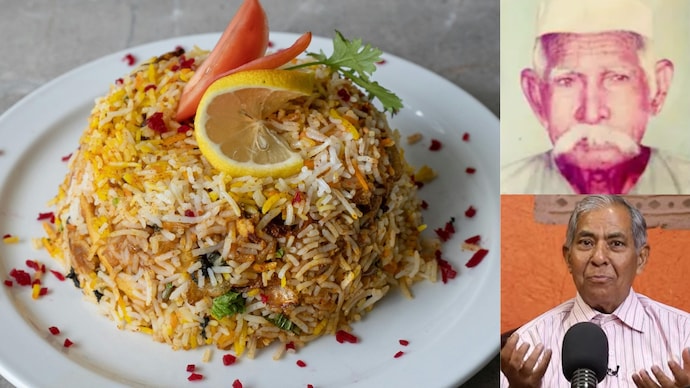
Agri scientist Vijaypal Singh's uncle, Chaudhary Meghraj Singh Khokhar (top), in 1968 told him about the properties that are essential for a rice variety to be called Basmati. (Images: Pexel/ Kisan Tak)
"Do you even know what Basmati is?"
It was 1968 and this was precisely the question Vijaypal Singh, a young student at New Delhi's Indian Agricultural Research Institute (IARI), commonly known as Pusa, was asked by his farmer fufa ji (uncle) during a visit to his village. The question from his uncle came as Singh said he was working to create a Basmati variety.
The question whether he knew what Basmati even was sent Singh silent. Fufa ji, Chaudhary Meghraj Singh Khokhar, realised that his nephew didn't really know the answer.
What followed was the fufa ji's lesson on what properties the Basmati rice should have. The 10-odd properties of Basmati, underlined by Khokhar, stayed with him and formed the basis for his creation, the Basmati 1211 variety, the top agricultural scientist revealed in a podcast with India Today Digital's sister portal, Kisan Tak.
In the years to come, Vijaypal Singh held his fufa ji's definition of a Basmati as a target to achieve, and gave birth to one of India's most successful agricultural innovations, the Pusa Basmati 1121. It's this variety that contributes significantly to India's agricultural exports, which is estimated at around Rs 25,000 crore annually.
It took 20 years of research and cross-breeding to refine the genes to get all the 10 qualities in one Basmati rice variety. Today, Vijaypal Singh, who was awarded the Padma Shri in 2012, is also known as the Father of Basmati rice.
"Vijaypal Singh, who has worked extensively in rice research, especially Basmati, is globally known and worked closely with the Father of the Green Revolution, MS Swaminathan, for a long time. The Basmati 1211 variety alone generates around Rs 25,000 crore annually for India," said Om Prakash, an agricultural expert with Kisan Tak.
Basmati, the premium long-grain aromatic rice, is prized globally for its fragrance, appearance, and texture. Basmati, which has received government support since the 1960s, is a major export item and has become synonymous with India the world over. Within the country, Basmati's availability, aesthetics and affordability have taken it to kitchens across India.
Rice cultivation in India has come a long way from the years of traditional landraces. India now produces several globally competitive rice varieties, including the Basmati 1211 created by Vijaypal Singh. And Singh's journey and his fufa ji's Basmati tips are part of the bigger story.
WHAT IS PUSA BASMATI 1121 AND WHY DOES IT MATTER?
Pusa Basmati 1121 is one of the most widely exported basmati rice varieties developed in India. It is known for its extraordinary grain length and expansion after cooking. It doubles up in size compared to other traditional Basmati varieties.
Unlike earlier basmati types such as Basmati 370 or even Pusa Basmati 1, the 1121 was designed to combine a set of properties, like, a very long grain length, pronounced elongation after cooking, a soft texture, non-stickiness, and high-yield potential for farmers.
Its adoption across Punjab, Haryana, and western Uttar Pradesh reshaped India's Basmati export industry. Today, India dominates global Basmati exports, and the Pusa 1121 variety forms the backbone of that trade.
According to agricultural and trade estimates cited in policy and industry discussions, Basmati exports contribute tens of thousands of crores annually, where the Pusa 1121 developed by Vijaypal Singh plays a central role.
While Basmati is just about 2% of global rice production (8-9 million metric tonnes) and around 5% of India's total rice output, it has a much larger economic value. India produces about 70% of the world's Basmati, with Pakistan making up the rest.
Within India's Basmati basket, Pusa 1121 alone makes up more than 65% of total Basmati production, according to the National Commodity and Derivatives Exchange Limited, an Indian agricultural commodity exchange. This is significant because Basmati is not a volume crop but a value crop.
WHAT WERE FUFA JI'S RULES OF BASMATI RICE?
Back in March 1968, after getting admitted to New Delhi's renowned Pusa Institute, Vijaypal Singh was visiting his village near Roorkee (in present-day Uttarakhand).
His fufa ji, a farmer with no formal education, asked his nephew, "Do you even know what Basmati is?"
Getting the hint that he didn't know, Singh's fufa ji, Chaudhary Meghraj Singh Khokhar, described Basmati through his lived experiences. He laid down what Singh later internalised as the "quality benchmarks" for the Basmati variety he would develop.
Among the defining traits, Vijaypal Singh recollected during the Kisan Tak podcast, were, the length, aroma, texture, the expansion in its volume and it being easily digestible.
"Basmati should have very long grains. When it is cooked, the aroma should spread to neighbouring houses. After cooking, one bowl of rice should become five bowls in quantity. The grains should be long, thin like a needle, and milky white... When you touch it, it should feel like butter, soft and smooth. When you eat it, it should melt in the mouth, making you want to eat more. Even if you eat a lot, your stomach should not feel heavy," Vijaypal Singh told Kisan Tak.
"When you spread it out, the non-sticky grains should separate like pearls. If kept overnight, the rice should not become stale. If it becomes stale, no one will buy your basmati, he warned me," Vijaypal Singh added. "He gave me 10 essential qualities that a rice variety should have to qualify as Basmati."
From that day, Singh recalled, he kept repeating his fufa ji's words in his mind. "It was like he had given me a target," he said. "He gave me the definition of Basmati."
HOW VIJAYPAL SINGH DEVELOPED PUSA BASMATI 1121
Singh, after joining the IARI in 1968, Vijaypal Singh was influenced by MS Swaminathan's broader Green Revolution-era research ecosystem. At the time, basmati breeding was still based on traditional selections like Basmati 370, which itself had been identified in the 1930s from landrace collections.
Singh, whose family was also involved in Basmati cultivation, had to combine all the ideal traits into one high-yielding, stable variety.
The process involved decades of controlled cross-breeding using diverse genetic material (germplasm). The development of the Pusa Basmati 1121 was a long process of selection, cross-breeding and refinement guided by the definition that his uncle once gave him.
"We kept combining good traits from different plants," Vijaypal Singh said in the Kisan Tak podcast hosted by Om Prakash.
However, the challenge was balance. Longer grain lines often meant weaker stems. High-yield varieties often lost their aroma. Aromatic varieties often had poor yield. His task was to unify all the positive and desired traits into one, without compromise.
Over time, thousands of crosses produced hundreds of breeding lines. One of these experimental lines became Pusa Basmati 1121.
"The industry and even ministries were split on whether it should be called Basmati," Singh said. "But testing showed strong results, and it was even evaluated abroad, including in Germany, where it got positive feedback on taste and cooking quality... Eventually, the ICAR released and notified it as Pusa Basmati 1 in 1989".
HOW DESI BASMATI 1211 WENT GLOBAL
After years of trials, selection, and field-testing, Pusa Basmati 1121 emerged as a commercial success. It offered farmers significantly higher returns due to its export demand and higher yield.
Unlike earlier basmati varieties that were limited in productivity, 1121 made basmati cultivation economically more lucrative. This encouraged farmers who adopted it across northern India.
In global markets, especially the Middle East, Europe, and parts of North America, the 1121 became a preferred Basmati due to its consistency and cooking quality.
Pakistan also worked on developing basmati varieties, but it could not match India's breakthrough in high-yield, export-dominant strains like Pusa Basmati 1121.
The US created Texmati and Jasmati to reduce rice imports, but they were no match for India's Basmati.
Today, Basmati exports from India are a multi-billion-dollar industry, and 1121 is its backbone.
This is the story of how the fufa ji's definition of what Basmati should be, stayed with Singh for two decades and led to the development of the best strain of the variety, the Pusa Basmati 1121. Today, it earns India valuable foreign exchange worth nearly Rs 25,000 crore annually. The unanswered question from 1968, perhaps, now stands answered.
- Ends
Published By:
Sushim Mukul
Published On:
Apr 13, 2026 12:04 IST








 English (US) ·