

 1 week ago
11
1 week ago
11
ARTICLE AD BOX

Tigress and cubs in the wild
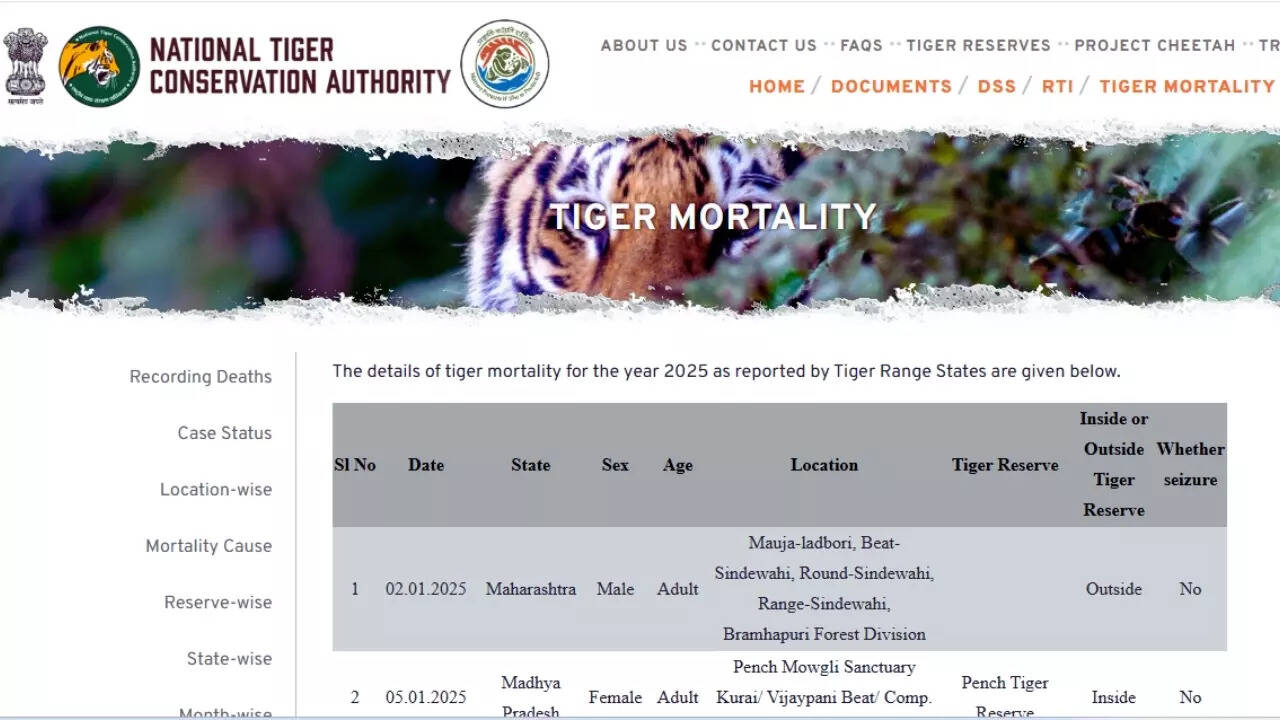
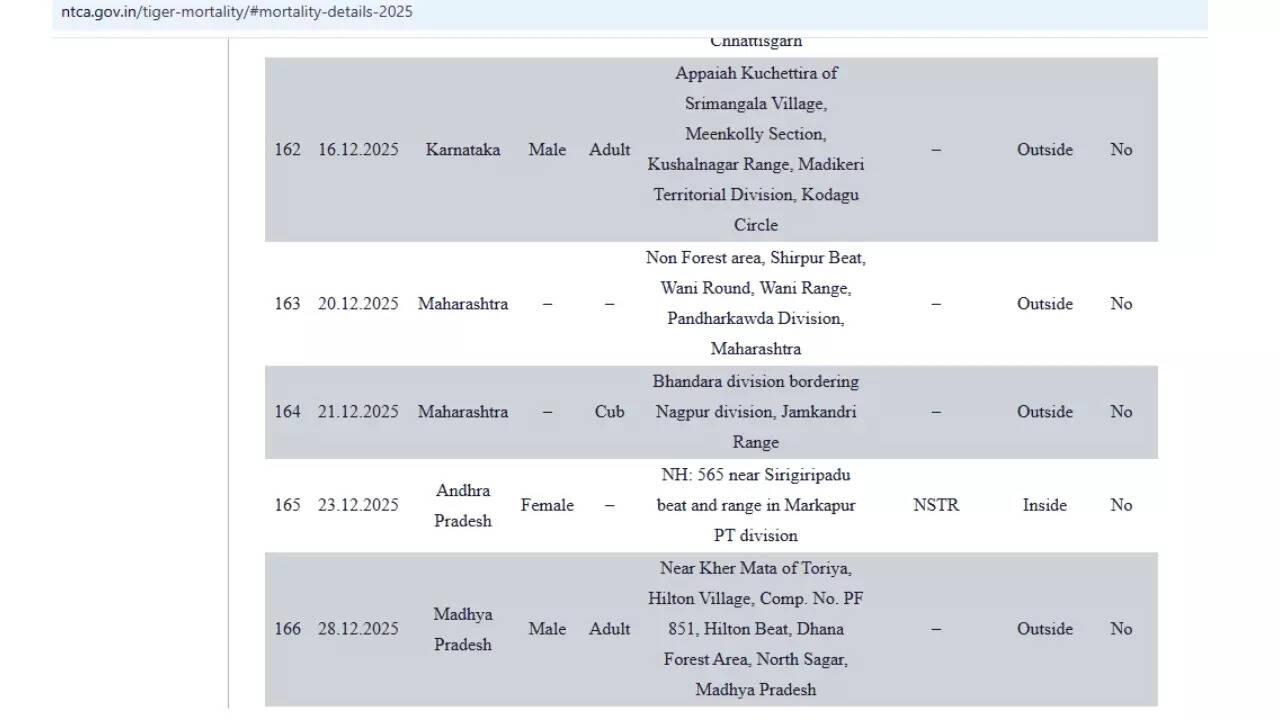
According to the latest figures made available by the National Tiger Conservation Authority (NTCA), India, home to nearly three-fourths of the world’s population of tigers, documented the deaths of as many as 166 tigers in 2025.
The figure has increased by 40 tiger mortalities compared to 2024, when 126 mortalities were reported, according to the latest figures made available by the National Tiger Conservation Authority.
This triggers fresh concerns regarding habitat pressure, territorial competition, and conservation challenges-issues that either stagnated or barely improved amidst overall population growth.
National Tiger Conservation Authority
According to NTCA data, Madhya Pradesh accounted for the highest death count of 55, while the other major mortalities were reported in Maharashtra at 38 deaths, Kerala at 13, and Assam at 12.Among the total number of tigers lost nationwide, 31 were cubs.
But why did 166 tigers die in India in 2025?
As per the report, and others published by several media outlets like The Hindu, and Deccan Herald, territorial pressure is emerging as a key factor behind the majority of these deaths.
National Tiger Conservation Authority
As per these reports, wildlife experts are of the view that territorial infighting caused by space constraints has emerged as one of the major contributors to tiger deaths. Increase in the tiger’s population has also brought out certain challenges, fight for space being one of those challenges.
Madhya Pradesh, in particular, has witnessed an unprecedented surge in tiger numbers over the last decade.Official figures show that the state’s tiger population rose from 308 in 2014 to 526 in 2018, and further increased to 785 in 2022, reflecting nearly a 60 percent rise since 2014. Experts argue that this rapid growth has intensified competition, especially in core forest areas.
Timeline of tiger fatalities in 2025
The NTCA data further provides details on the sequence of tiger deaths reported in the year.
The first reported tiger death in 2025 was from January 2, which was from the Bramhapuri forest division in Maharashtra, and it was an adult male tiger that was found dead. Subsequent to this, an adult female tiger died in Pench Tiger Reserve, Madhya Pradesh, three days after. The last reported tiger death was an adult male tiger that was found in North Sagar, Madhya Pradesh, on December 28.
This ended what has been an ongoing series of tiger deaths. Coming back to the reason behind the demise of these big cats, a majority of the tiger deaths recorded in Madhya Pradesh were due to natural causes.
However, a few were linked to poaching as well. Apart from natural and poaching, seven cases involved deaths due to electrocution.Forest officials say that young tigers and dispersing sub-adults remain the most vulnerable. Tiger cubs typically stay with their mothers for around 20 months, after which they begin dispersing, particularly males, in search of new territories. This phase often brings them into direct conflict with established adult tigers.It is significant to highlight the fact that forest corridors are being fragmented, and human dominated habitats are also limiting free movement. This information hints at the challenge of connectivity, as it might be a concern even inside the protected habitats, with the movement of tigers towards a less populated region being a challenge. The tiger conservation projects in India have been recognized and acknowledged all around the world.As revealed in the last official all-India tiger estimation on International Tiger Day in 2023, the tiger numbers in India have increased from 2,967 in 2018 to 3,682 in 2022, showing an annual growth rate of around 6 percent. It has been revealed that India safeguards close to 75 percent of all the total tiger population all around the world. Therefore, with the rise in the tiger population, the need for proper habitats, reducing conflict between human populations and tigers, and the establishment of ecological corridors is becoming all the more imperative.









 English (US) ·