

 1 day ago
5
1 day ago
5
ARTICLE AD BOX
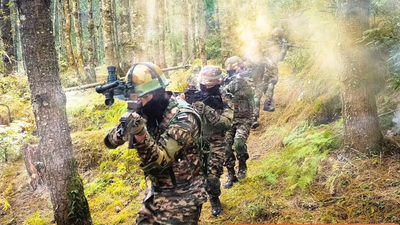
Understanding the Indian Army hierarchy from JCOs to senior officers. (Photo: indianarmy.adgpi/Instagram)
The Indian Army operates under a hierarchical system comprising three distinct categories that define progression from entry-level positions to the highest command. This framework, inherited from the British Indian Army and adapted over decades, establishes clear pathways for personnel advancement through commissioned officers, junior commissioned officers, and other ranks.Understanding this structure proves essential for aspirants seeking military careers and citizens interested in how the nation's largest defence force organises its personnel. The system balances tradition with operational requirements, creating defined roles at every level of command.Commissioned officers hold command authorityField Marshal represents the honorary five-star rank, bestowed only twice in Indian history.
Below this ceremonial position, four operational tiers manage strategic and tactical operations. General, Lieutenant General, Major General, and Brigadier constitute the general officer ranks, whilst Colonel through Lieutenant form the field-grade and junior officer positions.Officers enter through the National Defence Academy, Indian Military Academy, or direct entry schemes. Captain represents the standard rank for junior officers, with Major following after approximately six years of service.
Lieutenant Colonel typically commands battalions, whilst Colonels serve in staff and administrative capacities.Junior commissioned officers bridge leadership gaps
| Category | Ranks | Function |
| Commissioned Officers | Field Marshal to Lieutenant | Command, leadership, and strategic roles |
| Junior Commissioned Officers (JCOs) | Subedar Major, Subedar, Naib Subedar | Act as a bridge between officers and troops |
| Other Ranks (ORs) | Havildar Major to Sepoy | Operational duties and support functions |
Commissioned Officers:• Field Marshal (honorary, five-star rank - only awarded twice in history)• General (four-star)• Lieutenant General (three-star)• Major General (two-star)• Brigadier (one-star)• Colonel• Lieutenant Colonel• Major• Captain• LieutenantJunior Commissioned Officers (JCOs):• Subedar Major• Subedar• Naib SubedarNon-Commissioned Officers (NCOs) and Other Ranks:• Havildar Major (Company Havildar Major in some regiments)• Havildar• Naik• Lance Naik• Sepoy (or equivalent like Rifleman, Gunner, Sapper, Sowar depending on the regiment)Junior commissioned officers occupy a distinctive position within the Indian Army's structure.
Subedar Major, Subedar, and Naib Subedar serve as experienced leaders who've progressed from the ranks. They maintain discipline, provide tactical guidance, and ensure smooth operations at company and battalion levels.These ranks reflect years of field experience. A Subedar Major typically serves as the senior-most JCO in a battalion, advising the commanding officer on matters affecting enlisted personnel.Non-commissioned officers execute ground operationsThe backbone of operational capability rests with NCOs and other ranks. Havildar Major holds seniority amongst NCOs, followed by Havildar, Naik, and Lance Naik. These personnel lead sections and squads, directly supervising troops during training and operations.Sepoy represents the entry-level rank, though designations vary across regiments. Infantry units use Rifleman, artillery employs Gunner, engineers designate Sapper, and cavalry regiments call them Sowar.
Regardless of title, these soldiers form the foundation of combat strength.Promotion through these ranks depends on time in service, performance evaluations, and completion of mandatory training courses. The structure ensures experienced personnel guide newer recruits whilst maintaining clear chains of command from the smallest unit to army headquarters.







 English (US) ·