

 1 hour ago
4
1 hour ago
4
ARTICLE AD BOX
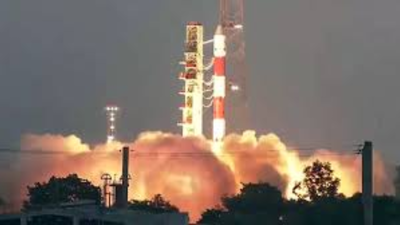
BENGALURU: Any space agency will tell you that every rocket launch comes with anxious moments, no matter what the record is. Yet, India's Polar Satellite Launch Vehicle (PSLV) failing twice in consecutive attempts won't be easy for Isro to digest given its workhorse's record. PSLV has had 64 missions, of which four, including Monday's PSLV-C62, failed to put the spacecraft in orbit, and one in 1997 placed the payload on a lower orbit than the intended one. When a launcher is seen as proven, scrutiny can soften. But back-to-back failures need to be treated as a structural warning - not bad luck - as they suggest deeper issues, whether with quality control, supply chains, testing protocols, or configuration management. When PSLV-C61 failed last year, it brought down the rocket's success rate from 95.2% to 93.7%. Now, it has slipped further. Isro told TOI on Monday that the failures have affected the collective morale of the team. "It would have been different if any other launcher failed, but a PSLV failure worries us," said a scientist. An analysis of setbacks shows that PSLV-C62's failure could have been caused by unresolved issues from the failed PSLV-C61 on May 18, 2025.
In both cases, PS3, or the third stage - a solid motor that provides a high-energy boost after the second stage burnout - suffered a glitch. While Isro has not made the previous failure analysis committee (FAC) report public, TOI has learnt there was a fall in chamber pressure of the motor case. The PSLV-C62 will now be analysed by another FAC. Isro said there was disturbance in the "roll rate" during the final stages of PS3 burning on Monday, and that caused a deviation. Failures before 2025 all point to different glitches. The first setback was on Sept 20, 1993 when PSLV-D1, the rocket's first mission, failed due to a guidance system error during the separation of PS2 (a liquid stage). Isro launched again on Oct 15, 1994, and thereon PSLV showed no glitch until Sept 29, 1997, when PSLV-C1 mission became a "partial success". Here, the pressure regulator on PS4 (which uses twin liquid engines) failed, resulting in the satellite being placed in a lower-than-intended orbit. The 1997 glitch has not repeated. The next failure came 20 years later, in Aug 2017, when the PSLV-C39 mission failed. In this case, the problem was with the heat shield, which has since been rectified. After the PSLV-C39 mission, the launch vehicle had 21 successful flights before the failure last year, followed by Monday's.





 English (US) ·