

 3 hours ago
4
3 hours ago
4
ARTICLE AD BOX
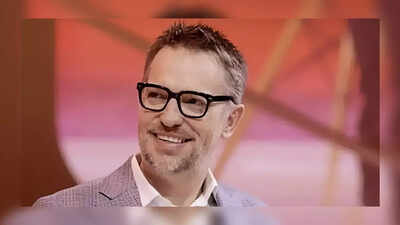
LinkedIn CEO Ryan Roslansky dismisses traditional five-year career plans as outdated, advocating for short-term learning and experience goals instead. He cites rapid technological advancements and economic volatility, supported by World Economic Forum data on skill transformation. Roslansky emphasises taking control of one's career through immediate skill acquisition and specific experiences, a philosophy he explores on his podcast, 'The Path'.
LinkedIn CEO Ryan Roslansky stated that traditional five-year career plans are "outdated" and "a little bit foolish" in the current labour market. Speaking on the "No One Knows What They’re Doing" podcast, Roslansky noted that "with technology and the labour market and everything is moving beneath you," professionals should instead prioritise short-term objectives. He advised that rather than following a fixed long-term path, “I would much recommend people focus on maybe the next few months and a couple of things that aren’t a plan, but [rather] what do you want to learn? What type of experiences do you want to get? That’s, I think, the right mental model in this environment."Roslansky, who has led the professional networking platform since 2020, attributes this shift in strategy to the rapid pace of workplace transformation driven by artificial intelligence (AI) and economic volatility. This perspective is supported by World Economic Forum data, which suggests that roughly 39% of core worker skills will be transformed or become obsolete by 2030. Given these shifts, Roslansky argued that focusing on immediate skill acquisition and specific experiences is more effective than attempting to chart out the next five years of life.“You’ll hear people frequently say, ‘Hey, you have to have a five-year plan, like, chart out what the next five years of your life are going to look like, and then follow that path and follow that plan. And in reality, when you know technology and the labour market and everything is moving beneath you, I think having a five-year plan is a little bit foolish,” Roslansky said.
Why LinkedIn CEO doesn’t believe in the five-year career growth plan
To compare, some career experts continue to advocate for five-year planning, maintaining that "career growth doesn't just happen by accident" and that more rigorous goal-setting enables people to achieve their objectives.
“Five-year plans also give you the flexibility to change what’s no longer relevant to your long-term goals, without derailing your progress. This way, you’re always working toward what you truly want to achieve,” talent management executive Mary McNevin told Arielle Executive.However, Roslansky's commitment to this philosophy runs so deep that he produces his own podcast, The Path, exploring how professionals navigate diverse, non-linear career trajectories.“A lot of people just believe that there’s some linear career path that you jump on. You know, you graduate high school and then go to a certain college and then you become a consultant and then get an MBA. People believe that’s how it happens,” Roslansky added.Drawing on LinkedIn data, Roslansky understands that a straight-line education and career path isn't a reality for most people. A recent report from job training provider TAFE Gippsland shows that people typically change careers three to seven times in their lives and switch jobs 16 times.This pattern is evident among Gen Z workers, who change jobs on average every 1.1 years, according to a recent report by recruiting firm Randstad. The company calls this "growth-hunting," not "job-hopping," because Gen Z says they switch jobs when they feel stuck or don't see opportunities to move forward in their current roles.“If you focus on those shorter steps, gaining learning, gaining experience, a lot of your career path will open up for you. And the sooner you realise that, you can take your own career into your own hands. No one is trying to figure this out for you,” Roslansky explained.



 English (US) ·