

 1 hour ago
3
1 hour ago
3
ARTICLE AD BOX
Makar Sankranti is celebrated every year around January 14. Makar Sankranti is known by different names in various regions — such as Pongal, Lohri, Magh Bihu, and Khichdi across India, marks a major seasonal transition. This year, too, it falls on Wednesday, January 14. Being a harvest festival, it holds special importance in the agrarian community.
Unlike most Hindu festivals that follow the lunar calendar, Makar Sankranti is based on the solar cycle. Hence, it falls on almost the same date annually. In some parts of the country, the festival is observed a day later. This happens mostly on leap years.
 The festival marks the Sun’s movement into the Capricorn (Makara) zodiac symbol and the beginning of its northward journey, known as Uttarayan. This point is seen as the end of winter and the approach of the warmer days of spring. This symbolises longer days, renewed energy, and the start of a new agricultural cycle. Traditionally, it is a time of gratitude for harvest and a celebration of nature’s abundance.
Story continues below this ad
ALSO READ | Art and Culture with Devdutt Pattanaik | Stories behind diverse calendars of India
Cultural significance of Makar Sankranti
The festival is rich in cultural and mythological significance. For farming communities, Makar Sankranti is closely linked to the completion of the harvest of crops such as rice, wheat, and sugarcane. The festival reflects a deep bond between people and the land, with prayers offered to the Sun God for sustaining life and ensuring prosperity.
Story continues below this ad
Many also observe the day with ritual baths in sacred rivers, early morning prayers and acts of charity, which are believed to bring peace, good fortune and spiritual merit.
The festival is also deeply rooted in mythology. According to legend, Sankranti is worshipped as the Goddess who defeated the demon Sankarasur. The day also holds importance in Hindu tradition as the beginning of an auspicious period. In the Mahabharat, Bheeshma Pitamah is said to have chosen to leave his mortal body (iccha mrityu) during Uttarayan, a period believed to grant liberation.
Varied celebrations across India
Celebrations vary widely across regions. In Maharashtra and Karnataka, people exchange sesame and jaggery sweets with the message of speaking kindly and strengthening bonds. In Tamil Nadu, the four-day Pongal festival begins with Bhogi, followed by the main Pongal day and Mattu Pongal, which honours cattle for their role in farming. Homes are decorated with colourful kolams, and special prayers are offered at temples.
Story continues below this ad
In Punjab and parts of northern India, Lohri is marked with bonfires, around which people gather to sing, dance and offer groundnuts and sweets to the fire. In Bihar, the festival is called Khichdi, named after the traditional rice and lentil dish prepared on the day.
In Assam, Makar Sankranti is also Bhogali Bihu (referring to bhog or food offering) or Magh Bihu (month of Magh in Assamese calendar). The night before, people build structures with hay and bamboo called meji. These are lit as bonfires on Bihu. Feasts with fish and meat are common. In several cities and towns, there are specific fish festivals held during this time. Assamese delicacies like pitha (rice cakes), laru (sweets), and jolpan (flattened rice with cream/yogurt) are served on the day of Bihu.
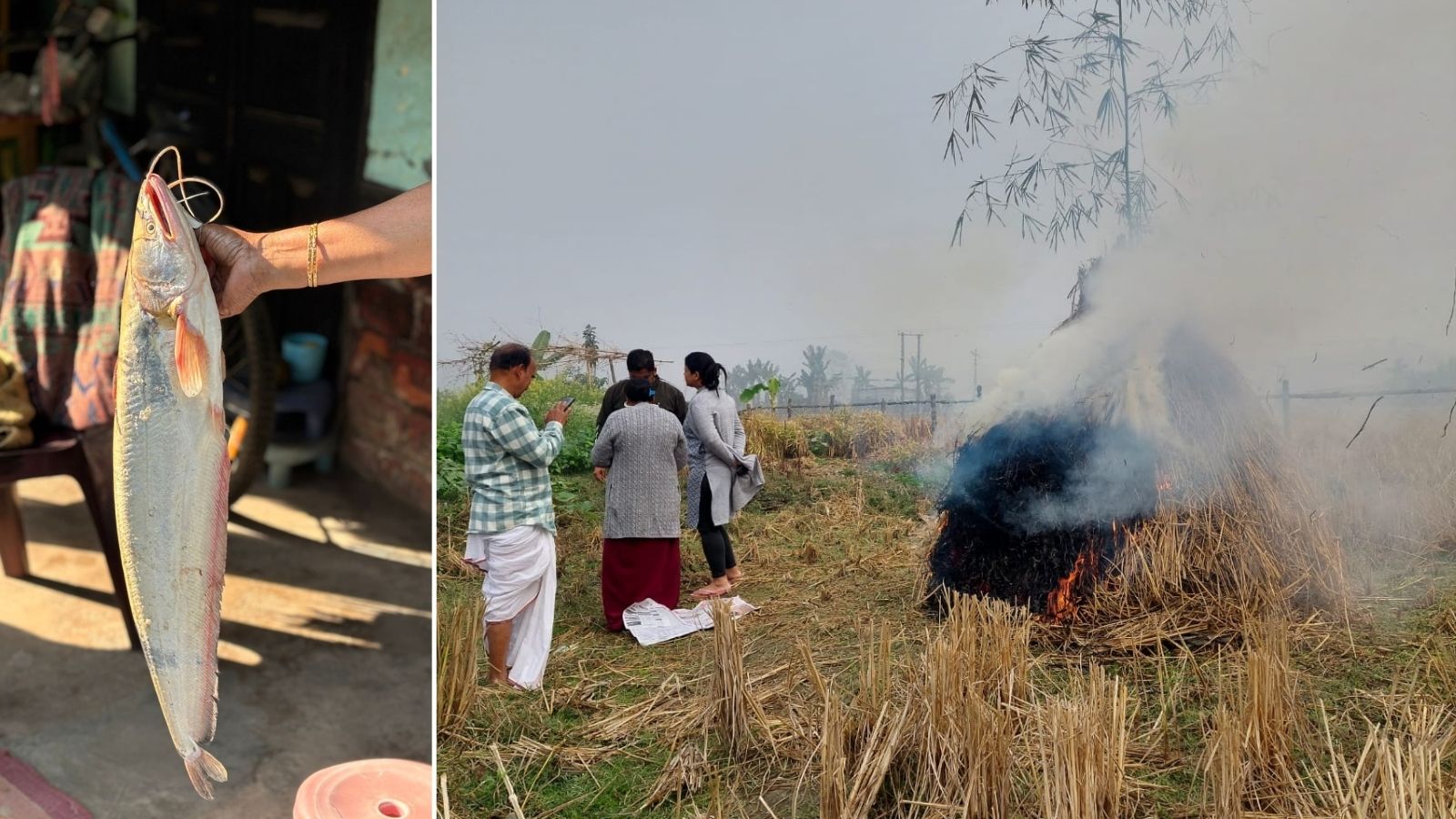 Fish is common in Assamese feasts during Bihu; a meji being set on fire on Bihu (Photo: Special arrangement)
In Bengal, the festival is known as Poush Sankranti. Delicacies with jaggery and pitha are a must. The Ganga Sagar mela is also held in this week and on Makar Sankranti, people take a dip in the Ganga
Story continues below this ad
In Rajasthan and Gujarat, kite-flying fills the skies, with Ahmedabad hosting an annual international kite festival.
Food is central to the celebrations, with sweet dishes made from sesame seeds, jaggery and rice prepared across households. Tilgul laddoos, chikkis, gul poli, pongal, payasam and khichdi are among the many festive delicacies enjoyed during the season. These foods are not only symbolic of warmth and sweetness in relationships but are also considered nourishing during winter.
ALSO READ | Six places where Makar Sankranti is celebrated with fervour
Story continues below this ad
Makar Sankranti is also a festival that carries a strong social message. The tradition of exchanging sweets and visiting friends and neighbours reflects the values of sharing, goodwill and harmony. In many places, women and children go door-to-door exchanging plates of sugarcane, sesame-jaggery mixtures and sweets, spreading joy within the community.
Beyond its religious and cultural importance, the festival highlights humanity’s connection with nature and the changing seasons. It serves as a reminder of gratitude for the harvest, respect for the environment and the importance of unity.







 English (US) ·