

 1 week ago
6
1 week ago
6
ARTICLE AD BOX
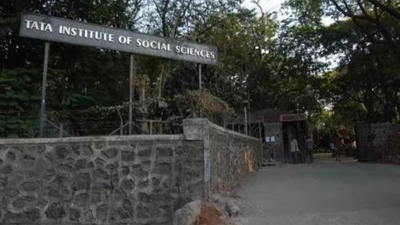
MUMBAI: A lively online classroom of 50 students, including a five-year-old boy -- who asked more curious questions than his mother who had enrolled -- and a retired executive aged 80, made up the first edition of the TISS Parzor Academic Programme for Zoroastrian Studies this past year.The outcome was enriching and rewarding beyond academics. A non-Parsi student, Pradnya, went on to design Avesta calligraphy with pronunciation on Instagram, guided by a Parsi priest in Tehran. Her classmate Gabrielle of Bologna studied the water of the Parsi Tankas of Bharuch. And Ervad (priest) Fatakia, curator of the Alpaiwala Parsi Museum, finds he can execute his role better and answer questions with greater ease.The second edition of the TISS Parzor programme is scheduled to begin this week. Course creator Shernaz Cama, a professor of 40 years from Delhi University, has curated a full certificate course as well as smaller modules for students who can join online from anywhere in the world.She said, "The course is extendable over two years under the National Education Policy (NEP). It is useful for anyone who wants international credits.
The programme enlists international teachers like Dr Sarah Stewart and Dr Almut Hintze of SOAS and Abhimanyu Acharya of Ontario."Coomi Vevaina, prof of literature at Mumbai University, who has written a book for Sahitya Akademi on Parsi contribution to Indian literature, said, "I curated a course on poetry, fiction, drama and cinema. We brought writers and film makers to present their own works. Sooni Taraporevala spoke on 'Little Zizou' and Anosh Irani on 'Dahanu Road'.
Dina Mehta's daughter introduced 'Brides Are Not for Burning'. Harish Nambiar taught Adil Jussawalla's poetry and Arundhati Subramaniam taught Keki Daruwalla's poems.
" One scholarship student, Sakshi of Delhi University, has already secured a job with a heritage company. She said, "I am deeply interested in multiculturalism, and had done research on Buddhism, Hinduism and Islam. However Zoroastrianism was completely new to me.
I had some reservations -- but the classroom turned out so diverse and exciting! There were students my age as well as retired professionals who were willing to learn and contribute.
Some came simply to have conversations. It was never about earning a certificate or degree -- just an easy, slow, natural process of learning." As Sakshi studied Zoroastrian demographics, culture and script, she was drawn in by the Delhi Parsi Anjuman.
"They invited me to their events and I felt I always belonged there," she said.Course convenor Kerman Daruwalla says 27 students opted for the full course while others picked short modules. "We teach Parsi Zoroastrian history, culture and heritage, cinema, theatre and demographics -- tangible and intangible heritage. Our main USP is having experts for all subjects like Almut Hintze of London for the Avestan language, which is the language of the Zoroastrian scriptures.
Almut is among a handful of top scholars in Avestan.
One cannot get an opportunity like this unless one enrols in her class at London University. Across 10 courses we had 50-60 guest experts including authors, poets, actors and writers, so students were learning directly from the creator," he said.Scholarships are available this year too. Cama says they heeded feedback about the content being too intensive, so now courses will run sequentially not simultaneously.








 English (US) ·