

 2 hours ago
5
2 hours ago
5
ARTICLE AD BOX
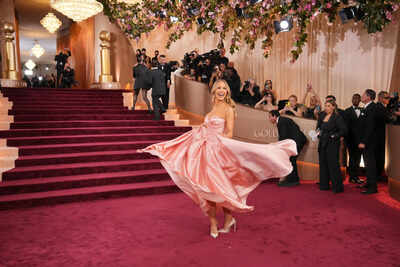
Nikki Glaser arrives at the 83rd Golden Globes on Sunday, Jan. 11, 2026, at the Beverly Hilton in Beverly Hills, Calif. (Photo by Jordan Strauss/Invision/AP)
Ricky Gervais once walked onto the Golden Globes stage and committed a small act of heresy. He looked at Hollywood’s finest, glittering in tuxedos and gowns, and treated them not like royalty but like a room full of people who knew exactly what kind of circus they were part of.
He mocked their virtue-signalling, their self-importance, their strange habit of lecturing the world while living inside gated bubbles. The room laughed because it was caught.That moment broke awards-show comedy. After Gervais, the polite era was over. Hosts could no longer just praise films and thank sponsors. They had to deal with the fact that the audience now expected honesty, or at least the illusion of it.Most failed.Then Nikki Glaser walked in and did something smarter than burning the place down. She made the room laugh at itself without making it hate her for it.
Glaser’s monologues live in the same universe as Gervais’s. She roasts the famous. She points at power. She refuses to pretend that Hollywood is a temple of virtue. But the tone is different. Where Gervais was a wrecking ball, Glaser is a precision instrument.
She opens with jokes that sound light but are doing something else underneath. At the Globes she looked out at the crowd and said, “There are so many A-listers here tonight, and by A-listers I mean people who are on a list that’s been heavily redacted.” It gets a laugh, but it also slips a quiet truth into the room: fame today is always walking alongside scandal, rumour and secrecy.She followed it with something even riskier. “And the award for most editing goes to… CBS News.
America’s newest place to see B.S. news.” That joke was not about left or right. It was about the way modern media reshapes reality into something smoother, safer and more convenient. In a room full of studio bosses and network executives, it landed because everyone recognised the target.Then she turned to Leonardo DiCaprio, one of the most untouchable stars in the room, and said he had achieved everything “before your girlfriend turned thirty.”
When the audience gasped, she did not retreat. She smiled and added, “I’m sorry, it’s cheap, we know, but we don’t know anything else about you.” Then she went further: “The most in-depth interview you’ve ever given was Teen Beat magazine in 1991. Is your favourite food still pasta, pasta and more pasta?” Even DiCaprio laughed, because Glaser had turned a tabloid cliché into a moment of shared recognition.That is the difference between her and Gervais. Gervais exposed Hollywood by attacking it.
Glaser exposes it by making it confess.She does the same thing with her film jokes. When she ran through the season’s movie titles and quipped that “Wicked, Queer, Nightbitch” sounded like something Ben Affleck might yell after climaxing, it was absurd, juvenile and also strangely accurate. It cut through months of prestige-cinema reverence in one vulgar burst of truth.Even when she flirted with scandal, she wrapped it in charm.
A cheeky innuendo about Michael B. Jordan drew laughter, groans and a visible eye-roll from his mother in the audience, which only made it funnier. The room did not feel attacked. It felt entertained.Glaser understands something that many hosts miss. Awards shows are not about art. They are about myth. They exist to sell the idea that Hollywood is glamorous, meaningful and slightly magical. If you attack that myth too hard, the room closes ranks.
If you flatter it too much, the audience switches off.Her genius is that she lets the myth stand while poking holes in it.Ricky Gervais walked into the Golden Globes and told everyone the emperor had no clothes. Nikki Glaser walks in and says, we all know the emperor is naked, so let’s laugh about it together.That is why she is winning this moment. She is not just roasting Hollywood. She is speaking its language back to it, sharper, funnier and more honest than it expects.In an era when awards shows are desperate to feel relevant again, Nikki Glaser has done something rare. She has made the monologue dangerous without making it mean.
Nikki Glaser Opening Monologue | 83rd Annual Golden Globes
That is how you become the new monologue queen.








 English (US) ·