

ARTICLE AD BOX
India CSR editor joins media delegation to observe how experiential STEM learning is transforming science and mathematics education for girls in government schools
RANCHI, Jharkhand (India CSR): Rusen Kumar, renowned CSR and Sustainability journalist and Editor of India CSR Network, visited Jharkhand as part of a media delegation to witness the on-ground impact of the UNICEF-BMW STEM partnership. The three-day visit, held from March 16 to 18, focused on understanding how the initiative is strengthening science and mathematics learning, especially for girls, through curriculum-linked experiential learning in government schools.
The delegation brought together representatives from BMW India, UNICEF India, and the media. From BMW India, the visiting team included Vinod Pandey, Director – Government and External Affairs, Customer Service Representative, BMW India, and Ms. Stuti Sehgal from BMW India’s PR agency. The UNICEF team included Dr. Saadhna Panday, Chief Education, UNICEF India, Parul Sharma, Education Specialist, UNICEF Ranchi, Sayem Mehmood, Education Specialist, UNICEF India, Radhika Srivastava, Partnerships Specialist, UNICEF India, and Sonia Sarkar, Communication Officer (Media), UNICEF India. Rusen Kumar joined the visit alongside a journalist from The Times of India.
Throughout the Jharkhand visit, Rusen Kumar engaged with students, teachers, school leaders, district education officials, and senior government functionaries, gaining valuable first-hand understanding of the on-ground impact of the UNICEF-BMW STEM initiative on science and mathematics learning in government schools, particularly among adolescent girls.
ADVERTISEMENT
Focus on STEM education for girls
The visit was designed to demonstrate how the UNICEF-BMW partnership is helping improve science and mathematics learning in government schools. The initiative places special emphasis on girls and promotes practical, curriculum-linked and experiential learning methods that make classrooms more engaging and effective.
The programme briefing in Ranchi began with a welcome by Dr. Kaninika Mitra, Chief Field Office, UNICEF Ranchi, followed by an overview of the Jharkhand education context, UNICEF’s education programme, and the national and state picture of the BMW-supported initiative. The delegation also interacted with the implementation partner STARS Forum (Vigyan Ashram) to understand the journey of strengthening STEM education in India and the challenges involved in implementation.

School visits in Ranchi district
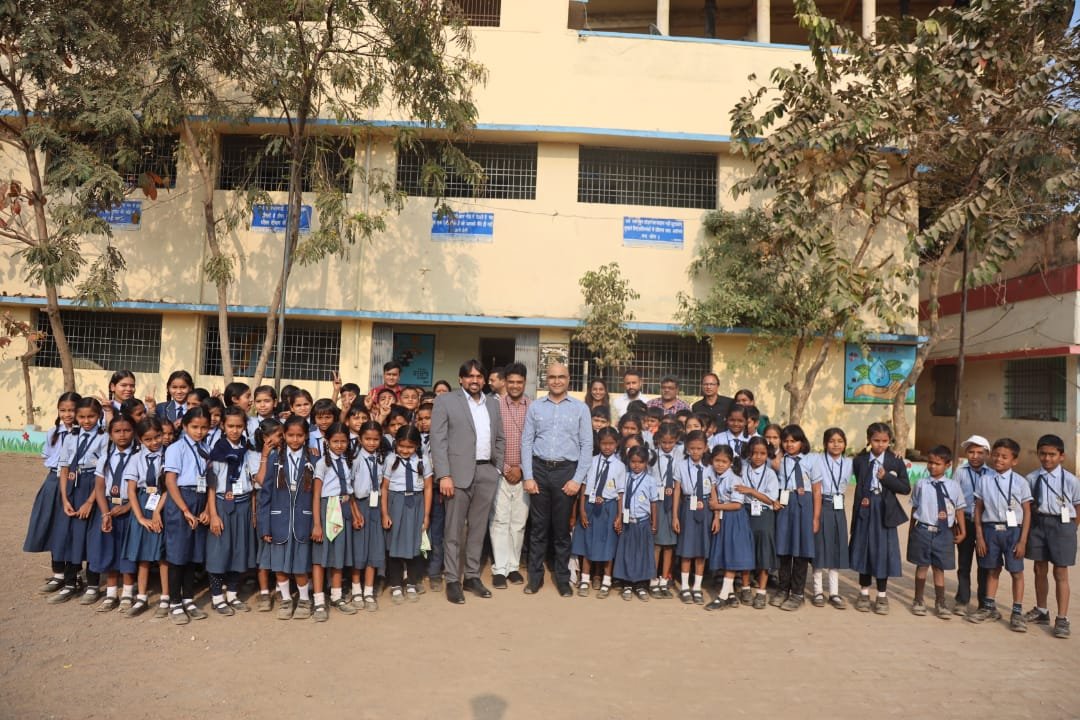
A key highlight of the visit was the field exposure to schools where the STEM intervention is already making a visible difference. On the second day, Rusen Kumar visited Kasturba Gandhi Balika Vidyalaya (KGBV), Chanho, Ranchi, where the delegation observed Grade 9 mathematics and science lessons and engaged directly with students. The interaction offered an important view of how classroom observation and student participation are shaping a more confident learning environment for girls.
Later, the delegation visited Jharkhand Balika Aawasiya Vidyalaya (JBAV), Itki, Ranchi, where girls from Grades 6 to 10 demonstrated textbook-based experiments in the STEM lab. The sessions showed how laboratory-based learning is enabling students to connect theory with practice and participate actively in science education.
 The delegation brought together representatives from BMW India, UNICEF India, and the media.
 Engagement with government stakeholders
Another important part of the visit was a meeting with the Education Secretary, where discussions focused on programme progress, the efforts of the Jharkhand government, and future areas of collaboration. The interaction underlined the importance of government support and institutional partnership in scaling meaningful STEM education reforms.
STEM fair showcases wider impact
On the final day, Rusen Kumar attended a STEM fair at Bariatu Government Girls’ High School in Ranchi, which served as the host school for participation from seven other districts. Girls from Grades 6 to 10 demonstrated experiments in the STEM lab, giving the delegation a broader understanding of the programme’s reach and its growing influence across districts. The fair also included experience-sharing sessions with school heads, district-level education officials, and teachers.
A field visit with a larger purpose
Rusen Kumar’s visit to Jharkhand reflects the growing importance of collaborative efforts between development institutions, the corporate sector, and public education systems. The UNICEF-BMW STEM initiative offers a practical example of how focused partnerships can improve learning outcomes, encourage scientific curiosity, and expand opportunities for girls in government schools. Through classroom engagement, lab demonstrations, and stakeholder dialogue, the visit highlighted a model of education intervention that is both locally rooted and future-oriented.
ADVERTISEMENT

ADVERTISEMENT

ADVERTISEMENT

ADVERTISEMENT






 English (US) ·