

 6 hours ago
5
6 hours ago
5
ARTICLE AD BOX
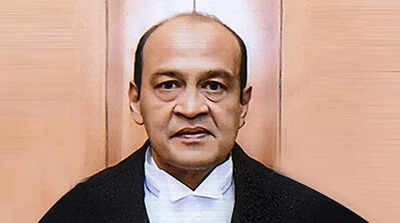
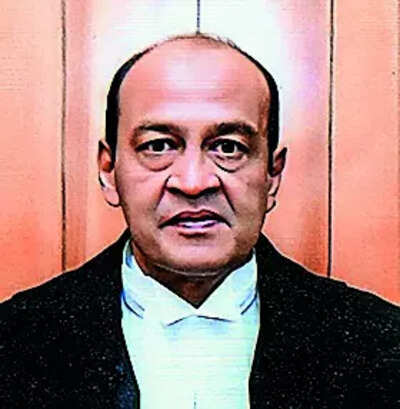
Impeachment Panel Validity Challenged
New Delhi: Supreme Court on Wednesday agreed to examine Allahabad high court judge Justice Yashwant Varma's plea challenging validity of Lok Sabha speaker's decision to constitute a three-member committee for his impeachment initiated in the aftermath of the discovery of unaccounted cash currencies at his official residence.
It issued notices to Lok Sabha and Rajya Sabha secretariats.The HC judge pointed out a procedural lapse on the part of the speaker to constitute a three-member committee against him. Appearing before a bench of Justices Dipankar Datta and A G Masih, former attorney general Mukul Rohatgi submitted that despite impeachment notices being moved both in the LS and RS, the speaker proceeded to constitute the committee on his own, without waiting for the Rajya Sabha chairman's decision on admission of the motion or holding the mandatory joint consultation.
Referring to The Judges (Inquiry) Act, Rohatgi said the committee has to be constituted jointly by the speaker and the chairman when notices of an impeachment motion are given to both the Houses on the same day.As per the Act, "Where notices of a motion (for the removal of a Judge) referred to in sub-section (1) are given on the same day in both Houses of Parliament, no committee shall be constituted unless the motion has been admitted in both Houses and where such motion has been admitted in both Houses, the committee shall be constituted jointly by the speaker and the chairman".
It also said where notices of a motion are given in the Houses of Parliament on different dates, the notice which is given later shall stand rejected.
The bench, after going through the provision, observed why this point was not raised by legal experts who are members of Parliament. "So many MPs and legal experts but no one pointed this out?" SC said. The judge in his petition filed through advocate Vaibhav Niti, said the speaker acted in clear derogation of the proviso to Section 3(2) of the Judges (Inquiry) Act, 1968, by unilaterally constituting a committee on Aug 12 after admitting a motion given before LS on July 21 as on the very same day a separate motion was given in RS which had not been admitted."In brief, the above action and all consequential actions are impugned as being contrary to the peremptory prescription contained in the first proviso to Section 3(2) Judges (Inquiry) Act, 1968 because although notices of motion under Section 3(1) of the Judges (Inquiry) Act, 1968 were given in both Houses of Parliament on the same day, the speaker constituted the committee unilaterally without awaiting admission of the motion by the chairman and the joint consultation with the chairman as contemplated in that statute," it said.
MPs gave separate motions before LS and RS on July 27, seeking removal of the petitioner as a judge. Both motions met the statutory numerical requirement.Thereafter, on Aug 12 the speaker said he was admitting the motion given before him and constituting a three-member committee as envisaged under the Judges (Inquiry) Act, 1968 to conduct the statutory inquiry.






 English (US) ·