

 2 hours ago
5
2 hours ago
5
ARTICLE AD BOX
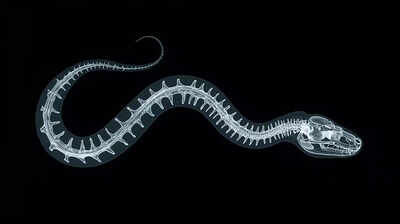
One afternoon, you read a paper title and pause, not because it is complex, but because it sounds wrong. Right-handed snakes. The idea lingers. Snakes do not write or throw balls. They slide and strike.
Yet somewhere in their skulls, choices have been made. A study from 2007 does not rush this point. It circles it. In forests where snails cling to leaves, a snake feeds with care. It does not grab at random. It approaches from one side more than the other. This is not a preference in the human sense. It is a shape meeting a shape. Teeth meeting shell. Over time, differences settle into habit. Then habit becomes structure. What looks like a curiosity turns out to be a rule written into bone.
This snake is right-handed, and snails might be the reason behind it
According to the study, 'Right-handed snakes: convergent evolution of asymmetry for functional specialisation', published on PubMed Central, if you look at the skull of Iwasaki’s snail eater under an X-ray, the imbalance is hard to miss. The right side of the jaw carries more teeth than the left. It is not dramatic, but it is enough to matter. These snakes do not crush shells. They ease soft bodies out, working patiently along the opening.
More teeth on one side give more grip and more control. It is not about strength. It is about fit. The snake does what works, and what works stays.
Over generations, the jaw shifts slightly. No plan. No intention. Just use it repeatedly until it becomes a form.
Most snails twist the same way
Snails, it turns out, are mostly right-handed too, though no one calls them that. The majority of species coil their shells to the right. It is simply how their bodies grow.
There are exceptions, rare ones, but they stand out. This shared direction shapes the world around them. Predators adapt to the common form, not the odd one. For a snail-eating snake, the right coiled shell becomes familiar terrain. The angle of entry, the resistance encountered, and the path taken inside are all important factors.
Over time, the snake learns the shell without thinking. The shell sets the terms. The snake follows.
This happens when snakes meet left-coiled snails
To see if this mattered, researchers watched four snakes feed. They were offered right coiled snails and left coiled ones. The difference was clear. Right coiled snails were eaten faster. Fewer jaw movements. Less struggle. The left coiled snails caused trouble. The snakes hesitated. Their usual method failed. Some snails escaped altogether, which in the lab meant surviving for a week after the attempt. It is an awkward outcome for a predator.
The snake was not weaker. It was simply tuned to a different shape. Familiarity had limits.
Being different help these prey survive
This imbalance cuts both ways. What helps the snake hurts the snail, unless the snail breaks the pattern. Left-coiled snails seem to gain a small edge, at least against predators shaped by the majority. A separate study found that these left-handed snails survived crab attacks more often too. Being rare can be risky, but it can also confuse expectations. Jeremy, the left-coiled snail, became famous for struggling to find a mate.
Survival and reproduction do not always pull in the same direction. Nature does not smooth these tensions out. It leaves them there, uneven, working quietly in the background.





 English (US) ·