

 3 hours ago
5
3 hours ago
5
ARTICLE AD BOX
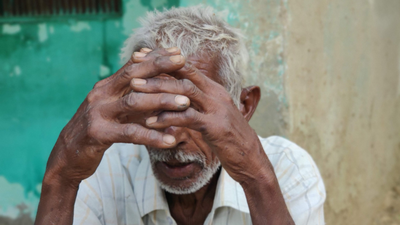
DELHI: An 80-year-old man walked out of his home in Chandauli’s Sayedraja one November morning, telling his family he was going to get his medicines. He never returned.Nearly three weeks later, on Dec 16, his body was found hanging from a mango tree in an orchard on the edge of the village.
The man, Mohan Ram (name changed), had been undergoing treatment for mental illness for several years, claims his family.Ram’s death is not an isolated case.Police records and FIRs from Chandauli district alone show that at least five elderly people have died by suicide over the last four months, most of them above 60. Officials familiar with the cases said the deaths followed a recurring pattern of family conflict, neglect, and financial strain—“parivarik kalah”, “upaksha” and “arthik tangi,” leading to distress and deepening isolation.Several victims were widowed or dependent on relatives, while others were older daily-wage workers who had lost income and mobility. In none of the cases was there evidence of mental health interventions or monitoring prior to the deaths.Mental health professionals warn that such cases reflect a deeper structural failure rather than individual tragedy.“Depression among the elderly is increasing, and it is going to blow up,” said Sanjay Gupta, professor in the department of psychiatry at Banaras Hindu University, roughly 30 km from Chandauli.
“Suicide in the elderly does not come easily. These are people who are mature, who have lived through struggle and hardship. When an elderly person reaches this point, it usually means depression or illness has gone undetected or unsupported for a really long time.”According to Gupta, migration and changing family structures are central to the problem, especially in rural districts. “Children move out for work, return late, or live in other cities altogether.
We still assume parents are quietly sitting at home. This is exactly where depression gets missed,” he said. Symptoms like withdrawal, lack of interest, disturbed sleep, and appetite loss, he added, are often mistaken for “normal” ageing.
“We don’t realise these are warning signs. We ignore them until it’s too late.”Doctors note that unlike diabetes or hypertension, there is no routine mental health screening for older adults in India, allowing depression and cognitive decline to go unnoticed for years.Unlike youth suicides, which often have social or relationship triggers, elderly suicides are more closely linked to biological depression and dementia, Gupta pointed out. “Psychotherapy alone will not work in many cases. Medication is required, but it needs supervision. Even medicines can become dangerous if there is no one to monitor intake.”Doctors caution that depression and dementia in older adults are often conflated: depression surfaces as withdrawal, low mood and sleep or appetite changes, while dementia involves memory loss, confusion and impaired daily functioning, frequently dismissed as ageing, delaying diagnosis and treatment.
India does not yet have a dedicated national dementia plan, despite WHO guidelines urging countries to treat it as a public health priority, leaving the burden largely on families of the elderly.The crisis unfolding in districts like Chandauli mirrors a national trend. According to Sample Registration System (SRS) data, the share of Indians aged 60 and above rose to nearly 9.7% in 2023, signalling a significant demographic transition.However, despite India’s geriatric population projected to double to nearly 20% by 2050, doctors say awareness and infrastructure for elderly care have failed to keep pace with rising lifespans. While psychiatrists focus on diagnosis and treatment, those working directly with older adults point to economic anxiety and everyday disconnection as equally powerful drivers of loneliness.“We see unmistakable signs of loneliness among the elderly,” said Bilal Zaidi, founder of Eldera.io, a platform for older adults across cities and small towns.
“One big reason is that many elders save their whole lives, then face a sudden loss of financial control after retirement, which creates anxiety and isolation.” For Zaidi, loneliness and economic anxiety among the elderly are twin triggers of mental decline.He pointed to a mismatch between the scale of the problem and the design of govt responses. “There are several schemes for elderly healthcare and insurance,” Zaidi said.
“But very little that addresses their economic engagement, social life or sense of purpose. Loneliness is not treated as a policy problem.”Rapid social and technological change has added another layer. “Children now move often, jobs take them far away. For the elderly, daily interactions that once gave them agency, such as visiting the market, hiring an auto, paying bills, have gone digital. If you can’t use these tools, you wait for someone younger to help.
That dependence breeds helplessness and deep isolation.”A Sitaram Bhartia Institute study recently (October 2025) of 300 senior citizens in Delhi underlines the scale of vulnerability: 27% had dementia (7% severe), 20% depression, 40% bone or muscle problems, and 22% frailty—conditions that worsen isolation and suicide risk even as life expectancy rises.Many in that 27% bracket of cognitive decline or depression also struggle with digital exclusion.
They cannot renew or access pensions under schemes like the National Social Assistance Programme (NSAP) because applications now require web logins and phone‑based authentication. Health insurance under Ayushman Bharat or state programmes relies on Aadhaar‑linked OTPs and app logins, systems older adults cannot easily navigate.
Those without supportive relatives often just give up.Lead researcher Dr Harjit Singh Bhatti warned that with 140 million elders set to reach nearly 350 million by 2050, systemic geriatric care “remains deeply inadequate.” The findings make one reality stark: as India ages, longevity is rising faster than preparedness.As police in Chandauli register suicides and families conduct hurried funerals, experts demand geriatric psychiatry wings in every district hospital, annual screenings for those 60+, and family training to spot silent despair.









 English (US) ·