

 1 hour ago
4
1 hour ago
4
ARTICLE AD BOX
By branding Pongal as a "Dravidian festival", Chief Minister M K Stalin has turned a centuries-old harvest celebration into a political statement ahead of the 2026 polls, reopening a familiar debate in Tamil Nadu over culture, identity and where regional pride ends and national tradition begins.
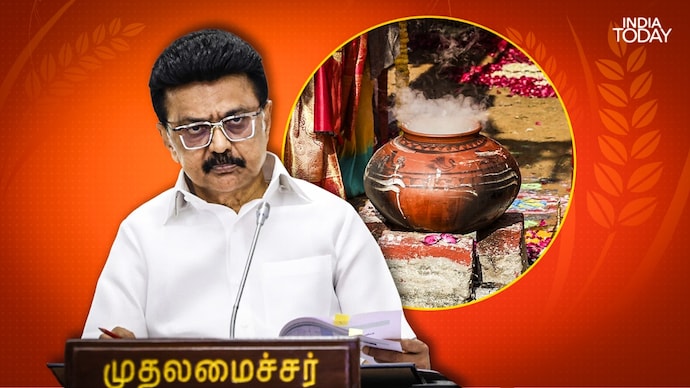
Tamil Nadu Chief Minister M K Stalin brands Pongal a “Dravidian festival” ahead of the 2026 Assembly polls. (Photo: ITG)

Chennai,UPDATED: Jan 14, 2026 17:28 IST
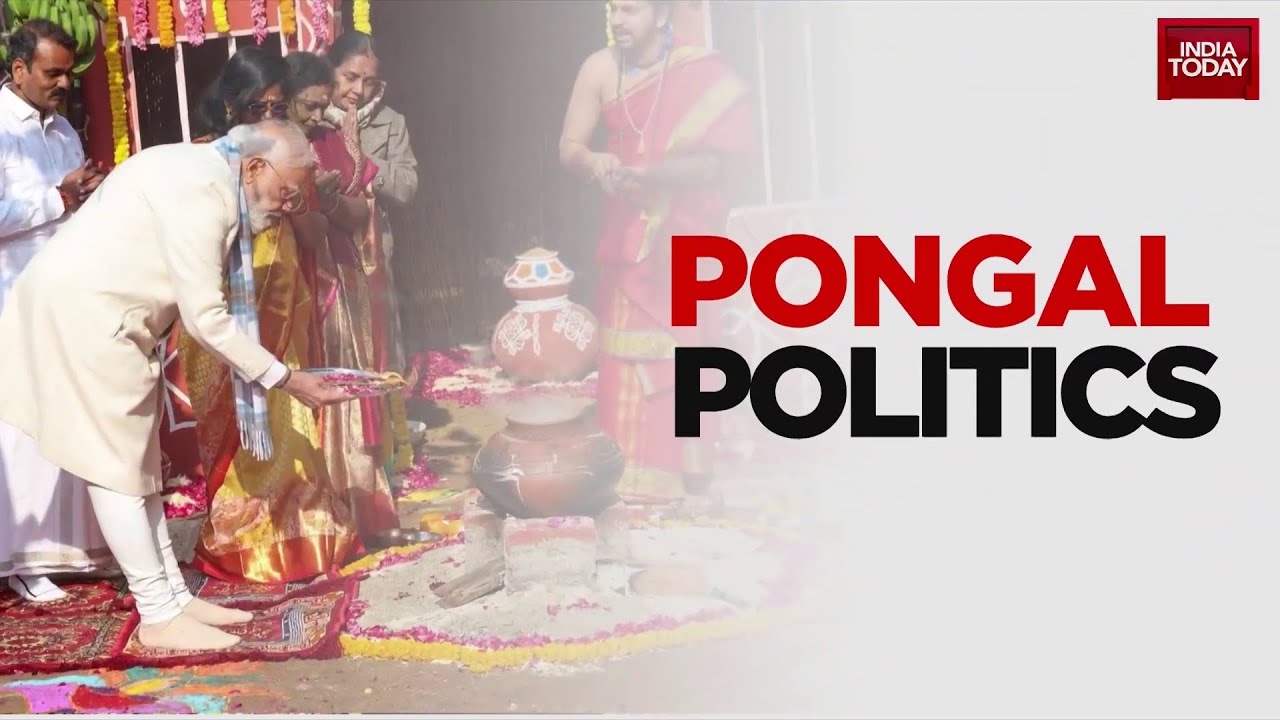
As the steam rises from millions of clay containers across Tamil Nadu this week, the air isn't just thick with the scent of jaggery and cardamom; it’s heavy with the pungent aroma of pre-election posturing. Tamil Nadu Chief Minister MK Stalin has officially stirred the pot, declaring Pongal a "Dravidian festival" of social justice, equality, and distinct cultural identity.
It is a masterstroke of branding, but it raises an embarrassing question for the "rational" kitchen: is the milk boiling over, or is it just the rhetoric?
THE 'DRAVIDIAN' TAG: LABEL OR LIBEL?
First, let’s address the nomenclature. Is it a Dravidian festival or a Tamil festival? For decades, the Dravidian movement has been a master of "cultural eminent domain." By slapping a "Dravidian" sticker on an over 2,000-year-old harvest tradition, the DMK isn't just celebrating a crop; they are planting a flag.
Why say it now? Because 2026 is the year of the ultimate harvest: the Assembly elections. By framing Pongal as a purely Dravidian construct, Stalin is attempting to build a cultural firewall against the "Northern winds" of the BJP and the charisma of new political pot-boilers. It’s a classic defensive play: if you can convince the voter that their very identity is tied to your political model, you don't just win a vote; you win a heritage.
But let’s be honest: calling Pongal "Dravidian" is like calling sunshine "state-sponsored". The festival has roots in the Sangam Age, long before the word "Dravidian" was used to denote a political party. It belongs to the soil, not the Secretariat.
THE GREAT INDIAN HARVEST: SAME SPIRIT, DIFFERENT SEASONING
While the "Rational Big Brother" in Chennai tries to sequester Pongal behind a linguistic facade, the rest of India is busy celebrating the exact same day under different names. From the Makar Sankranti of Andhra Pradesh, Karnataka and elsewhere to the Lohri bonfires of Punjab and the Bihu feasts of Assam, the underlying "National Scheme" is identical. The sun transitions, the harvest is reaped, and the farmer says thanks.
In Andhra, Sankranti is celebrated with a fervour that sometimes rivals Tamil Nadu’s, complete with bull-taming and sweet rice. Is the difference only in nomenclature? Largely, yes. The overall cultural flavour across the country is a singular "Indian umami"; only the indigenous ingredients vary.
While here in Tamil Nadu, we boil rice in milk for Sakkarai-Pongal (sweetened with sugar/jaggery) and its non-sweet variant, Ven-Pongal, our neighbours might be eating Chakkara-Pongal (Andhra Pradesh), Payasam (Karnataka), or Til-gur (Maharashtra), or Khichdi (Uttar Pradesh), or Dahi Chura (Bihar), or Chikki and Laddoo (Punjab), or Payesh (Bengal), or Til-Chikki (Gujarat), or Pitha (North East).
See our special story: Sankranti across India; one festival, many names, one spirit
If at all any state can claim an exception, it is Kerala, which observes Vishu (new year / harvest festival) in April every year. But even here, the most significant event in the year at the famous Ayyappa shrine, the lighting of the sacred Maraka Vilakku, happens at precisely this time.
To claim Pongal is an island unrelated to the rest of Bharat’s melting pot is to ignore the very Sun that we are all thanking. If Tamil Nadu is indeed India, which it is, then Pongal is as national as the tricolour, just draped in a veshti.
THE RATIONAL HYPOCRISY: SECULAR VS NATIONAL
One of the DMK’s proudest proclamations, or propaganda, is the Samathuva (equal/equality) Pongal — the secularised, communal cookout. They’ve successfully convinced other faiths to join in. For years, Muslims and Christians in Tamil Nadu have treated Pongal as a "Tamil Thanksgiving" rather than a "Hindu Holiday". That is, in public. I doubt if the heathen Pongal is cooking in their private hearths, as it is in ‘Tamil’ homes across this state "known for secularism and social justice."
How did this Samathuva shift happen? It became acceptable because the movement skilfully pivoted the focus from the Surya (the deity) to the Uzhavar (the farmer). By making it about the "Man who tills" rather than the "God who shines," they created a neutral ground.
But here’s where we hit a wall of rational hypocrisy. If Pongal can be so easily secularised and stripped of its religious tag to accommodate everyone locally, why is there such an allergic reaction to acknowledging it as part of a larger national theme? If it’s okay for a non-Hindu Tamil (remember, Tamil predates sand and stone and so it also does all the new-fangled foreign faiths) to celebrate Pongal, why is it "anti-Dravidian" to admit that the Marathi farmer in Latur is essentially doing the same thing? We embrace the "Global Tamil" in the diaspora, yet we seem terrified of the "National Indian" in the next state, who is cooking the same recipe under a different name.
JALLIKATTU: THE BULL IN THE IDEOLOGICAL SHOP
Nothing illustrates this better than Jallikattu. Once a village ritual of valour, it has been polished into a gleaming monument of "Dravidian" identity. But let’s not forget: the bulls don’t carry party membership cards. While it is framed as a purely Tamil phenomenon, valorous cattle-taming traditions exist in various forms across the Deccan and beyond. To pitch it solely as a "Dravidian" sport is to reduce a primal, ancestral bond to a campaign talking point. It is a matter of immense pride for the Tamil, certainly, but that pride shouldn't require the denial of a shared national heritage.
THE 2026 RECIPE: A 'RISING SUN' OVER THE POT
The significance of this "Dravidian" pitch ahead of the 2026 polls is as clear as a freshly washed kolam. With a Rs 3,000 cash gift — jackpot really — landing in 2.22 crore ration cards, the DMK is hoping that the "sweetness" of the Pongal hamper will linger in the mouth until the voting booths open.
By calling it "Dravidian Pongal," Stalin is effectively saying, "The money in your hand and the sugar in your pot are courtesy of the Dravidian Model." It’s brilliant political marketing, perhaps hoping that the Rising Sun (DMK's election symbol) will shine brightest when it reflects off a boiling brass pot on Pongal day. But in politics and polls, as in Pongal, the cream always rises to the top — though sometimes it’s just froth.
A ROSE BY ANY OTHER NAME
At the end of the day, January 15 this year, Pongal by any other name will taste the same. The "Rationality" of the state might demand we call it a secular harvest, but the "Spirit" of the land knows it is a sacred bond between man and nature. Stalin’s pitch is a tactical attempt to own the culture, but culture is like Sakkarai Pongal — it’s too sticky to be held by just one hand.
We can celebrate our "Tamilness" with fierce pride and zero dilution, while still acknowledging that we are part of a larger "National melting pot." After all, even the Pongal Paanai (pot), be it clay, bronze or brass, only works if you acknowledge the heat from the whole stove, not just your corner of the burner. The milk has boiled over, the whistle has blown, and the "way" is open; but let’s make sure we’re looking at the whole horizon, not just the fence.
Pongalo Pongal. (The celebratory cry of children as they go door-to-door to collect goodies on Pongal day).
- Ends
Published By:
Priyanka Kumari
Published On:
Jan 14, 2026




 English (US) ·