

 1 week ago
13
1 week ago
13
ARTICLE AD BOX
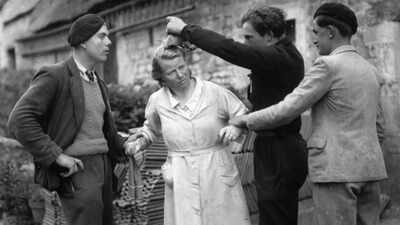
When France emerged from the long night of Nazi occupation in the summer of 1944, the nation erupted in scenes of jubilation. Flags unfurled over liberated cities, church bells rang, and parades filled the streets from Normandy to Provence.
Yet, as every historian of modern France knows, liberation arrived with two faces. Alongside the ecstatic return of freedom came a darker and more turbulent reckoning, a wave of retribution now remembered as the Wild Purge, or l'épuration sauvage.Across hundreds of French towns, crowds gathered not only to welcome their liberators but also to punish those accused of collaboration. And the most visible and symbolically charged of these punishments fell upon women.
Photographs published in France-Soir and carried by Allied newspapers stunned the world: women with shaved heads, bare feet, and infants in their arms being marched through town squares as residents spat and jeered. Their crime, real or rumoured, was horizontal collaboration, meaning intimacy with the occupying German soldiers. As historian Fabrice Virgili writes in Shorn Women: Gender and Punishment in Liberation France, these spectacles were public rituals of purification staged to restore a wounded national pride.
The wild purge and the burden placed on women
To understand this eruption, one must grasp the humiliation that France endured from 1940 to 1944. German soldiers were omnipresent, billeted in homes, stationed at cafes, and visible on every street. Under occupation, social boundaries blurred in ways that troubled the national conscience. During this period, some women formed relationships with German soldiers. As scholars such as Robert Gildea and Sarah Fishman have documented, these relationships took many forms: romantic attachments, exchanges for food or safety, coerced intimacy, or simply attempts to survive the privations of war.When liberation came, however, such distinctions disappeared in the heat of public anger. As the Resistance returned in triumph, France sought not only to drive out the Germans but to erase the shame of occupation. In this search for purification, women’s bodies became the canvas upon which the nation redrew its moral boundaries.Between 20,000 and 25,000 women were subjected to public head shaving between 1943 and 1945.
The ritual typically began with women being seized from their homes by Resistance fighters or angry crowds. Once outside, their heads were shaved in front of neighbours and townspeople, often in the same squares where German soldiers had once marched. Many women were forced to carry placards or symbols associated with the enemy, such as crudely painted swastikas, while others were stripped, beaten, or otherwise humiliated.
Spectators often spat at them, threw objects, or shouted insults as the women were paraded through the streets.Photographs from Chartres, Toulouse, and other cities show women holding infants in their arms, their newly shorn heads exposed to the hostility of the crowd. These images, captured by war photographers including Robert Capa and published in Life Magazine, became enduring symbols of the violence that accompanied France’s return to freedom.
The act of shaving held deep symbolic power: it marked women physically and publicly, turning their bodies into sites of punishment and shame that would follow them long after the crowd dispersed.
A gendered form of retribution
The Wild Purge revealed a striking double standard. Men who had supplied the Germans, informed on neighbours, or profited from the black market often avoided such raw public punishment. For women, however, the body itself became the battleground on which national honour was reclaimed.
Their punishment was not only physical but moral and sexual. Historian Fabrice Virgili argues that the head-shaving ritual became a way for men to reassert control and masculinity at a moment when the nation’s pride had been deeply wounded.Many of the women humiliated in this manner had never had a relationship with a German soldier. Some were targeted due to rumours, jealousy, old personal grudges, or simple misfortune.
Others were punished because they worked in German-controlled offices or shops. A number had even assisted the Resistance, yet were swept up in the chaos of liberation. The liberation offered an opportunity for settling scores under the cover of patriotic fervour, and accusations often required no proof.
Mob justice gives way to the legal purge
By late 1944, Charles de Gaulle’s provisional government moved to halt the uncontrolled reprisals. A formal process, l'épuration légale, replaced mob justice.
More than 300,000 cases of suspected collaboration were investigated, although only a small fraction resulted in severe penalties. The contrast between the Wild Purge and the legal purge revealed the true nature of the head-shaving rituals: they were primarily acts of catharsis rather than justice.Historian Henry Rousso, in his influential work The Vichy Syndrome, describes the Wild Purge as a troubling mirror held up to the national conscience, showing a society eager to punish symbols rather than confront deeper complicity.During the occupation, an estimated 200,000 to 300,000 children were born to French mothers and German fathers. Many faced lifelong stigma. Archival letters recovered from post-war welfare offices document the harsh treatment these children endured, including exclusion from schools, social ostracism, and occasional refusal of registration by local authorities. Many had witnessed their mothers’ humiliation during the Wild Purge, forming memories that shaped their entire lives.
How historians remember the Wild Purge today
Modern scholarship views the Wild Purge with a mixture of sorrow and critical distance. Museums and memorial institutions in France have begun confronting this chapter more openly, acknowledging it as part of the nation’s complex reckoning with occupation and liberation.Today, historians largely agree that the Wild Purge was an explosion of collective emotion rather than deliberate justice, that it disproportionately and unjustly targeted women, and that it symbolised the struggle of a nation attempting to reconstruct its identity after profound humiliation. It reveals how easily vengeance can masquerade as patriotism and how public anger can turn into public cruelty.








 English (US) ·