

 1 hour ago
3
1 hour ago
3
ARTICLE AD BOX
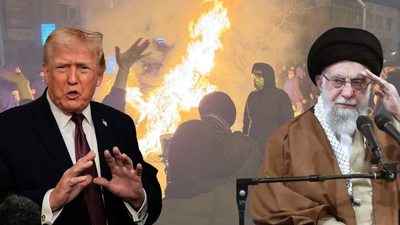
US President Donald Trump has made clear to his national security team that if the United States strikes Iran, he wants it to be swift, decisive and regime-shaking, not a prolonged conflict that drags on for months, as per NBC news.
According to US officials cited by NBC News, Trump has told advisers that any action must deliver a definitive blow. Yet his own defence and intelligence teams have so far been unable to guarantee that an American strike would collapse Iran’s leadership or avoid a wider regional war. That uncertainty has left the White House weighing limited options, even as Trump publicly signals support for protesters challenging Tehran’s rule.But behind the tough rhetoric and comparisons with this month’s dramatic seizure of Venezuela’s Nicolás Maduro lies a far more complex reality. Iran’s military capabilities, regional footprint and internal dynamics make any “quick win” vastly harder to deliver.
A fragile uprising — and a president watching closely
Iran has been rocked by its largest nationwide protests since the 1979 Islamic Revolution, driven initially by economic collapse and now fuelled by deep anger at the political system.
Activists say at least 2,600 people have been killed and more than 18,000 arrested in a crackdown marked by internet blackouts, mass detentions and the threat of executions.Trump has repeatedly hinted at intervention. “Help is on the way,” he told Iranians this week, warning the regime it would “pay a big price” if killings continued. On Wednesday, however, he struck a more ambiguous tone, saying he had been told executions had stopped and that the situation would be “watched”.American personnel have been repositioned from Qatar’s Al Udeid air base, and diplomats across the region have been warned. Yet unlike previous confrontations, there has been no major surge of US troops or aircraft carriers into the Middle East — a signal of how constrained Washington’s options remain.
Why Iran is not Venezuela
The recent US operation in Venezuela looms large over Trump’s thinking. That raid, which captured Maduro in under half an hour, relied on months of covert planning, overwhelming air superiority and the near-total failure of Venezuela’s air defences.
Caracas’s systems — largely Russian-made and poorly maintained — were neutralised through electronic warfare and precision strikes, leaving the regime exposed.Iran presents an entirely different challenge. While its defences were badly damaged during Israel’s 12-day air campaign in June, Tehran has spent the past year rebuilding and upgrading its systems. It now operates a layered air defence network combining Russian S-300 and reportedly S-400 systems, China’s HQ-9B missiles, and indigenous platforms such as the Bavar-373, as per a report by the SOuth China Morning Post.Unlike Venezuela, Iran’s air defences are networked, mobile and designed to survive sustained attack. The HQ-9B alone has a range of around 300 kilometres and speeds exceeding Mach 4. Russia’s S-400 extends that range even further. Tehran has also reduced its reliance on foreign maintenance by expanding domestic production — a vulnerability that crippled Caracas.Any attempt to replicate a Venezuela-style leadership strike would therefore face far higher risks, including aircraft losses, misidentification of civilian targets and rapid escalation.
The limits of US military power
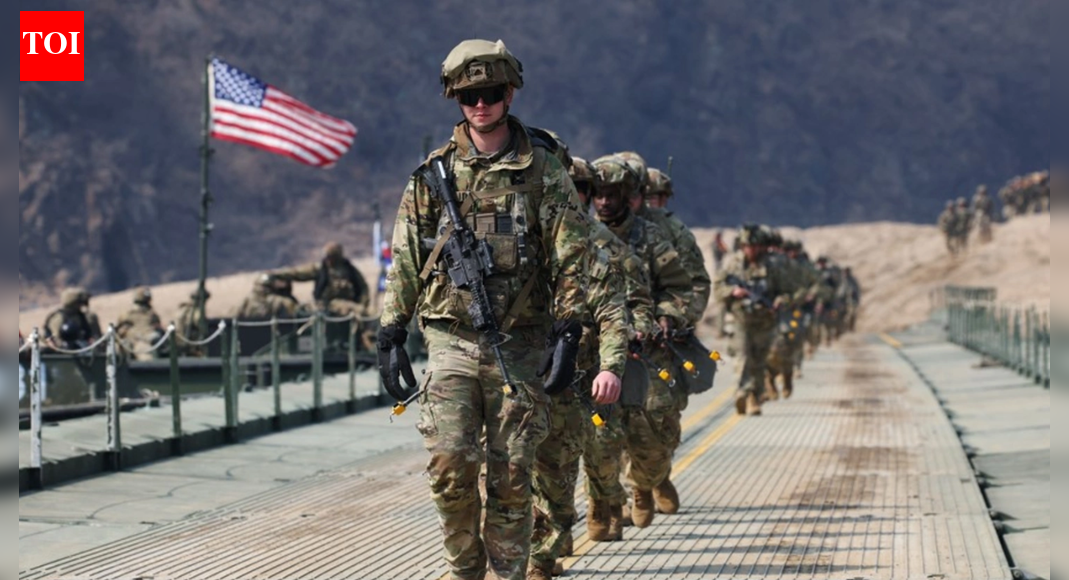
Even if Trump authorised air or missile strikes, the US lacks the forward posture it would normally rely on for a major operation. There are currently no American aircraft carriers deployed in the Middle East although USS Abraham Lincoln has reportedly been deployed.According to News Nation, citing sources, the carrier strike group — built around USS Lincoln is backed by several warships, including at least one attack submarine — is expected to take about a week to reach the region. Any strikes would likely depend on regional airbases in Qatar, Bahrain, Iraq, the UAE or Saudi Arabia — all of which would immediately become potential Iranian targets.Long-range bombing missions, such as the B-2 strikes used against Iran’s nuclear facilities in June, remain an option. But using such firepower against urban or political targets would carry an obvious risk of civilian casualties and international backlash.There is also the question of what, precisely, would be bombed. Protests and repression are spread across Iran’s cities, not concentrated in a single command centre. Targeting military or intelligence facilities would not necessarily weaken the regime’s grip on the streets — and could instead allow Tehran to rally nationalist support against foreign aggression.Crucially, Iran retains a formidable missile arsenal. Despite losses, it is believed to possess around 2,000 ballistic missiles, many hidden in hardened mountain sites.
A large-scale launch could overwhelm even advanced US and Israeli defences, threatening bases, ships and civilian infrastructure across the region.For all Trump’s confidence and his invocation of Venezuela as proof that decisive action works, Iran is a far more resilient, militarised and ideologically entrenched adversary. In Iran, “help” may be far more complicated — and dangerous — than Trump suggests.







 English (US) ·