

 1 hour ago
3
1 hour ago
3
ARTICLE AD BOX
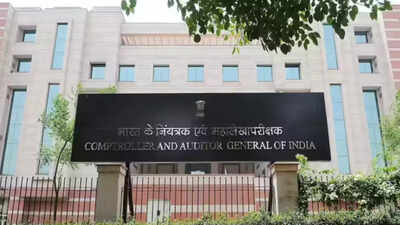
LUCKNOW: An audit by Comptroller and Auditor General (CAG) tabled in UP Vidhan Sabha on Wednesday has uncovered severe planning and financial mismanagement in the implementation of two major national rural electrification schemes-- Deendayal Upadhyaya Gram Jyoti Yojana (DDUGJY) and the Pradhan Mantri Sahaj Bijli Har Ghar Yojana (SAUBHAGYA) in Uttar Pradesh, leading to losses worth thousands of crores.The schemes, launched by the central government in 2014 and 2017 respectively, aimed to strengthen rural electricity infrastructure and achieve universal household electrification.From the outset, planning was flawed. The audit found that detailed project reports (DPRs) for the SAUBHAGYA scheme, prepared by the Uttar Pradesh Power Corporation Limited (UPPCL), completely ignored a key mandate: providing off-grid solar connections for remote areas, leaving a critical component of the program unaddressed.As per audit report, under SAUBHAGYA, dicoms declared saturation by December 2018 and claimed 64.67 lakh connections, whereas only 33.23 lakh had actually been released by that date, with another 28.42 lakh connections completed subsequently. That led to Rs 1,094.14 crore of grants foregone.The financial mismanagement was even more staggering. Under DDUGJY, the discoms failed to meet prescribed milestones like timely project completion (delays ranging from 29 to 49 months) and reducing Aggregate Technical & Commercial (AT&C) losses.
Consequently, loans of Rs 1,816.94 crore could not be converted, costing Rs 908.47 crore in additional grants.Together, the two schemes saw a total loss of Rs 2,002.61 crore in grants.A core objective of the DDUGJY scheme, separating agriculture and non-agriculture feeders for better power management, remained largely unachieved. The audit found that in seven sample districts, 71.22% of agricultural consumers were still connected to non-agriculture feeders, negating intended benefits.The report further highlights several areas of unnecessary or excessive spending. Discoms incurred avoidable expenditure of Rs 402.44 crore by unnecessarily applying cement concrete grouting to over 24 lakh single concrete poles, contrary to scheme specifications which required only refilling with boulders.In DPR preparation, MVVNL and DVVNL overpaid contractors by Rs 3.33 crore due to inflated cost calculations.Further financial irregularities included incorrect tax claims. PVVNL erroneously claimed Goods and Services Tax (GST) on materials, inflating project costs by Rs 3.63 crore. Due to delayed claims, the company also failed to secure a reimbursement of Rs 4.21 crore in state taxes from the Uttar Pradesh government.The audit also highlighted irresponsible financial practices. PuVVNL took an excess loan of Rs 66 crore from the Rural Electrification Corporation (REC), leading to an avoidable interest burden of Rs 3.94 crore.
Separately, PVVNL paid excess interest of Rs 7.19 crore to REC by not verifying the correct applicable interest rate.Most strikingly, the CAG identified Rs 26.65 crore in excess payments to Turnkey Contractors (TKCs) due to duplicate or irregular claims, including payments for connections already provided under other schemes.The CAG wrote that, “audit paints a picture of poor planning, weak financial oversight, and non-compliance with guidelines, ultimately undermining the efficiency and objectives of the central government's rural electrification drive in Uttar Pradesh.”



 English (US) ·