

 1 week ago
5
1 week ago
5
ARTICLE AD BOX
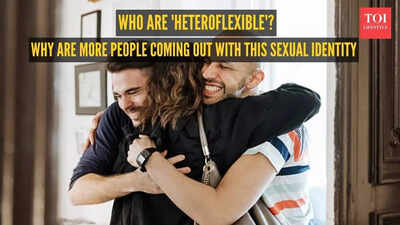
About 50 to 55 million Americans now identify as heteroflexible.
What was once a niche identity label has now transformed into a casual reference. Over the last year, 'heteroflexible' has exited dating app descriptions and entered regular conversations.
As per reports, more and more people are identifying with the identity right now, more than any other sexual identity. But who are 'heteroflexibles' and why are more and more people coming out with the identity? Let's delve in.
Who are 'heteroflexibles'?
Heteroflexible typically describes people who identify as mostly straight but are open to sexual or romantic experiences with someone from the same sex. The emphasis is on primary heterosexual attraction with occasional flexibility, curiosity or exceptions, as per Verywell Mind. Feeld, a dating app recently released its annual Raw report. As per the findings, heteroflexibility is the fastest-growing sexuality, with the number of practitioners reaching a whopping 193% over the past year. A shocking 15% of the American population, about 50 to 55 million Americans now identify as heteroflexible. Out of these, two-thirds are millennials, 18% are Gen-Z and 15.5% are Gen X.
Why are more and more people identifying as heteroflexible?
Berlin was the most heteroflexible city in the world, per the study, while New York City had the fastest-growing bisexual population, with an increase of 161%.
According to experts, one of the reasons why identity is rising is that the term itself is subjective and flexible. The category encompasses a wide bracket of people: straight people who have enjoyed being with someone of the same sex, heterosexuals who have felt same-sex attraction on occasion, those who are bicurious and someone in a straight relationship who is open to experiences that involve more than one gender or identity.
“If anything, it would be surprising if people were never sexually curious about people of their own sex or gender, or if attraction worked in neat and predictable ways,” said Dr. Luke Brunning, a lecturer in applied ethics at the University of Leeds, told the outlet. However, critics within the bisexual and pansexual communities have blamed heteroflexibility for treading into their territory and contributing to their erasure at a time when they have been struggling for visibility.
Are you 'heteroflexible'?
While sexual identities are extremely subjective, certain criteria are commonly experienced. As per Verywell Mind, a person might be heterosexual if:
- You're straight but have enjoyed being with someone of the same sex
- You prefer the opposite sex, but have felt attracted to people of the same sex on a few occasions
- You know (or suspect) you're not 100% straight, but "queer" and "bisexual" don't seem to fit your orientation exactly
- You'd be with someone of the same sex only in certain situations
- You prefer the opposite sex, but you like to experiment with people of the same sex
- You're satisfied with your orientation but are curious
- Being with someone of the same sex is on your bucket list, but you're content with someone of the opposite sex
As the world progresses and individual expression rises, aligning with any sexual and personal identity is a free choice, as easy as breathing air and as right as expressing your thoughts.







 English (US) ·