

 1 week ago
7
1 week ago
7
ARTICLE AD BOX
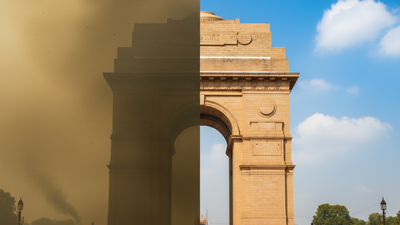
NEW DELHI: The Graded Response Action Plan (GRAP), enforced in Delhi-NCR during periods of hazardous air quality, has been found to significantly improve the region’s air quality, according to a study by IITM-Pune and the Commission for Air Quality Management (CAQM). GRAP is triggered when the Air Quality Index (AQI) rises to dangerous levels. Its primary aim is to restrict pollution-causing activities, acting as a “mini-lockdown” to protect public health, despite causing some inconvenience to residents and businesses.

Effectiveness of GRAP The study, titled “Possible effectiveness of the Graded Response Action Plan restrictions in New Delhi, India,” found that without GRAP, the city could face 60% more severe-AQI hours and 60%–200% more hours of severe-plus pollution.
The plan’s interventions also helped reduce PM2.5 levels by 2–42 µg/m³, depending on the stage, potentially preventing 177–297 short-term deaths and saving 8,615–14,456 years of life. GRAP’s impact over the past two years:
| GRAP II | 2.06 | 2.66 | 2.14 | 2.25 |
| GRAP III | 28.44 | 32.21 | 20.07 | 24.32 |
| GRAP IV | 47.6 | 37.44 | 27.74 | 30.65 |
The duration of GRAP enforcement also varied by stage:
| GRAP II | 68 | 62 |
| GRAP III | 33 | 28 |
| GRAP IV | 3 | 13 |
Key Actions Under GRAP
- Stage I – 31 action points: Emphasis on strict enforcement of existing pollution rules.
- Stage II – 10 action points: Measures include staggered government office timings, a ban on inter-state buses from the NCR (except EVs, CNG, BS-VI), and higher parking fees to discourage private vehicles.
- Stage III – 9 action points: Construction and demolition banned (except government projects), restrictions on BS-III petrol and BS-IV diesel vehicles, closure of stone crushers and mining operations, hybrid school classes for students up to Class V, and limitations on diesel goods vehicles.
- Stage IV – 5 action points: Strictest measures include banning non-essential trucks and diesel heavy goods vehicles, hybrid schooling for most students in Delhi and select NCR districts, and additional restrictions on non-BS-VI private vehicles
Expert Insights Experts agree that while GRAP can be inconvenient, its public health benefits are undeniable:
- Anumita Roychowdhury, CSE: “GRAP prevents further pollution peaks, flattens AQI spikes, and provides early warning for public health.”
- Dipankar Saha, former CPCB head: “GRAP protects public health; alternative solutions can reduce inconvenience.”
- Sachin Ghude, IITM-Pune: “Without GRAP, Delhi would have recorded more severe AQI hours; it reduced AQI by up to 49 units.”
The Graded Response Action Plan has proven to be an effective tool in mitigating air pollution in Delhi-NCR. While it may disrupt daily routines, its implementation saves lives and reduces the harmful effects of toxic air, underlining the urgent need for continued enforcement and public compliance.






 English (US) ·