

 1 hour ago
2
1 hour ago
2
ARTICLE AD BOX
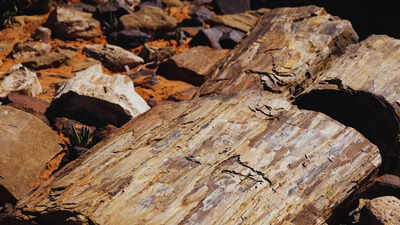
Petrified tree fossil - Representative image
India is often celebrated for its monuments, biodiversity, and living cultures, but beneath its soil lies another extraordinary heritage, fossils that record life from hundreds of millions of years ago.
From dinosaur nesting grounds in Gujarat to marine fossils high in the Himalayas, the country offers a rare opportunity to explore deep time through landscapes that once held forests, oceans, and prehistoric animals. For scientists, these places are invaluable research sites. For travellers and students, they offer a different kind of “treasure hunt,” one that reveals how Earth and life evolved long before human history began.Millions of years ago, the Indian landmass was part of the ancient continent called Gondwanaland. Over time, the Indian landmass moved northwards across the ocean and finally merged with the Eurasian plate to form the mountain range known as the Himalayas. This journey ensured that the Indian landmass passed through different climatic conditions and environments such as the ocean, river valleys, wetlands, and forests, which contained different types of fossils.
This suggests that the Indian landmass fossils contained sea creatures, dinosaurs, petrified trees, mammals, among others. These fossils provide valuable information regarding evolutionary changes and the climatic conditions that existed over the years.
Dinosaur Fossil National Park in Balasinor, Gujarat
One of the most famous fossil sites in India is the Dinosaur Fossil National Park, which is located near Balasinor in the state of Gujarat. This site is also known as the “dinosaur capital of India” and is known to have one of the largest dinosaur nesting sites in the world.
The fossil site includes dinosaur eggs, bones, and nesting sites that date back to the late Cretaceous period, around 65-70 million years ago. The fossil site includes Rajasaurus narmadensis, a carnivorous dinosaur that was found in the nearby regions of western India.
The most interesting fact about this site is that the dinosaur eggs were found in clusters, which means that the site was used by the dinosaurs for nesting.
This provides important clues about reproductive behaviour and herd patterns. Today, guided tours and interpretation centres help visitors understand the science behind these discoveries while preserving the fragile fossil beds.
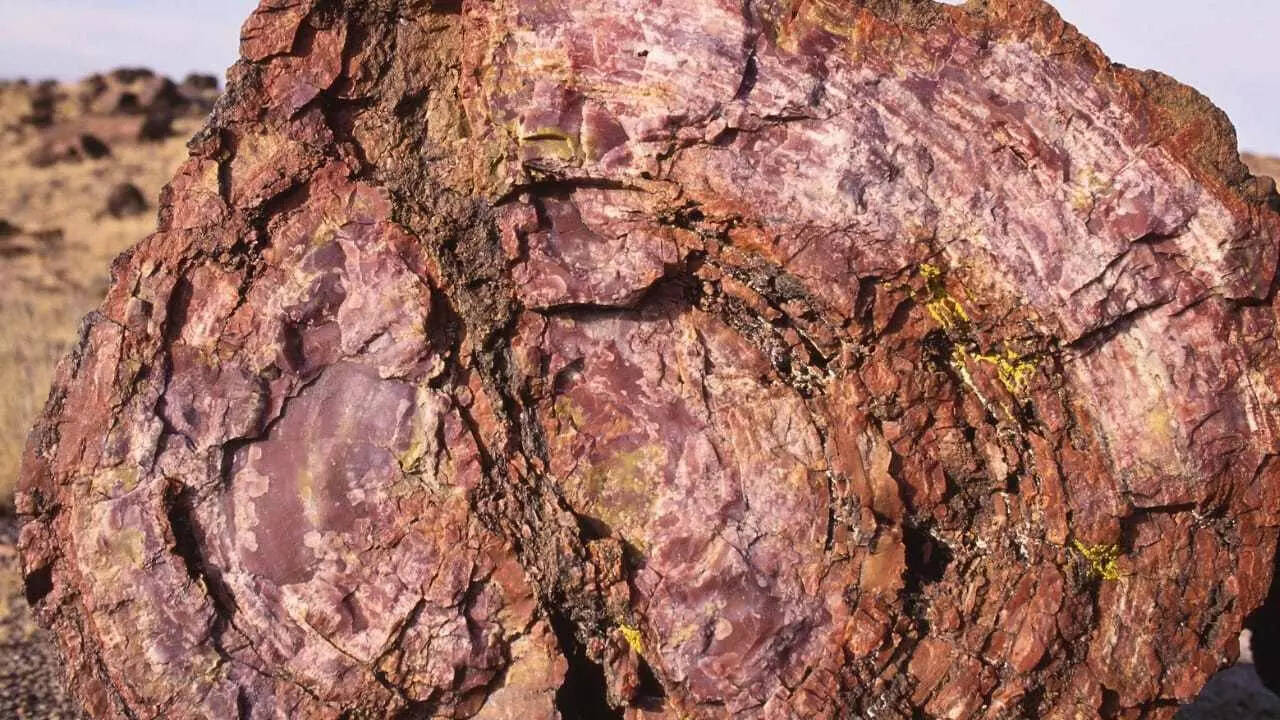
Pertified tree fossil - Representative image
Ghughua Fossil National Park, Madhya Pradesh
The Ghughua Fossil National Park in Madhya Pradesh is known for its petrified wood. While dinosaur fossils are common, Ghughua mainly offers fossils of ancient plants. In this region, petrified trees abound.
The trees have petrified, meaning they have turned to stone. This happens when minerals replace the original material while retaining its original structure. The fossils found in this region have been estimated to be between 40 to 150 million years old.
The ancient tropical forests that once flourished in the region are what these fossils represent. In this region, scientists have identified fossils of plants such as palms, dicotyledons, among others.
This indicates that the climate in India was once warm and humid.
Spiti Valley, Himachal Pradesh: Marine fossils in the mountains
Few fossil sites in the world feel as dramatic as Spiti Valley, where marine fossils are found at elevations exceeding 3,000 metres above sea level. The region’s rocks were once part of the Tethys Sea, an ancient ocean that existed millions of years ago. As the Indian plate was pushed into the Eurasian plate, resulting in the creation of the Himalayas mountain range, the sediments were uplifted high into the mountains.
Today, tourists and scientists can look at fossils of ammonites, brachiopods, and other sea creatures embedded in the rocks. This is important from a scientific point of view because it demonstrates the transition from a sea basin to a mountain range. It also allows geologists to date the rocks and understand the history of the Himalayas.
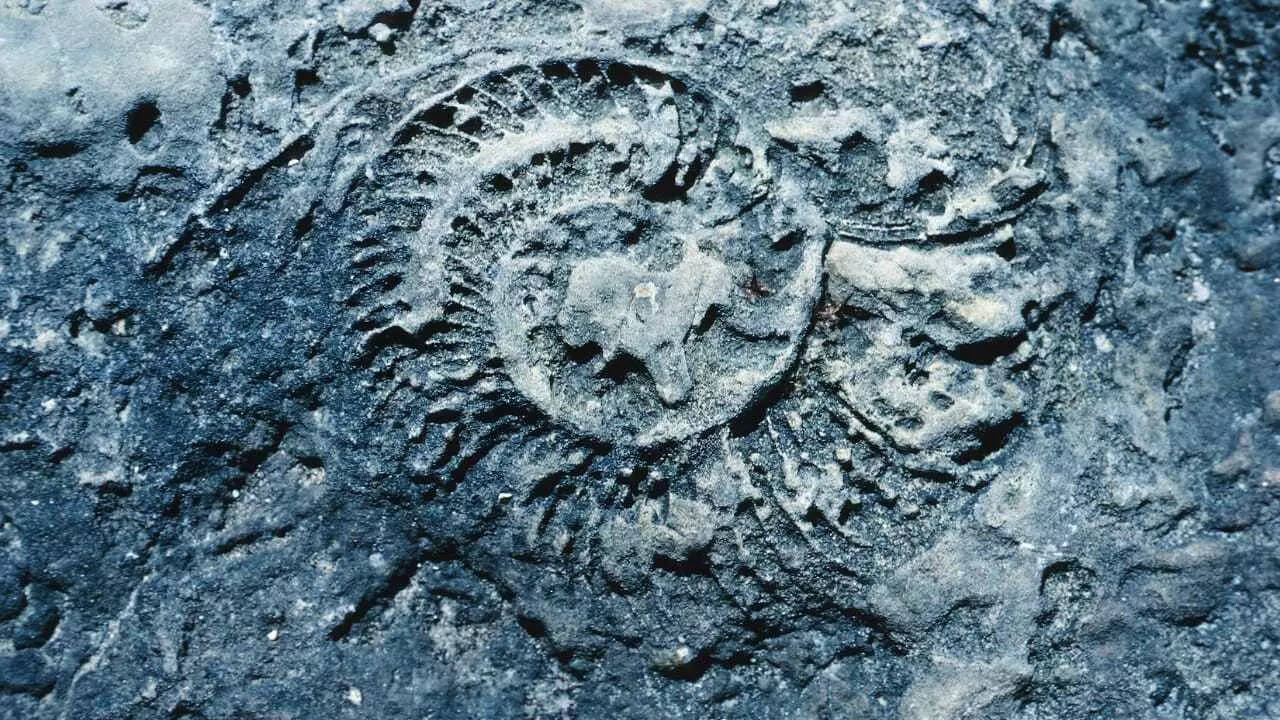
Marine fossil - Representative image
Shivalik Fossil Park, Himachal Pradesh
The Shivalik Fossil Park gives a glimpse of a much more recent time in Earth’s history, that of the mammals.
The Shivalik hills are famous for fossils that date back to a time period of 2 to 20 million years ago. Many fossils of ancient elephants, early horses, crocodiles, turtles, and other mammals have been discovered. These fossils are of particular interest to scientists studying the evolution and migration of large mammals on the Asian continent.
The fossils on display provide an understanding of how climatic changes and geography influenced the evolution of animals during the Miocene and Pliocene periods.
Kutch Region, Gujarat: A Jurassic marine archive
The arid landscape of Kutch, located in Gujarat, has an impressive marine fossil record. The Kutch Fossil Park and sedimentary deposits have fossils that belong to the Jurassic period, which dates back between 145 and 200 million years ago. During this period, this area was submerged under a sea. The fossils that have been found include the fossils of ammonites, coral pieces, and shells. The fossils provide scientists with an understanding of biodiversity during the Jurassic period.
They also give a basis of correlation with similar fossils found in Europe and Africa. The area is also of value to geologists because of its rocks that give evidence of changes that have occurred over time.
Ariyalur Fossil Region, Tamil Nadu
In southern India, the Ariyalur Fossil Region is one of the country’s most scientifically significant fossil areas. Sedimentary rocks here have yielded a mix of marine fossils, dinosaur remains, and molluscan shells. The fossils date mainly to the Cretaceous period, when the area lay near a shallow sea. Dinosaur eggs and skeleton fragments have been unearthed by paleontologists that fill the gaps in the dinosaur fossil records of India.
Fossils of marine animals have also been found in Ariyalur, which help to reveal the changes in sea levels and climatic conditions of peninsular India.









 English (US) ·