

 6 days ago
8
6 days ago
8
ARTICLE AD BOX
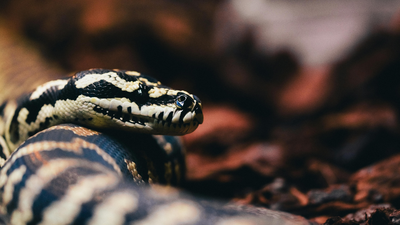
It sounds like a scene out of a horror movie, yet the premise that a headless snake can move around or bite is based on scientific facts. Many people in India face encounters with snakes in both rural and urban areas and tend to underestimate their reflexes, particularly when they are dead.
It is very fascinating and of great interest to know why this is the case, and there are six different scientific facts that are related to this. It is not only fascinating to know why this happens, but it is also of great importance for safety. By understanding the science behind this, we can have a better understanding of the body of the snake.
Why a headless snake can still move: Spinal reflex actions
According to a study carried out by the University of Cincinnati, one of the major reasons why a headless snake can still move is because of the reflex actions of the spinal cord.
It should be noted that not all actions involving the voluntary movement of the body require the intervention of the brain. According to the National Institute of Neurological Disorders and Stroke, the spinal cord has the ability to react by itself.
How residual nerve activity helps the movement
Another factor is that nerve signals do not stop immediately after death. In a conversation with ABC, Dr Christina Zdenek explains that electrical activity in nerve cells can continue for a short time.
This lingering activity allows muscles to contract, which may cause the snake’s body to twitch, coil, or move briefly after being severed.
Strong bite reflex of a headless snake still biting
As per the Royal Society of Tropical Medicine and Hygiene, surprisingly, even the severed head of a snake can remain dangerous. This is because the act of biting is mainly reflexive in nature. It has been mentioned that “if the snake's head is stimulated in some way, it can cause the snake to automatically bite. This is a defence mechanism to help protect the snake, even in the most adverse of circumstances.”
Active venom glands that keep working
Apart from the reflexive nature of the act of biting, the venom glands can also remain in function for a short time even after death. The venom can remain in function even after death, such that it can be injected if the head bites. Thus, it is very risky to handle even a dead snake, notes the Royal Society of Tropical Medicine and Hygiene. It is for this reason that experts advise against touching snakes, whether dead or alive.
Biological reasons behind this phenomenon: Metabolism and ATP
This is because they are classified as ectothermic, or cold-blooded, creatures. This means that their metabolism is slower compared to mammals. A study in Molecular and Integrative Physiology reveals that because of their slower metabolism, their body can continue moving even when they are already dead.The other factor is the energy reserves in the muscles of the snake. Muscles have an energy reserve known as ATP. The energy reserve is required by the muscles of the snake when it is moving. Even if the snake is already dead, there is some energy reserve remaining in the muscles of the snake that is required for temporary movement of the snake.
Conclusion: Awareness is key
The movement of the headless snake and its biting capabilities are not a myth but a natural biological response of the snake. The response of the snake may seem intimidating, but it is a natural response of the nervous system of the snake. The key take-home point from this is to exercise caution. It is very important not to handle any snake, whether it is dead or alive.





 English (US) ·