

 1 hour ago
6
1 hour ago
6
ARTICLE AD BOX
Artificial Intelligence (AI) is a force-multiplier that could redesign some jobs, but would eventually add more tech jobs to India’s economy, representing a transformative opportunity in the country’s journey towards Viksit Bharat 2047, Prime Minister Narendra Modi said on Tuesday.
In an interview to news agency ANI, PM Modi said at a time when the world is worried about Al, which stands at a civilisational inflection point, India is “using it to dissolve divides” while remaining ready to face any disruption in the employment sector due to it.
“I view Al as a force-multiplier which will further help us push the boundaries of what we thought possible… History has shown that work does not disappear due to technology. Its nature changes and new types of jobs are created,” he said.
“While some jobs may be redefined, digital transformation will also add new tech jobs to India’s economy. India is already well-equipped to adapt to this change… Combining innovation with inclusion, we are confident that Al will strengthen India’s workforce. With the right skills and preparation, our youth will lead the future of work,” he said.
The Prime Minister said there was a need to approach AI with a sense of more responsibility as it got further advanced, which India was doing by moving towards a more structured governance approach in Al regulation at a time when the technology itself seemed to be at the inflection point of civilisation.
“With the launch of IndiaAl Safety Institute in January 2025, the country created a dedicated mechanism to promote the ethical, safe and responsible deployment of Al systems… What makes India’s approach distinctive is its focus on local risks and societal realities,” he said.
“AI can expand human capability in unprecedented ways, but it can also test existing social foundations if left unguided,” he said.
Story continues below this ad
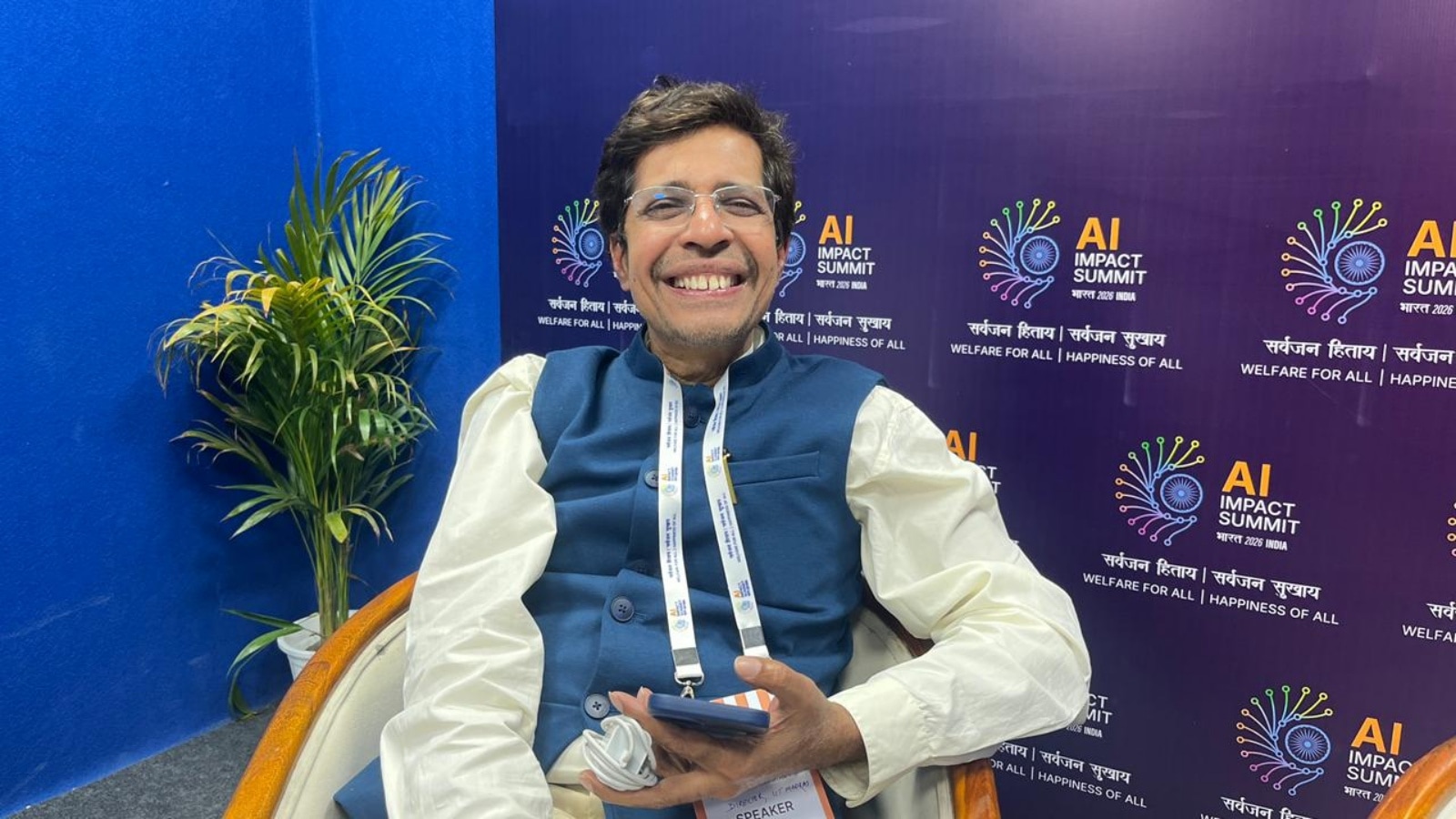
PM Modi said this belief was behind the vision of the AI Impact Summit currently underway in the capital, the first of its kind and scale to be hosted in the Global South. The Summit, he said, was framed around the “people, planet, progress” framework and impact that ensures “meaningful and equitable outcomes, not just innovation”.
“The guiding spirit, ‘Sarvajan Hitay, Sarvajan Sukhay’, reflects India’s civilisational philosophy. The end goal of technology should be ‘welfare of all, happiness of all’. Technology exists to serve humanity, not to replace it,” he said.
He said AI was being utilised in India to help address deep developmental challenges while creating entirely new economic opportunities.
From Al governance and inclusive datasets to climate applications, agricultural productivity, public health and multilingual access, these issues were central when it came to India’s vision: Al must accelerate global development while remaining deeply human-centric, the PM said.
Story continues below this ad
It was also enabling inclusive growth, bridging the urban-rural divide and expanding access to opportunity. “With its experience of building a human-centric digital public infrastructure, India is best placed to ensure that Al’s benefits reach the last mile, to farmers in villages, students in small towns, MSMEs, women entrepreneurs, informal workers and youth across rural and urban India, and not remain confined to a narrow urban elite,” he said.
“Technology must serve every citizen, regardless of geography, gender or income. The goal is not Al adoption for its own sake. It is Al that genuinely empowers citizens and accelerates India’s journey toward becoming a developed nation by 2047, and offers a scalable model for the Global South,” he said.
Underlining India’s potential to become “an AI powerhouse”, while balancing issues related to its impact on jobs, which he said the country was equipped to handle, the PM said the recently tabled Union Budget 2026-27 reinforced its vision of combining innovation with inclusion when it came to AI.



 English (US) ·