

 1 hour ago
4
1 hour ago
4
ARTICLE AD BOX
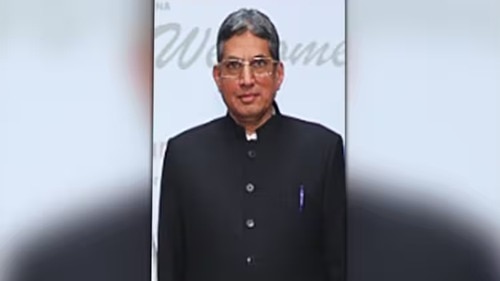
On the sidelines of the India AI Impact Summit 2026 at Bharat Mandapam, Vidheesha Kuntamalla spoke to Veezhinathan Kamakoti, Director, Indian Institute of Technology Madras, about what the summit seeks to achieve, India’s role in shaping global AI norms, and how educational institutions are approaching the challenges of safe, trusted and socially responsible artificial intelligence. Edited excerpts:
AI today is already part of everyday life. Many applications people use, from navigation to health monitoring, rely on AI for prediction and decision-making. The key question is: What impact does this intervention have on our day-to-day lives? Is that impact good or bad? And who decides what is acceptable and what is not?
That is what this summit is about. It brings together stakeholders from across the world to discuss how we can amplify the good that AI can do and restrict or prevent its harmful uses. Since AI is not a single-country phenomenon — it is global — these discussions also need global consensus.
What is IIT Madras’s core focus at this summit?
One of the most important verticals we are working on is safe and trusted AI, led by Prof. Ravindran. For any AI system to be widely adopted, people must trust it and believe it is safe.
So we are asking foundational questions: How do you define safety in AI? How do you define trust? How do you ensure that an AI system behaves reliably, ethically and predictably? This becomes especially important when you consider misuse, whether in cyber warfare, surveillance or malicious attacks, versus positive applications like healthcare prediction or early disease detection. We need common global principles to distinguish between these uses.
How does this align with India’s long-term vision, especially towards Viksit Bharat 2047?
Story continues below this ad
At IIT Madras, our AI work is closely aligned with national priorities. One major effort is the Bharat AI Education Stack, launched recently, which focuses on education as a public good.
The idea is simple but powerful: Every child should have access to a personalised AI tutor; parents should be able to understand their child’s learning trajectory; teachers should receive support in personalising instruction; and policymakers should have dashboards to track educational outcomes.
This directly aligns with Sustainable Development Goal 4 — equitable, accessible and quality education for all and echoes Swami Vivekananda’s idea that if the poor cannot reach education, education must reach the poor.
How can AI concretely help children and parents?
AI can act as an early indicator. For instance, it can help identify learning difficulties, developmental challenges or even specific interests of a child at an early stage. These are not diagnoses, but pointer signals that can guide parents and teachers.
Story continues below this ad
AI can also help understand what a child is inclined towards, what engages them, and how learning can be personalised rather than standardised.
Beyond education, what flagship AI projects is IIT Madras working on?
We are working with several government agencies to integrate AI into public systems. Some notable efforts include opening up large-scale datasets such as the brain research database and the cancer atlas, which allow for massive AI-driven research and intervention.
We also have extensive work in responsible AI, healthcare AI, and collaborations with organisations like Wadhwani AI. Many projects are underway, many of them focused on applying AI to real-world public problems.
Does IIT Madras have dedicated AI degree programmes?
Story continues below this ad
Yes. We offer a B.Tech in AI and Data Science, an M.Tech in the same field, and a large-scale online BS programme in Data Science and Programming.
The distinction is important. The B.Tech programme focuses on engineering creation — building systems, hardware-software co-design, and deep technical work. The BS programme focuses more on application — using data science tools effectively with strong theoretical grounding.
Are faculty members adequately trained to teach AI, given how fast it evolves?
AI is evolving rapidly, so upskilling is continuous even at the faculty level. Many faculty members themselves are enrolled in AI and data science courses.
Story continues below this ad
We are now creating this massive online data science course. We aspire to make more and more people understand AI and start applying it in their respective fields.
Today, almost every department has AI components tailored to its discipline, AI for chemical engineering, civil engineering, and so on. This interdisciplinary integration is crucial for meaningful adoption.
Has AI changed how students are assessed, especially with tools like ChatGPT?
Yes, assessment methods are changing. While there are software tools including some developed in-house that can flag potential AI-generated content, the real shift is in evaluation design.
Story continues below this ad
Students are now asked to explain their code in detail: Why they used a particular function, how a specific logic works. If you haven’t written or deeply understood the code, you cannot convincingly explain it.
Evaluation has become more rigorous and concept-focused. Writing basic code is no longer enough — higher-order thinking, problem formulation and understanding matter far more.
Do you see education moving towards prompting AI rather than writing code?
That shift is already beginning. A visiting professor once posed a provocative idea: can we teach programming where students don’t write a single line of code, but instead learn how to ask the right questions to a large language model?
Story continues below this ad
That itself is a complex skill. The future of education will likely move in that direction — from execution to intent, from syntax to reasoning.
Is IIT Madras moving towards AI-driven or paperless administration?
We are steadily moving towards more automated, paperless workflows. Many processes are already digital, which speeds up decision-making and file movement.
However, administration still involves human judgement. Automation helps efficiency, but governance will continue to require careful oversight, especially in academic institutions.







 English (US) ·