

 20 hours ago
3
20 hours ago
3
ARTICLE AD BOX
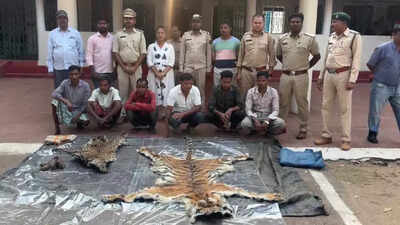
RAIPUR: A chilling wildlife crime trail has emerged from Bastar, where investigators suspect a tiger and a leopard were not only poached but also allegedly consumed before their skins and body parts entered the illegal trade network, exposing a brutal and layered racket operating deep inside south Chhattisgarh’s forests.
The breakthrough came after forest teams intercepted two men on the Dantewada-Balod road with a tiger skin, triggering a chain of raids on Monday and Tuesday that led to the arrest of more than eight accused including the forest deputy ranger, with recovery of a leopard skin from Keshapur village. Nails of the animals have also been seized, but teeth, often the most valuable in illegal trade, are still missing, raising fears that parts of the consignment may already have moved beyond the state.
Preliminary investigation suggests the tiger was hunted nearly four months ago in Bijapur’s Naimed area, while the leopard was killed in the hill stretches of Faraspal-Bailadila in Dantewada. During questioning, the accused indicated that the meat of the animals may have been consumed locally before the skins and claws were preserved for sale — a detail that investigators say points to a disturbing mix of subsistence killing and organised trafficking.
The operation involved a joint team of Dantewada and Bijapur forest divisions, Indravati Tiger Reserve, the state flying squad and the Wildlife Crime Control Bureau. Officials say the arrested people are all tribals and they are part of local network, but the larger chain is still under probe. Those arrested include Laxman Telam, 51, deputy forest ranger Deviram Oyam, 58, Ramesh Kudiyam, 24, Farson Poyami, 27, Semla Ramesh, 24, Sukhram Podiyam, 21, Maso Oyam, 50, and Arjun Bhogami, 42.
The deal they informed, was struck for Rs 1 crore.What has deepened the gravity of the case is the suspected loss of a tiger from the Indravati landscape. The already fragile population in the reserve could dip further from six to five underscoring the high conservation cost of such crimes.Officials described the operation as a significant breakthrough in dismantling a local wildlife trafficking network operating in the region. “No one involved in illegal hunting or trafficking of wildlife will be spared,” DFO Ranganadha Ramakrishna V said, adding that strict enforcement would continue to curb such activities and strengthen conservation efforts.







 English (US) ·