

 1 hour ago
2
1 hour ago
2
ARTICLE AD BOX
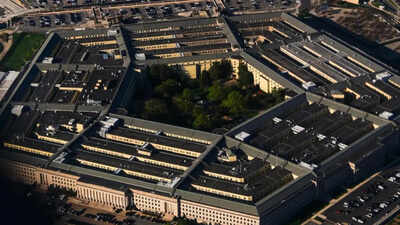
Big win for US journalists: Judge slams Pentagon's 'unlawful policy', tells it to restore press access
US District Judge Paul Friedman on Thursday ruled that the Pentagon is violating his earlier order to restore press access for journalists.Reuters reports him saying that the new restrictions were implemented by the Defense Department after its prior rules were deemed unconstitutional.In his ruling, Friedman added that the Pentagon cannot simply reinstate an unlawful policy "under the guise of taking 'new' action and expect the court to look the other way."As part of an ongoing lawsuit brought by The New York Times, the court ruled in March that the Pentagon's changes last year to press access , which saw credentials from a host of prominent outlets stripped, violated the First Amendment as reported by AP.However, the Pentagon responded to the March ruling with even tighter restrictions."The very next business day, the department announced that it was immediately closing the 'Correspondents' Corridor', the area in the Pentagon from which journalists had worked for years," Friedman said.The Pentagon also moved to fully bar journalists from entering the military headquarters without an official escort, instead offering a new workspace "in an annex facility."
'Transparent attempts to negate court's order'
For decades, vetted journalists from prominent outlets have been granted badges allowing them to freely move through parts of the Pentagon to engage with officials and public affairs staff. The Defense Department has cited security risks for the tighter restrictions.Friedman wrote that the tightened restrictions "are not security measures or efforts to make good on prior commitments but rather transparent attempts to negate the impact of this court's order."He ordered the Defense Department to permit Times journalists and "all regulated parties" access to the Pentagon.
Pentagon disagrees, plans to appeal
Defense Department spokesman Sean Parnell said on social media that the department disagrees with the ruling and intends to appeal."The department has at all times complied with the court's order — it reinstated the PFACs of every journalist identified in the order and issued a materially revised policy that addressed every concern the court identified in its March 20 opinion,"He added: "The department remains committed to press access at the Pentagon while fulfilling its statutory obligation to ensure the safe and secure operation of the Pentagon Reservation."
Times attorney: Ruling 'vindicates First Amendment'
Times attorney Theodore Boutrous said Thursday's ruling "powerfully vindicates both the court's authority and the First Amendment's protections of independent journalism." AP reports.The New York Times, the lead plaintiff in the suit, had told Friedman the Pentagon had not complied with his order but instead released what it called a new "interim" policy defying the court ruling.
Broader tensions between press and Trump administration
Pentagon press access has become a flashpoint in broader tensions between the media and the Trump administration, with officials frequently lashing out at coverage it views as displeasing.Among other measures, last year the Defense Department forced eight prominent outlets to vacate their workspace to make room for new, mostly conservative outlets.AFP, alongside the Times, Fox News, the AP, and others have refused to sign the new policy, which resulted in the stripping of their Pentagon credentials. The current Pentagon press corps is comprised mostly of conservative outlets that agreed to the policy.
'Viewpoint discrimination, full stop'
Friedman, who was nominated to the bench by Democratic President Bill Clinton, said recent US military operations in Venezuela and Iran underscore the need for public access to information about government activities."Those who drafted the First Amendment believed that the nation's security requires a free press and an informed people and that such security is endangered by governmental suppression of political speech.
That principle has preserved the nation's security for almost 250 years. It must not be abandoned now," the judge wrote last month.Friedman said the challenged policy is clearly designed to weed out "disfavored journalists" and replace them with those who are "on board and willing to serve" the administration."That," he wrote, "is viewpoint discrimination, full stop."







 English (US) ·