

 1 hour ago
3
1 hour ago
3
ARTICLE AD BOX
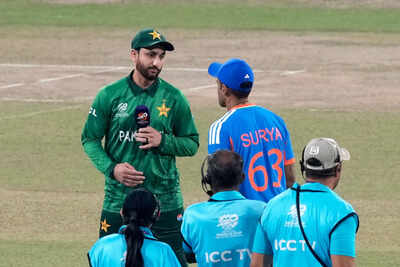
Pakistan's captain Salman Ali Agha (L) and India's captain Suryakumar Yadav (R) after the coin toss of the T20 World Cup cricket match in Colombo, Sri Lanka. (AP)
Was Sunday’s India vs Pakistan clash ever not going to happen?I don’t think anybody directly involved with cricket administration was in major doubt. It was always a matter of who would blink first.
Inside India vs Pakistan Drama: Who Blinked First? | T20 World Cup 2026 Explainer
From that standpoint, Pakistan latched onto the first opportunity they got to find a way back into the ecosystem.Look at the sequence of events…Last week it did not take the Pakistan Cricket Board (PCB) more than 90 minutes after the conclusion of these so-called talks with the ICC to go back to the Prime Minister and get a go-ahead for the game. It’s remarkable for a cricket board to have that kind of access to the PMO — that you can knock on his door at 11:30 at night and, within half an hour, come back with an answer saying, 'Yes, we’re playing.'Each country — whether it’s India, Pakistan, or even Bangladesh in this case — is going to draw conclusions from its own perspective as to how things transpired. But here’s a question that can be collectively answered: What would have been the consequence if India and Pakistan had not played this Sunday game, and if this whole India-Pakistan-Bangladesh relationship had fallen apart in the backdrop of everything that happened over the last month?The answer is clear: Cricket in the Indian subcontinent would have died — at least for the next 5–10 years.
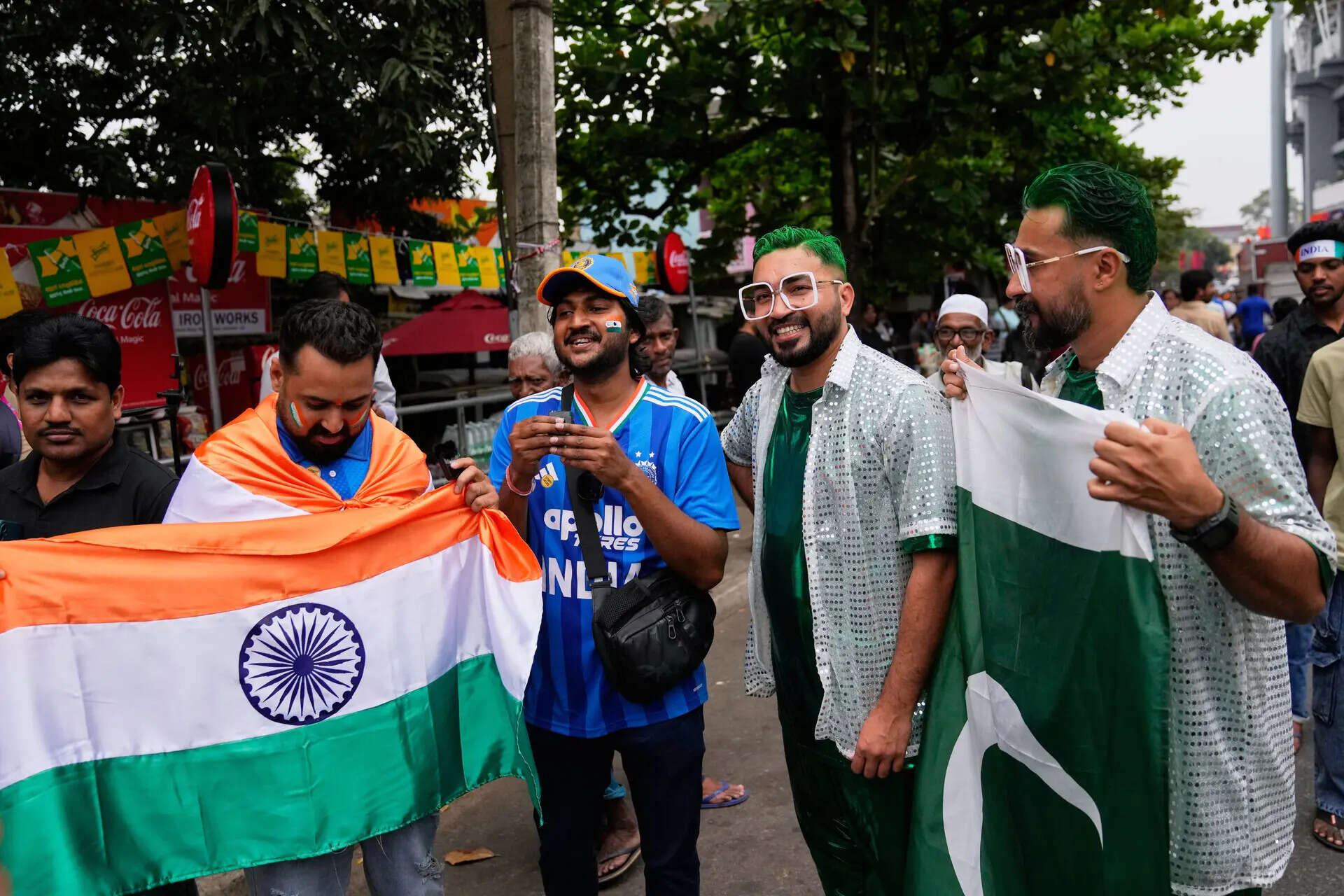
India's and Pakistan's fan arrive to watch the T20 World Cup cricket match between India and Pakistan in Colombo, Sri Lanka, Sunday, Feb. 15, 2026. (AP Photo/Eranga Jayawardena)
That means a cricketing economy worth around US$250–300 million would have been totally wiped out from the game.This would have had a cascading effect not just on India-Pakistan. It would have had a cascading effect on any India-Pakistan-Bangladesh game. It would have had a cascading effect on the Asia Cup. The property’s existing rights cycle would’ve died overnight.In the ICC media rights spectrum, the India market is sold separately.
Imagine the impact it would’ve had on the India rights.Think of the credibility the ICC would have lost in the wake of a cancellation. In time to come, would they be able to pitch a tournament or a media rights cycle to another broadcaster or a sponsor? What kind of credibility would ICC members be left with? That your participating nations can simply drop out of a tournament one week or a fortnight before it is going to start? Do you think any top-dollar investor would ever think of putting money here?I don’t think people understand the gravity of what I’m saying.Eight of the full members under ICC membership are on the brink of bankruptcy at any given point in time. Can they afford to lose out on these opportunities — especially the ones that come up during ICC tournaments?Participation fees are the bread and butter for some of the teams to run their cricket.
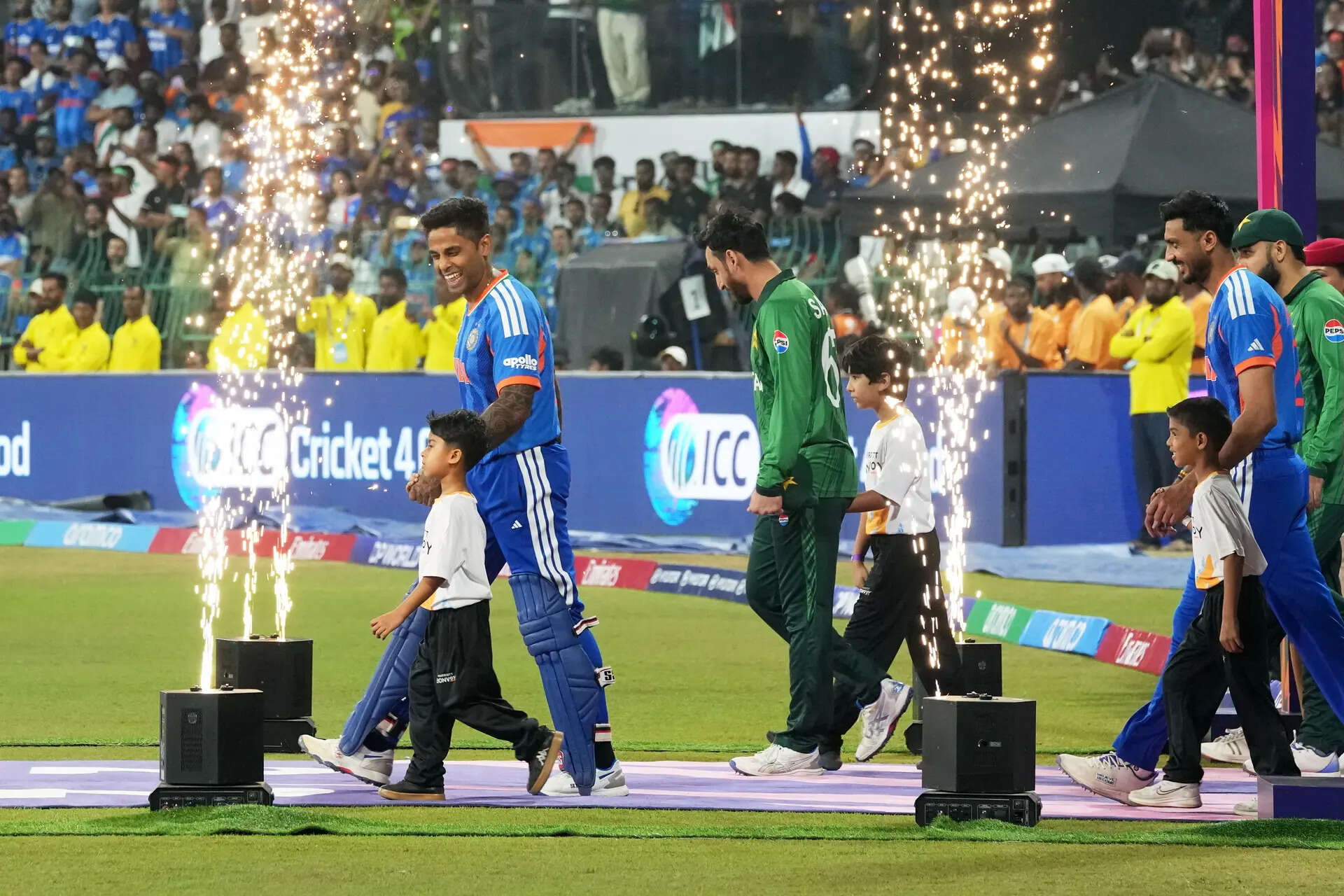
India's captain Suryakumar Yadav, left, smiles as he and Pakistan's captain Salman Ali Agha walk out onto the field for the T20 World Cup cricket match between India and Pakistan in Colombo, Sri Lanka, Sunday, Feb. 15, 2026. (AP Photo/Eranga Jayawardena)
Pakistan’s threat of a pullout was a fake one. It’s not like Mohsin Naqvi doesn’t understand these numbers and the underlying facts, just as he very well understands that running away with a trophy doesn’t really mean a thing.In the end, it’s very nice to come out with a grin on your face and say, “Whatever, we got our demands,” and for clueless digital bots on X to cheer these claims.But truth be asked, what demands got fulfilled?In 2024, an ICC tournament was taken away from Bangladesh — the Women’s World Cup. Between 2029 and 2031, Bangladesh will be given another tournament, right? It is essentially the same tournament that will now not be held.Other than that, I don’t think the ICC has gone ahead and given anything outside of what was already due to them. So, this whole chatter that the ICC was under pressure and did this or that is mere humbug. The more important aspect of discussion here is nobody wants to talk about the pressure that cricket in the subcontinent was under.And then you blame India, saying they are happy playing the IPL and don’t care about the others?India is happy feasting on the IPL, the bilateral rights and the ICC rights revenue.
Enough cash keeps ringing in to help them keep their vast domestic circuit going, and distribute enough within the ecosystem as pension funds, contracts, membership grants, infrastructure subsidies, so on and so forth.The others need to worry about themselves; that’s where statements proclaiming false bravado don’t always sit well.When this match happens and the players walk out onto the field, there can be all kinds of posturing — whether they shake hands or not, all the drama.
There can be words exchanged, trophy moments, and so on. People on X (earlier Twitter) will come and have opinions, argue, troll, abuse.But the only people who would’ve ended up losing are those who were threatening all along, making false claims, while waiting for an excuse to do a U-turn.The lesson learnt is this: beyond a certain point, such threats don’t work.Let’s agree that the BCCI was wrong in what they did to Mustafizur Rahman.
They should not have done that. The timing, the reasoning — everything was wrong.But I have always said, two wrongs don’t make a right.The BCCI made a mistake by removing Mustafizur just before the World Cup, putting the ICC in a spot.The moment the BCCI took the call on Mustafizur, the Bangladesh Cricket Board (BCB) decided to stretch the issue. It was election season in Bangladesh, and one should remember – politics works the same in all parts of the world.They saw the perfect opportunity to raise a stink.The mistake they made was saying they would not tour India for security reasons – building on BCCI’s decision to cancel Mustafizur’s IPL. The moment they said it was due to “security reasons,” the ICC had no choice but to conduct an independent risk assessment.Had Bangladesh said on Day One that this had nothing to do with security risks and that they were taking a stand in response to what the BCCI had done to Mustafizur, then it would have become a diplomatic issue between India and Bangladesh; and there is no way Pakistan would have got an opportunity to interfere, because it would have been a bilateral matter.But Bangladesh making it into a security issue ate up 15-20 days in independent assessment and gave Pakistan enough time to participate in some mischief-mongering.Later, Bangladeshi officials themselves admitted off the record that their government had clearly told them not to visit India. Fair enough, but that’s also the stand they should’ve publicly taken.PCB offering solidarity to a country that did not care to tour Pakistan for over a decade and then doing a U-turn to paint the eventual scenario where they’re playing India but Bangladesh are eventually out of the tournament doesn’t really help anybody’s cause.So, what solidarity are we talking about?Nobody in the right frame of mind has found it safe enough to tour Pakistan — forget India. To that extent, India has stated on record that for ICC or ACC tournaments, the Indian team won’t tour Pakistan and Pakistan won’t tour India. They’ll play at a neutral venue.There’s a signed agreement between the two neighbours for this rights cycle and the next underlining this.Now, what if India had said, we don’t want to come there, that’s it — you either come here or drop out of the tournament? That’s when a statement like Nasser Hussain’s—“What if it was India?”—would've made sense.Not when the BCCI has agreed to play this fair, knowing very well their participation alone keeps cricket in the Indian sub-continent going.This match was supposed to happen in Colombo. Pakistan couldn’t have walked away from a signed legal agreement by citing ‘Force Majeure’.Whoever in the PCB thought of sharing this great idea clearly doesn’t understand how ‘Force Majeure’ works. It doesn’t work on the idea of so-called ‘solidarity’ that lacks logic or reason.Instead, legal consequences would’ve started piling up if Pak didn’t do the U-turn and they knew it well.What force majeure were PCB officials talking about anyway? The Prime Minister’s office taking a call at 11:30 pm saying his country won’t play a certain country in a global tournament where you’ve signed specific agreements to that effect doesn’t mean a thing, just the way the Prime Minister’s office doing a U-turn some days later doesn’t mean a thing.So, let’s just move on by saying – thankfully, the focus is back on the game, and all the humbug has evaporated.An India vs Pakistan clash is not a standalone economic juggernaut anymore, like it used to be. An India versus Australia is the greatest rivalry in cricket — economically speaking. There are numbers to underline this fact.The charm of an India-Pakistan faded a long time ago. In fact, Pakistan just made this worse by trying to board a wagon that wasn’t theirs to ply and in turn have come out looking like gold-diggers holding the ecosystem to ransom.





 English (US) ·