

 18 minutes ago
3
18 minutes ago
3
ARTICLE AD BOX
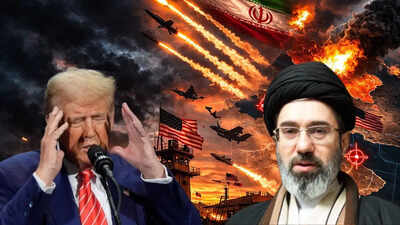
Iran’s Supreme Leader has ordered that the country’s stockpile of near-weapons-grade enriched uranium must remain inside Iran, two senior Iranian sources told Reuters, a move that could further complicate peace negotiations with the United States and Israel amid the ongoing regional conflict.According to Reuters, Ayatollah Mojtaba Khamenei’s directive hardens Tehran’s position on one of Washington’s key demands during negotiations aimed at ending the US-Israeli war on Iran. Israeli officials have told Reuters that US President Donald Trump had assured Israel that any peace agreement would include the removal of Iran’s highly enriched uranium stockpile from the country.Israel, the United States and several Western nations have long accused Iran of pursuing nuclear weapons capability, particularly after Tehran enriched uranium to 60%, a level much higher than civilian requirements and closer to weapons-grade enrichment.
Iran has consistently denied seeking nuclear weapons.Israeli Prime Minister Benjamin Netanyahu has maintained that the war cannot end unless Iran removes its enriched uranium stockpile, halts support for proxy militias and dismantles its ballistic missile programme.“The Supreme Leader’s directive, and the consensus within the establishment, is that the stockpile of enriched uranium should not leave the country,” one of the Iranian sources told Reuters on condition of anonymity because of the sensitivity of the issue.
The sources said Iranian leaders believe sending the uranium abroad would leave the country vulnerable to future attacks by the United States and Israel. Iran’s Supreme Leader holds final authority over major state decisions. The White House and Iran’s foreign ministry did not immediately respond to requests for comment.A fragile ceasefire remains in place following the conflict that erupted after US-Israeli strikes on Iran on February 28.
Iran subsequently targeted Gulf states hosting US military bases, while clashes intensified between Israel and Iran-backed Hezbollah in Lebanon.Despite ongoing mediation efforts led by Pakistan, negotiations have made little progress as a US blockade of Iranian ports and Tehran’s control over the Strait of Hormuz continue to complicate diplomacy.The Iranian sources also claimed there was deep suspicion within Tehran’s leadership that the current pause in hostilities could be a tactical move by Washington before launching fresh airstrikes.Iran’s top peace negotiator, Mohammad Baqer Qalibaf, said on Wednesday that “obvious and hidden moves by the enemy” indicated the United States was preparing new attacks.Trump on Wednesday warned that Washington was prepared to launch further attacks on Tehran if Iran refused to agree to a peace deal, though he suggested the US could wait “a few days” to “get the right answers.”According to the sources, both sides have narrowed some differences in negotiations, but major disagreements remain over Iran’s nuclear programme, particularly regarding the fate of the enriched uranium stockpile and Tehran’s insistence on retaining its right to enrichment.Iranian officials have repeatedly stated that Tehran’s primary objective is securing a permanent end to the war along with credible guarantees that the United States and Israel will not launch future attacks. Only after such assurances, they said, would Iran engage in detailed nuclear negotiations.Israel is widely believed to possess nuclear weapons, although it has never officially confirmed or denied having an atomic arsenal and continues to maintain a policy of ambiguity on the issue.Before the conflict escalated, Iran had reportedly indicated willingness to export half of its uranium enriched to 60%. However, Reuters sources said that position shifted following repeated threats from Trump to strike Iran.Israeli officials told Reuters it remained unclear whether Trump would authorise another strike on Iran or allow Israel to resume military operations. Tehran has warned it would respond forcefully to any future attack.One Iranian source suggested there were still possible compromises available to resolve the dispute.“There are solutions like diluting the stockpile under the supervision of the International Atomic Energy Agency,” the source said.The International Atomic Energy Agency estimates that Iran possessed 440.9 kilograms of uranium enriched to 60% when Israeli and US forces attacked Iranian nuclear facilities in June 2025.
The current status of that stockpile remains unclear.IAEA chief Rafael Grossi said in March that most of the surviving stockpile was believed to be stored in tunnels at the Isfahan nuclear facility, while some material was also believed to remain at Iran’s Natanz enrichment complex.Iran has maintained that part of its highly enriched uranium programme is intended for medical applications and for a Tehran-based research reactor that uses uranium enriched to around 20%.







 English (US) ·