

 1 hour ago
6
1 hour ago
6
ARTICLE AD BOX
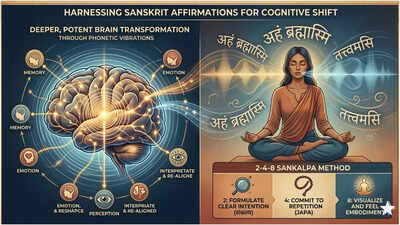
Affirmations become truly powerful when they move beyond “positive statements” and start changing the way the brain interprets experience. In psychology, some affirmations are designed to interrupt negative thinking patterns, while ancient traditions used mantras that work through rhythm, repetition, and meaning.
Sanskrit mantras should be preferred over English statements because Sanskrit works beyond just meaning; it works through sound. It’s a highly phonetic language, so every syllable carries a certain vibration. When you repeat it, you’re not just thinking the words; you’re actually feeling them resonate within you. That adds a different depth to affirmations. It also reduces mental resistance. In English, affirmations often trigger doubt: “I am successful… am I really?” Sanskrit doesn’t invite that same questioning because it’s not your everyday language.
The mind relaxes instead of arguing, allowing the affirmation to sink in more easily. Another benefit is focus. Since you’re not used to speaking Sanskrit casually, you naturally slow down and pay attention. This makes the practice more mindful and present, rather than something you rush through mechanically. And finally, Sanskrit is rooted in Sankalp, a deep sense of intention. Traditionally used for mantras, it carries the energy of commitment, not just statements.
So your affirmations start to feel more powerful and purposeful, not just positive words you repeat. Here are some powerful Sanskrit affirmations that are simple yet profound. Even if you don’t fully understand the meaning, the repetitive sound pattern can calm the nervous system. 1. So HumMeaning: “I am that” or “I am part of the universal consciousness.”Usage:Often repeated with breathing.Breathe in: SoBreathe out: HumIt creates a deep sense of calm and unity. 2. Om Shanti Shanti ShantiMeaning: Peace in mind, peace in body, peace in the world.The triple repetition symbolizes peace in:* the individual* the environment* the universeIt is often used to calm emotional turbulence. 3. Lokah Samastah Sukhino BhavantuMeaning:May all beings everywhere be happy and free.This affirmation shifts focus from personal worry to compassion and interconnectedness, which surprisingly reduces stress. 4. Aham BrahmasmiMeaning: “I am the universe” or “The divine exists within me.”This mantra comes from ancient philosophical texts and encourages deep self-awareness and inner strength. 5. Tat Tvam AsiMeaning: “You are that.”It reminds us that the same consciousness exists in all beings, dissolving feelings of separation and isolation. The 2-4-8 Sankalp Method









 English (US) ·