

 1 week ago
6
1 week ago
6
ARTICLE AD BOX

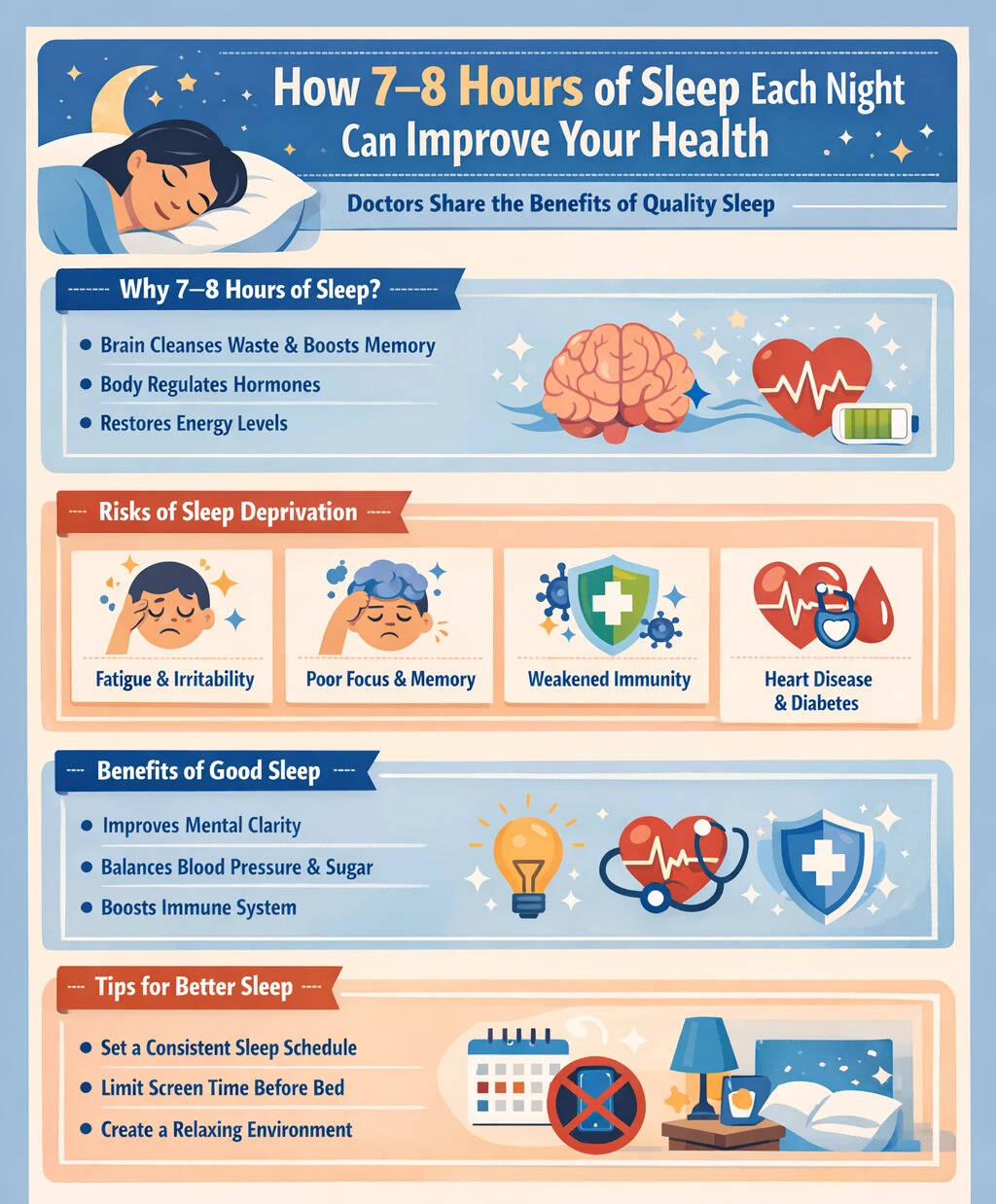
Sleep specialists stress the importance of securing seven to eight hours of sleep each night to facilitate the healing of both mind and body, fine-tuning hormone levels, and enhancing overall health. A lack of adequate rest can disrupt focus, deteriorate memory, destabilize moods, and increase the risk of critical health complications like hypertension and diabetes.
Sleep is one of the most important yet commonly ignored aspects of a healthy lifestyle. Many people aim for sleeping only five or six hours, hoping that the body will adjust accordingly.
However, sleeping for a regular period of seven to eight hours each day will enable the brain and body to undertake the necessary repair mechanisms that are necessary during the night.Dr. Prashant Makhija, Consultant Neurologist, Wockhardt, explains, "During sleep, the brain will eliminate any waste that it collected during the day and will reboot many of the functions that are associated with memory, learning, and emotional stability.
At the same time, the body will regulate many of the hormones that are necessary for appetite, metabolism, and stress. However, when sleep is reduced, many of the systems may begin to get out of balance.
People may experience tiredness, inability to concentrate, irritability, and slower thinking during the day.""Sleep deprivation may also affect the heart, blood pressure, and the immune system. In the end, sleep deprivation may lead to hypertension, diabetes, and stress.
Sleeping for a regular period of time will enable the body to restore energy levels and maintain stability throughout the day," he stresses.

Dr. Dipesh Pimpale, Consultant Neurologist, KIMS Hospitals, Thane, also weighs in and shares, "The human body follows a natural internal clock that guides when we feel alert and when we feel sleepy. Seven to eight hours of sleep, keeps the rhythm in balance, allowing the body to recover and prepare for the next day.
Good sleep is also beneficial for mental clarity, reaction, and emotional stability. When sleep is deprived, the brain is in a state of partial fatigue.
This may cause difficulty in concentrating, remembering, and making decisions. People may also experience mood swings, headaches, and reduced productivity. Over time, lack of sleep can influence how the body manages blood sugar, appetite, and stress hormones.""Consistent sleep also supports the immune system. When people do not get enough sleep, they may easily get sick. This is because the body is not getting enough time to build its defense against disease. A person may establish a sleep schedule, avoid late-night screen use, and create a sleep-conducive environment to help the body get the sleep it needs," adds Dr. Dipesh. Dr. Aniruddha Vasant More, Consultant Neurologist, Jupiter Hospital, Thane, further states, "The brain also uses sleep to function properly.
While an individual is sleeping, the brain processes memories, replenishes energy, and refines essential brain functions. Therefore, when an individual does not get enough sleep, as in the case of those who sleep less, their brain functions may not work properly. This is why they may experience slower thinking, forgetfulness, and poor concentration.
"
"In addition, their brain functions may be affected in the long term.
Another factor that affects an individual's sleep is their internal clock. This clock functions properly when an individual sleeps at consistent times each night. When an individual adopts a routine that allows them to sleep well, they may feel more alert, balanced, and productive. This can be achieved by making simple changes to their lifestyle," he advises.In the long run, prioritising consistent, quality sleep is not a luxury but a daily investment in how well your body functions, how clearly your mind works, and how resilient your overall health remains.Medical experts consultedThis article includes expert inputs shared with TOI Health by:Dr. Prashant Makhija, Consultant Neurologist, Wockhardt.Dr. Dipesh Pimpale, Consultant Neurologist, KIMS Hospitals, Thane.Dr. Aniruddha Vasant More, Consultant Neurologist, Jupiter Hospital, Thane.Inputs were used to explain how consistently getting 7–8 hours of sleep supports overall health, and why doctors emphasize prioritizing proper sleep habits to prevent long-term health issues.








 English (US) ·