

 6 hours ago
2
6 hours ago
2
ARTICLE AD BOX
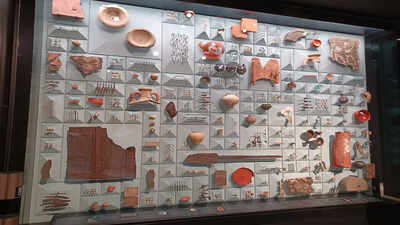
London's Walbrook Street yielded an astonishing discovery in 1952: a remarkably preserved 1800-year-old Roman temple dedicated to Mithras. Image Credits: Wikimedia Commons
The most amazing secrets about history can be revealed when people are just trying to cure their own pain. The cold fall of 1952 saw a group of construction workers clearing out a plot of land that had been heavily bombarded on Walbrook Street in London.
The area had been utterly destroyed during the Blitz of the Second World War, and the construction workers were meant to prepare the site for a huge office building.As their heavy machinery dug deep into the waterlogged ground, they did not hit the typical broken Victorian pipes or standard modern building foundations. Instead, they struck ancient, perfectly laid stone masonry that felt entirely out of place. The crew paused their digging and called in experts, and what happened next completely mesmerised the public.Buried at almost twenty feet under the busy contemporary surface were the stunning ruins of an eighteen-century-old temple that was in the form of a semicircle. The structure was not an ordinary marketplace or civic building. Rather, it was a subterranean temple built for Mithras, the secretive Persian god of the sun, whose followers practised strange rituals underground.A secret underground society in the heart of the empireThe unexpected discovery of the pagan temple below the financial district was a huge sensation in post-war Britain, totally changing the way the ordinary citizen perceived their own town’s history. As described in a study called A Contemporary Archaeology of London’s Mega Events published by University College London, the amazing discovery marked an unforgettable episode in the city’s history.
As many as thirty thousand people queued on the street daily just to see the Roman stones emerging from the ground.The sanctuary had been superbly preserved since it was located right next to the buried Walbrook Stream. The oxygen-deprived mud acted as a protective layer for the beautiful marble statues of Roman gods, the ritual vessels, and the intricately carved architectural pillars. For generations, millions of Londoners had lived on top of a secret temple where Roman soldiers, merchants, and government officials used to perform their secret rituals in complete darkness.
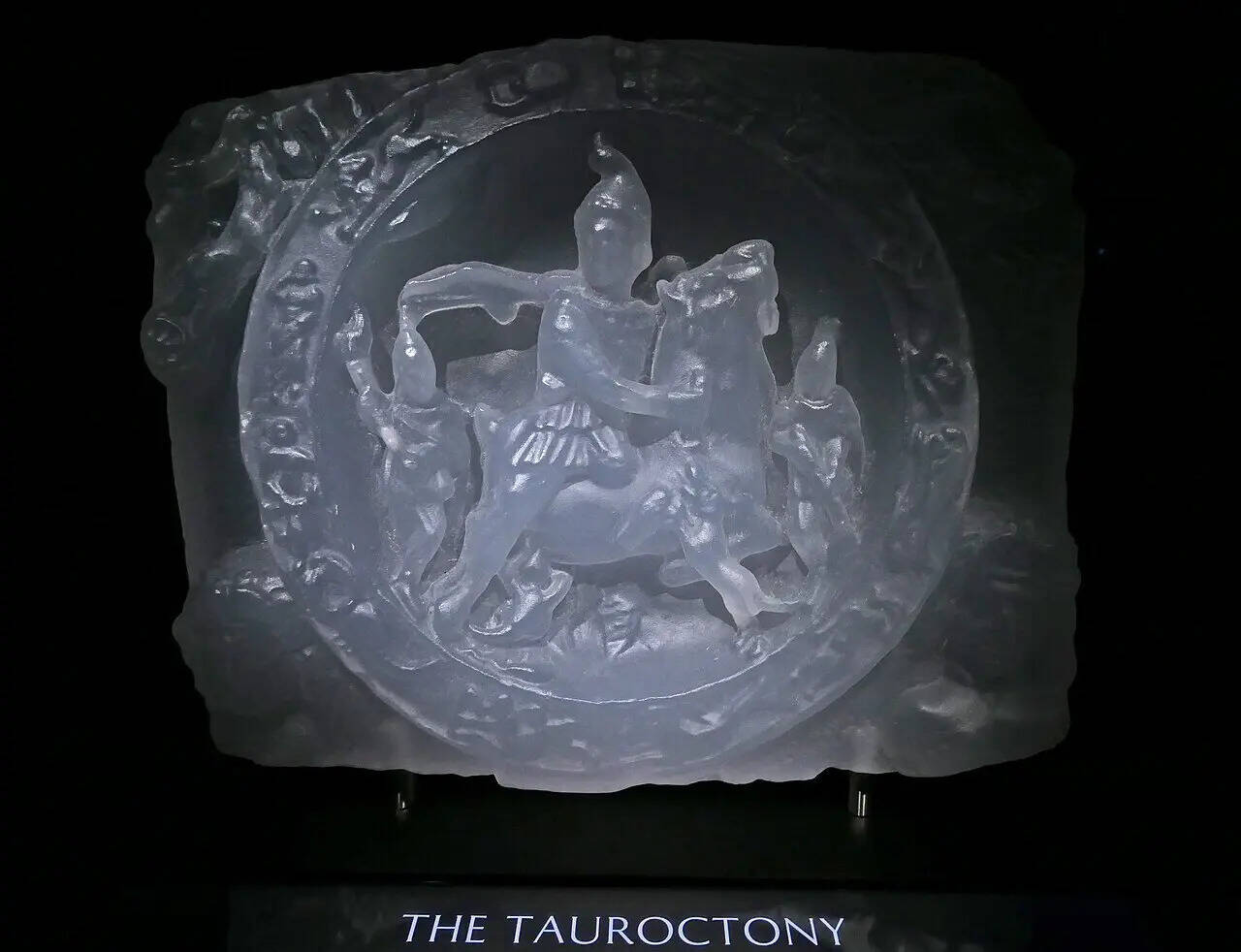
Unearthed during construction, the subterranean sanctuary, complete with statues and artefacts, captivated the public, drawing thousands daily. This find redefined urban development, establishing rescue archaeology and ensuring buried history belongs to all. Image Credits: Wikimedia Commons
Redefining the rules of modern city constructionThe discovery changed the way modern construction companies engage with the ancient past. As noted in a historical study titled Examination of the legal status of archaeologically-recovered material in England, the conflict between the developers who were planning to construct an office building and the population who were ready to preserve the ruins turned into a great milestone in history.
It gave rise to rescue archaeology and laid down the legal basis that the buried treasures of the past belong to all citizens rather than being hindrances to commercial projects.Rather than demolishing the temple, the developers decided to take down the stone buildings and later rebuild them at another location, leaving the ancient site accessible to everyone who wishes to visit. The well-preserved temple is thus a symbol that our most magnificent capital cities are actually constructed above a series of ghosts.
As we hustle and bustle through our busy lives, working in offices and commuting by subway, we are actually hovering over a series of worlds waiting for someone to unearth them by simply digging up some stone.The mind boggles at how, during the darkest hours of the last century, the bombs from above inadvertently stripped the city of its protective outer layer to reveal a sanctuary constructed by people who had gazed upon the same skyline for two thousand years.







 English (US) ·