

 1 hour ago
5
1 hour ago
5
ARTICLE AD BOX
Prateek Yadav's doctor said he left the ICU against medical advice despite repeated warnings. His postmortem later attributed his death to massive pulmonary thromboembolism, ruling out steroid speculation.
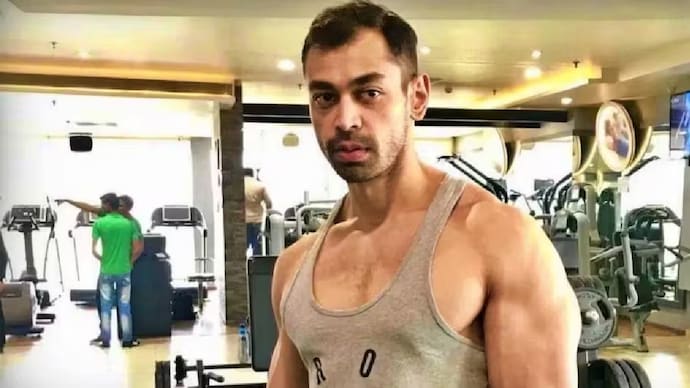
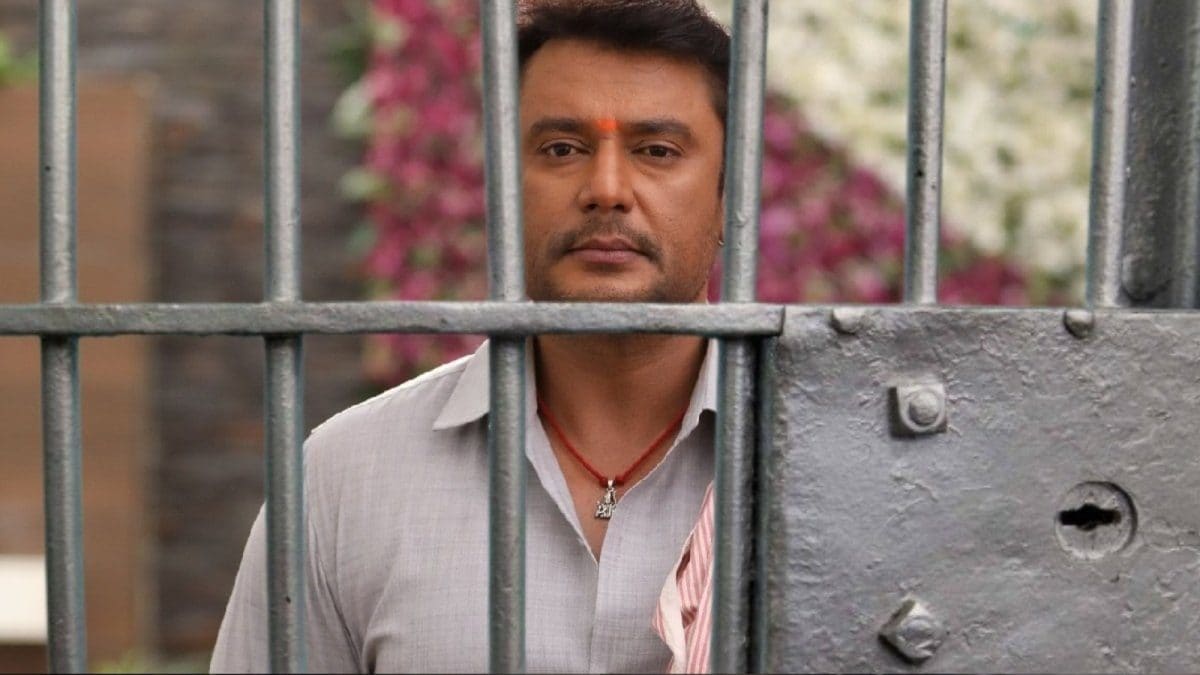
Prateek Yadav (Photo: file photo)
The death of Prateek Yadav has triggered a storm of speculation. Conspiracy theories are swirling, with many pointing to steroids because Prateek was an avid gym-goer with a visibly muscular physique. But the real story is far more complex — and far more heartbreaking — than anything circulating on social media.
India Today has spoken exclusively to the doctor who was treating Prateek for the past five years. And for the first time, a clear picture is beginning to emerge.
A CONDITION MOST PEOPLE HAVE NEVER HEARD OF
Five years ago, Prateek Yadav walked into a doctor’s clinic complaining of chest pain and breathlessness. He was young. He looked healthy. But the diagnosis that came back would follow him for the rest of his life.
Prateek had DVT.
Deep Vein Thrombosis (DVT) is a condition in which blood clots form inside the deep veins of the body, most commonly in the legs. On its own, it can be managed. But when a clot breaks loose and travels to the lungs, it triggers a condition called Pulmonary Embolism, and at that point, every minute counts. Patients with DVT are placed on blood thinners and kept under close medical supervision, sometimes for years.
That is exactly the path Prateek was on. Under the care of his doctor, whose identity India Today is not revealing at her request, he was put on blood thinners and monitored periodically over the next five years. Life went on.
Until April 29.
THE HOSPITAL, THE ICU AND A DECISION NO ONE COULD STOP
After a phone consultation with his doctor, Prateek came to the hospital in person. What she found when she examined him alarmed her. He had massive chest discomfort. He was dizzy. He was breathless. She did not hesitate. He was admitted to the ICU immediately.
For a couple of days, things appeared to be moving in the right direction. He was being monitored. He was being cared for. The situation seemed to be stabilising.
Then, on May 1, Prateek told the doctors he wanted to go home.
LAMA: THE TWO LETTERS THAT CHANGED EVERYTHING
In medicine, when a patient chooses to leave a hospital against the explicit advice of their treating doctors, it is recorded as LAMA. Leave Against Medical Advice. It is not a discharge. It is a patient overriding the judgment of their medical team and taking responsibility for whatever comes next.
The doctor did not mince words with Prateek. She told him, repeatedly, that leaving the ICU in his condition was suicidal. That is the word she uses when she recalls those conversations today. Suicidal. But Prateek, known to be an adamant man, had made up his mind. He could not stand the constant beeping of the ICU machines. They distressed him. The nurses coming and going at all hours, the relentless, claustrophobic rhythm of it all. He wanted his home. He wanted his children.
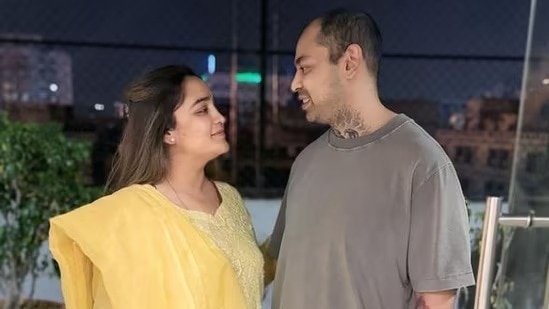
His wife Aparna was there through all of it. She reasoned with him. She requested, again and again, that he stay and complete his treatment. The doctor recalls Aparna doing everything in her power to keep him in that hospital. But no one, not his doctor, not his wife, could change his mind.
He signed the papers. He walked out.
Prateek was not without support at home. He had a dedicated nursing staff of three people attending to him around the clock, a 24x7 setup ensuring he was not left without care. The doctor stayed in the loop through the nursing team in the days that followed. She confirmed that Prateek was taking his medication regularly at home, a fact the nursing staff verified with her. The last direct call she has on record to Prateek himself was on May 3. After that, her contact was only with the nursing staff, not with Prateek directly.
After that, there was silence.
On the morning of May 13, 2026, at 5:55 am, Prateek was declared dead at Civil Hospital, Lucknow.
WHAT THE POSTMORTEM SAYS
The postmortem report, now available with India Today, does not mention steroids. It does not point to any substance abuse. What it does record, in unambiguous medical language, is this: Prateek died of cardiorespiratory collapse caused by massive pulmonary thromboembolism.
The clot that had been managed for five years had finally broken free.
The report notes six contusions found on his body, across his chest, right arm, right forearm, elbow, and left wrist, all confirmed as antemortem. They fall into two groups. The older injuries, estimated at 5 to 7 days, go back to a fall Prateek had at home before he came to the hospital on April 29. The fall was serious enough that a CT scan of his head was ordered to rule out anything life-threatening. The newer injuries, about a day old, are consistent with another fall, this time after he had lost consciousness in his final hours at home. His doctor was aware of both falls.
There is an important detail that explains why the injuries appear as severe as they do. Prateek was on blood thinners. Anticoagulants, by their very nature, cause bruising and contusions to look far more dramatic than they would in someone not on the medication.
The appearance of the injuries is not evidence of foul play. It is the expected presentation of a man on long-term anticoagulant therapy who had two falls.
The heart and pulmonary thromboembolic material have been preserved for histopathological examination. Viscera have been retained for chemical analysis.
A MAN WHO WANTED TO GO HOME
Prateek was 38 years old. He was fit, he was young, and perhaps, like many people his age, a part of him simply could not believe that things would get this serious. He had lived with DVT for five years. He had managed it. He had shown up for his checkups. He had taken his medication. In his mind, maybe going home for a few days did not feel like a gamble with his life. It felt like a break.
He missed his children. That was all he wanted. To go home and be with his kids.
He could not have known, or perhaps could not bring himself to believe, that walking out of that ICU on May 1 would be the decision that nothing could come back from. He was 38. He felt he had time. He thought he would be fine.
He was not.
And that is the quiet tragedy at the heart of this story. Not steroids. Just a young man who wanted nothing more than to go home to his children. And did.
These details are being shared in the hope that those of us still breathing take something away from this. The most important lesson Prateek leaves behind is a simple one. Listen to your doctor. The discomfort of a beeping machine, the restlessness of a hospital room, the longing to be home, none of it is worth your life. Small discomforts inside a hospital exist to prevent a permanent silence outside of it.
- Ends
Published By:
Nitish Singh
Published On:
May 14, 2026 02:55 IST




 English (US) ·