

 1 hour ago
6
1 hour ago
6
ARTICLE AD BOX
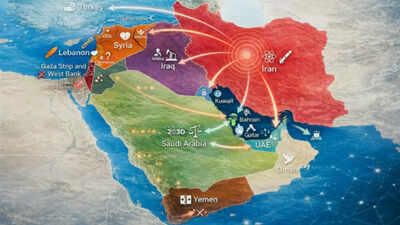
The ongoing conflict involving Iran, Israel and the United States represents one of the most consequential geopolitical crises in West Asia in decades. Alongside the war itself, the leadership transition following the death of Ali Khamenei and the emergence of Mojtaba Khamenei as Iran’s new supreme leader has introduced an additional layer of uncertainty into the region’s political landscape.For more than four decades, West Asian geopolitics has been shaped by three interlocking dynamics: Iran’s revolutionary ideology and regional ambitions, the security concerns of the Gulf monarchies, and the stabilising — though often contested — military presence of the United States. The present war has shaken this structure and opened the possibility of a broader strategic realignment.At the same time, external powers such as China and Russia are increasingly asserting influence across the Middle East.
Their roles in the region after the war will significantly shape the future balance of power.The future of Iran, the stability of West Asia, the presence of American military forces, and the growing involvement of Eurasian powers together form the central strategic question facing the region in the coming decade.
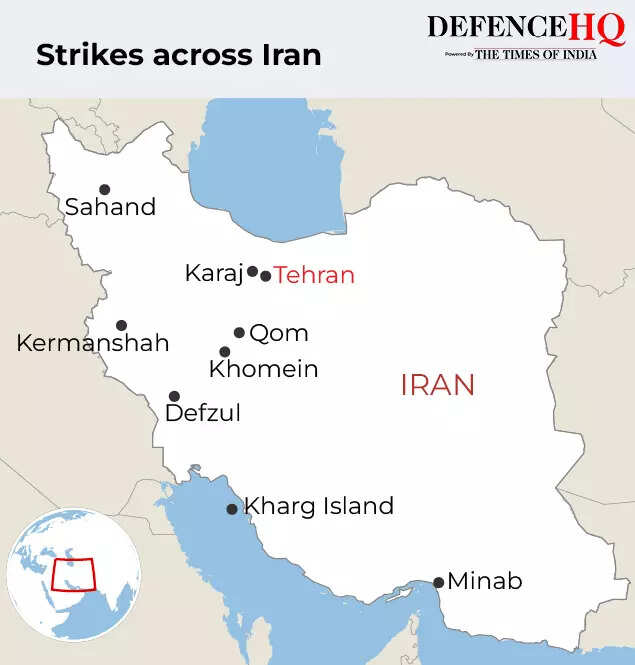
Israel-US carried out strikes across Iran.
Strategic Shock: Leadership Transition in IranIran’s political system is built upon the doctrine of Velayat-e-Faqih, which places ultimate political and religious authority in the hands of the Supreme Leader.
The leadership of Ruhollah Khomeini and later Ali Khamenei ensured continuity and ideological coherence for more than forty years. The sudden death of Ali Khamenei during a major regional conflict therefore represents a profound political shock.The elevation of Mojtaba Khamenei introduces an element of dynastic continuity into a revolutionary system that historically rejected hereditary rule. While the transition has been institutionalised through Iran’s political mechanisms, it also reflects the growing influence of the Islamic Revolutionary Guard Corps (IRGC), which has emerged as the dominant force within the Iranian state.The new leadership may rely heavily on the IRGC to consolidate power during wartime, potentially transforming Iran into a more security-centric political system.Domestic Stability in Iran: Despite decades of sanctions and recurring internal protests, the Iranian political system has demonstrated considerable resilience. Its survival has been sustained by a strong security apparatus, ideological institutions and a centralized political structure.
However, Iran faces significant domestic pressures that will shape its future stability.Economic strain: International sanctions and geopolitical confrontation have severely constrained Iran’s economic growth. Currency instability, inflation and unemployment continue to affect living standards across the country. These economic difficulties represent one of the most persistent challenges to the regime’s legitimacy.Social discontent: Iran has experienced several waves of protest over the past decade. Although these movements have been suppressed, they reveal underlying dissatisfaction with political restrictions and economic conditions. The leadership transition could temporarily consolidate authority, but long-term stability will depend on the regime’s ability to address economic and social grievances.Institutional power dynamics: The most important internal development is the growing dominance of the IRGC in both political and economic spheres.
The organisation already controls large sectors of Iran’s defence industry, infrastructure projects and strategic decision-making. Under Mojtaba Khamenei, the IRGC may become even more central to governance.Iran’s regional strategy: Iran’s influence in West Asia is built on a strategy of asymmetric power projection. Rather than relying solely on conventional military strength, Tehran has developed a network of allied groups and political movements across the region.These include: Hezbollah in Lebanon, Shia militias in Iraq, the Syrian government and the Houthi movement in Yemen This network provides Iran with strategic depth and serves as a deterrent against adversaries such as Israel and the United States.The current conflict is unlikely to diminish this strategy. If anything, the war may reinforce Tehran’s reliance on regional partnerships as a means of countering superior conventional military forces.
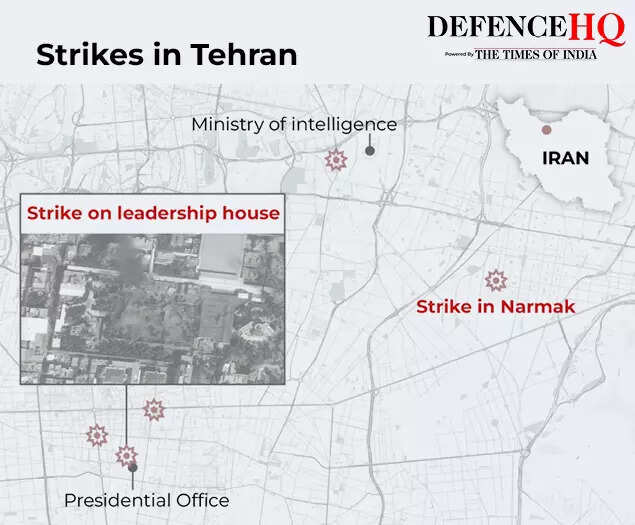
Strikes in Tehran
Iran and the Gulf Monarchies: Relations between Iran and the Gulf states have long been characterised by rivalry, mistrust and periodic diplomatic engagement. Members of the Gulf Cooperation Council include: Saudi Arabia, United Arab Emirates, Qatar, Kuwait, Bahrain and Oman.While these states share concerns about Iran’s missile capabilities and regional influence, they also recognise that long-term regional stability requires some level of engagement with Tehran.Saudi Arabia The rivalry between Iran and Saudi Arabia is one of the central geopolitical contests in West Asia. Both states seek leadership in the Islamic world and influence across regional conflict zones. Despite earlier diplomatic rapprochement, the present war could renew strategic competition between the two powers.United Arab Emirates The UAE maintains a pragmatic relationship with Iran. Security cooperation with Western partners coexists with strong economic ties, particularly through the commercial networks of Dubai.
This dual approach encourages the UAE to support regional de-escalation.Qatar and Oman. These states traditionally act as mediators in regional diplomacy. Their diplomatic channels could prove essential in facilitating post-war negotiations between Iran and its adversaries.Iran and IraqRelations between Iran and Iraq remain strategically important. Since the fall of Saddam Hussein in 2003, Tehran has expanded its influence through political alliances and militia networks.
Iraq functions as both a strategic buffer and a logistical corridor connecting Iran to Syria and Lebanon. However, Iraqi domestic politics and nationalist sentiment often constrain Tehran’s influence.Iran and Turkey Iran’s relationship with Turkey is characterised by both competition and cooperation. The two countries compete for influence in Syria, Iraq and the Caucasus while maintaining substantial economic ties. Following the war, Turkey may attempt to position itself as a regional mediator capable of balancing relations with both Iran and Western powers.Iran and the United StatesThe confrontation between Iran and the United States has shaped Middle Eastern geopolitics since the 1979 Iranian Revolution.For the United States, the central strategic objectives include: preventing Iran from developing nuclear weapons, ensuring the security of Israel and Gulf allies and maintaining freedom of navigation through the Strait of Hormuz. Iran, in contrast, views the American military presence in the region as a direct threat to its sovereignty and political system.
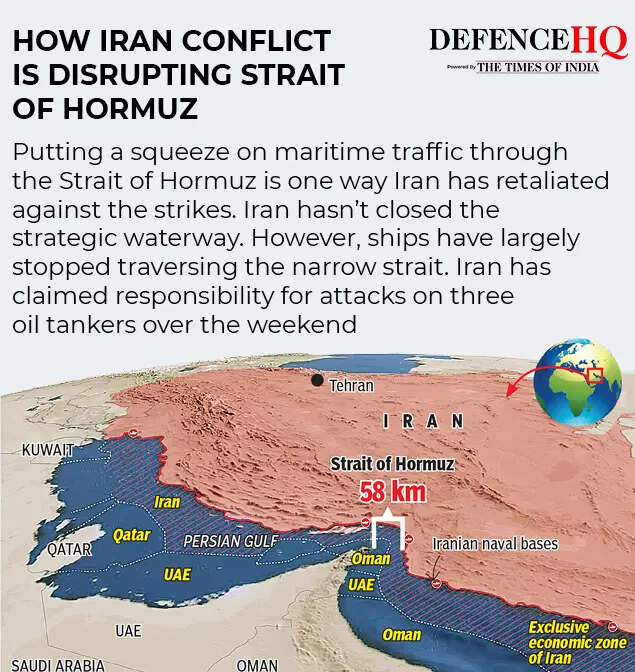
How Iran conflict is disrupting Strait Of Hormuz
Although the current conflict has intensified hostilities, history suggests that diplomatic engagement could eventually re-emerge once the immediate crisis subsides.The Future of US military bases in the Middle EastA central question emerging from the war concerns the future of the American military footprint in West Asia. For decades, the United States has maintained a network of bases designed to protect energy routes, deter adversaries and reassure regional allies.
Key installations include: Al Udeid Air Base, Naval Support Activity Bahrain, Al Dhafra Air Base and Camp Arifjan.However, the war has exposed the vulnerability of these installations to missile and drone attacks from Iran and its allies. Future American strategy may therefore shift toward: smaller and more dispersed facilities, mobile deployment forces and expanded missile defence networks. At the same time, political sensitivities within host nations could influence the scale of long-term U.S.
deployments.The emerging role of China in West AsiaThe role of China in the Middle East has expanded significantly over the past decade. Unlike the United States, Beijing has traditionally avoided direct military involvement in regional conflicts. Instead, China has focused on economic diplomacy, energy partnerships and infrastructure investment through the Belt and Road Initiative. Following the war, China is likely to pursue several strategic objectives.Energy security China is the largest importer of Middle Eastern oil. Stability in the Gulf is therefore critical for its long-term energy security. Beijing will likely support diplomatic initiatives aimed at reducing regional tensions.Economic influence: China has steadily expanded trade relationships with both Iran and Gulf states. Infrastructure investments, port development and digital networks are increasing Beijing’s economic presence across the region.Strategic mediation: China’s role in facilitating diplomatic engagement between Iran and Saudi Arabia demonstrated its growing diplomatic influence. After the war, Beijing may attempt to position itself as a neutral mediator capable of balancing relations with multiple regional actors.Russia’s strategic calculus in the Middle East: The role of Russia in West Asia has evolved significantly since its military intervention in Syria in 2015.
Moscow has sought to present itself as an alternative security partner to the United States while maintaining relations with multiple regional actors.Military presence: Russia maintains a military presence in Syria, including facilities at: Khmeimim Air Base and Tartus Naval Base These installations provide Moscow with a strategic foothold in the eastern Mediterranean.Strategic partnerships: Russia has strengthened security cooperation with Iran while also maintaining diplomatic channels with Israel, Turkey and Gulf states.
This flexible diplomacy allows Moscow to play multiple roles within the regional power structure.Energy and Geopolitics. Russia also views the Middle East through the lens of global energy competition. Cooperation with regional producers can influence oil prices and global energy markets.The energy dimension: West Asia remains central to global energy markets. Disruptions to shipping through the Strait of Hormuz can rapidly affect oil prices and global economic stability.
For major importers such as India, China and Japan, maintaining stability in the Gulf is therefore a critical strategic priority.Possible Futures for West AsiaThe region now faces several possible trajectories.Controlled Deterrence: The war could end with Iran retaining its political system while maintaining tense but stable relations with regional adversaries.Intensified regional rivalry: Alternatively, the conflict may deepen geopolitical divisions between Iran and a coalition of Gulf states aligned with the United States and Israel.Multipolar regional order: A third possibility involves the emergence of a more multipolar regional system in which the United States, China and Russia all compete for influence while regional states pursue more independent foreign policies.The current conflict marks a turning point in the strategic history of West Asia. Iran’s leadership transition, the evolving role of the IRGC, and the broader confrontation with Israel and the United States have created a period of deep uncertainty. At the same time, the regional balance of power is being reshaped by the expanding roles of China and Russia, the recalibration of American military deployments and the strategic calculations of Gulf states. The future stability of the Middle East will depend on whether these competing forces lead to renewed confrontation or a gradual movement toward diplomatic accommodation and multipolar balance.






 English (US) ·