

 1 hour ago
3
1 hour ago
3
ARTICLE AD BOX
A match that saw so much happen before even a ball was bowled ended in the most predictable manner. For all the build-up, the rhetoric and the theatre that inevitably accompany an India–Pakistan clash, the competitive edge in this rivalry has dulled in recent years. Sunday was no exception. India wobbled briefly, but the stutter was fleeting. Ishan Kishan responded with an innings of rare authority, counterattacking on a surface that grew increasingly tacky with every passing over. If Kishan tilted the contest with the bat, the bowlers slammed it shut. For much of the late 20th century, Pakistan’s pride lay in the variety and menace of their attack – a conveyor belt of fast bowlers and crafty spinners. In recent years, that historical narrative has felt inverted. India’s attack was sharper, more disciplined and infinitely more adaptable to conditions.
What was once a combative rivalry now increasingly resembles a lesson in modern white-ball precision.
BIGGEST WIN FOR INDIA OVER PAKISTAN IN T20Is (61 runs)! 🤯
With that, they make it 8-1 in #INDvPAK in the ICC Men’s T20 World Cup and qualify for the Super 8! 👏
Watch them next in ICC Men’s #T20WorldCup | #INDvNED | WED, 18 FEB, 6 PM! pic.twitter.com/na6yc5i7Pz
— Star Sports (@StarSportsIndia) February 15, 2026
https://platform.twitter.com/widgets.js
Once they slumped to 38 for 4 in the powerplay, undone by pressure as much as skill, the result felt inevitable. Usman Khan’s resistance offered brief defiance, but the broader story was one of sustained Indian control – another chapter in a rivalry that increasingly leans only one way.
– Shankar Narayan
Calm Salman gets Abhishek with unfussed execution
Pakistan captain Salman Agha had a stack of spinners to dial and give the first over. Yet, he chose the least accomplished of them all, which is himself. He is a reluctant bowler, a bit-part at best. He has bowled only 17 overs in 47 games, mostly in the filler role, yet in a courageous gamble, he made the unprecedented first move. His gambit (or gamble) was vindicated as he removed the dangerous Abhishek Sharma with a ball that stuck on the surface. He has little variations, but every ball was designed to perfection. Angling into the left-hander, subtle variations in pace and length, stump-to-stump, a tad inward drift, the job was done. He exudes calm. He doesn’t evoke the charisma of Imran Khan, or the marvel of Wasim Akram, or the strut of Shahid Afridi or the bashfulness of Babar Azam, or the wry humour of Inzamam-ul-Haq. But he is utterly comfortable in his skin. He doesn’t crack jokes, doesn’t play with words, is averse to theatrics on the field or with the mic, doesn’t rattle out headline-worthy one-liners. But is firm in his ideas and resolved to put the ideas into practice. And one of his ideas yielded him startling benefits.
– Sandip G
Ish-Kish flips the momentum after Abhishek dismissal
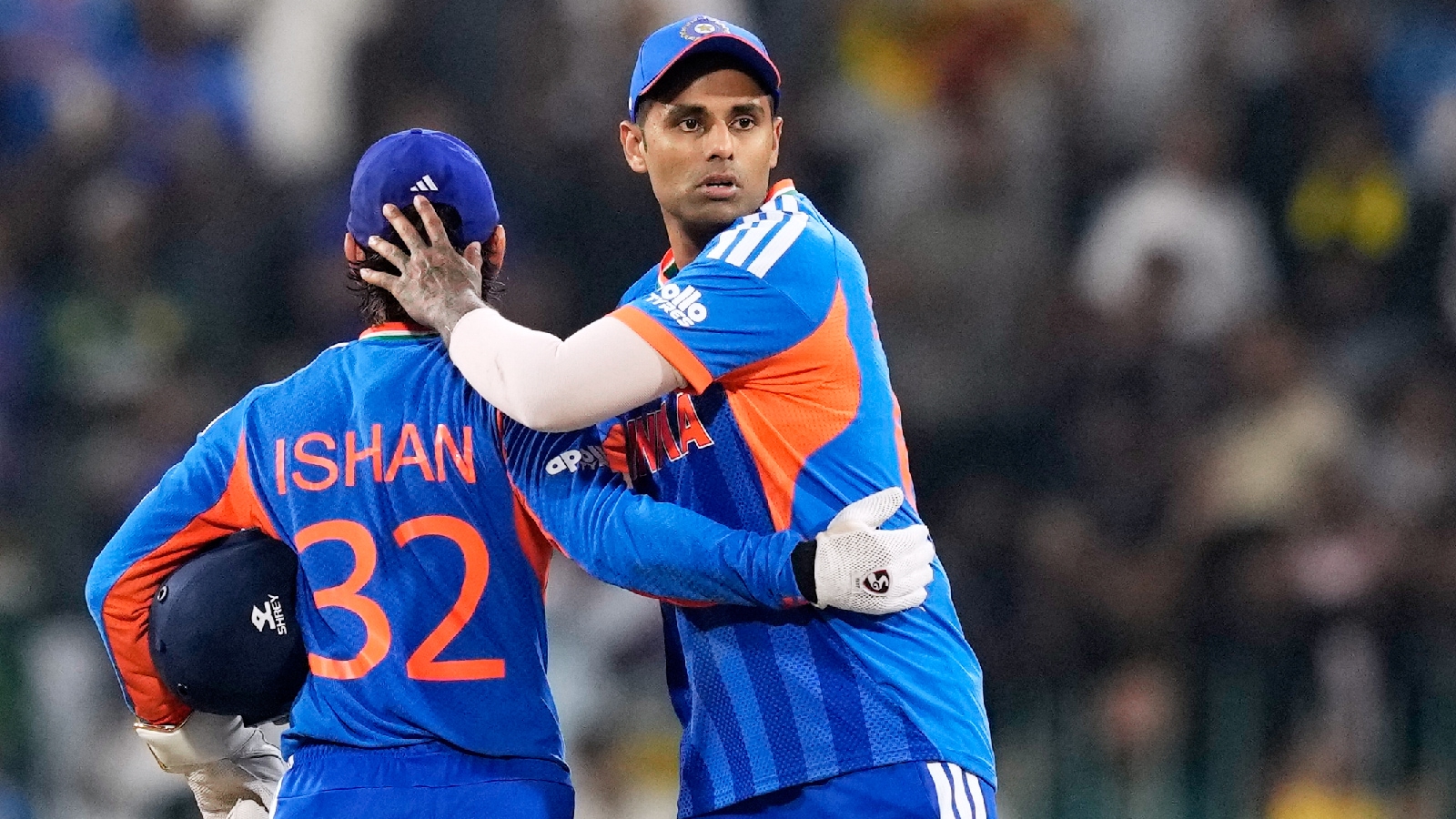
India’s start could scarcely have been shakier. Abhishek Sharma fell in the very first over, undone by Salman Ali Agha’s calculated gamble with the ball, and the early breakthrough briefly tilted the mood Pakistan’s way. For a few moments, the pressure hung in the air. Ishan Kishan responded in the only way he knows – by attacking. Rather than retreat into consolidation, the left-hander went on the offensive, pulling anything short, sweeping the spinners off their lengths and even stepping inside-out to pierce the infield. His intent forced an immediate rethink from the bowlers, who were suddenly scrambling to adjust their lines and fields. The counterattack was swift and decisive. Kishan surged to a half-century off just 27 balls, flipping the tempo of the innings and dragging momentum firmly back towards India.
– Shankar Narayan
ALSO READ | ICC T20 World Cup: How did Ishan Kishan turn his worst match-up into 77 off 40 against Pakistan?
Heavy artillery, soft hands
Ishan Kishan can wield the heavy artillery, like the sweeps, slog sweeps, the flat-batted pull down the ground, and the more conventional swivelled pulls. But his game has sophistry too. He flaunted his velvety hands when he tapped Abrar Ahmed past the short third man. Then he shuffled across when they cramped him for room, but just as the leg-break spun into him, he arched himself away from the ball’s line, saw it almost whizz past him to wicket-keeper’s grasp, before his bat intervened and deflected it to the fence. The flourish was minimal, there was no exaggerated wind-up before the stroke either. Abrar merely blew his cheeks, stupefied. There was little wrong with the ball, but Ishan was in a mood to punish. Heavy artillery and soft hands could be unstoppable.
– Sandip G
Story continues below this ad
ALSO READ | Ishan Kishan deserves credit for making his own luck even as Shubman Gill, Sanju Samson ran out of it
Saim Ayub snares Ishan with flight and turn
Relief flickered on Saim Ayub’s face when he castled Ishan Kishan. He usually keeps his celebrations grand, but here he was simply relieved to see the back of the batsman that had tormented him and his colleagues. Ishan’s manoeuvre, backing away and giving himself room, would concede an impression that he gifted the wicket. It cannot be further from the truth, as it first beat him in flight and then the massive turn. The ball, with delicious revvs, gripped the surface and spat off it. Not quite like the Premadasa sorcerer, Muttiah Muralitharan, but as close to the orthodox off-break you would see in T20s. Of all the spinners, Ayub extracted the maximum turn, because he ripped the ball more than most. He could have as well bowled every ball like that, but then the experimental side catches up. Like a seam-up he bowled early that Ishan had deposited in the stands.
-Sandip G
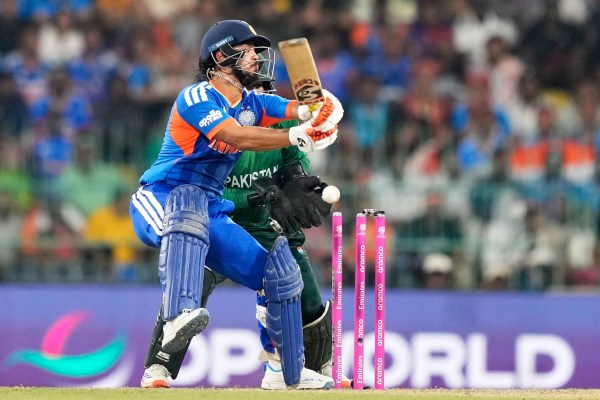 India’s Ishan Kishan is bowled out by Pakistan’s Saim Ayub during the T20 World Cup cricket match between India and Pakistan in Colombo. (AP Photo/Eranga Jayawardena)
Surya takes on Tariq threat after effective preparation
Usman Tariq, and his unique bowling action, had been a talking point in the lead-up to the game. He himself had done little to dilute the hype, claiming that the Indians would be under pressure while facing him for the first time. The Indians made sure they were not taken aback as they had plenty of practice against an action which has the bowler taking a long pause before delivering the ball. Skipper Suryakumar Yadav took it upon himself to deliver with the strange action that they were about to face.
He himself would have faced such deliveries in the nets as Tariq’s first offering in the game was played with a straight bat through midwicket for a boundary. There was hardly any violence in the shot with the batter focusing on placement rather than power. Suryakumar and Tilak Varma milked him efficiently without taking any risk as his effectiveness even on a helpful pitch was largely neutralised.
– Tushar Bhaduri
Usman Tariq brought the mystery, but Suryakumar Yadav had the answer! 🕵️♂️✨
Listen to Jatin Sapru and Navjot Singh Sidhu break down how easily SKY read the variations to find the boundary. 🏏🙌
ICC Men’s #T20WorldCup | #INDvPAK | LIVE NOW 👉https://t.co/SpqYo6n3dL pic.twitter.com/OLyLScg4mP
— Star Sports (@StarSportsIndia) February 15, 2026
Saim aims to control; induces chaos; claims Tilak, Hardik
At 125/2 after 14 overs, with Tilak Varma and Suryakumar Yadav in control, India seemed set to surge towards 200. Pakistan had already sent down 13 overs of spin and now entrusted Saim Ayub with his fourth and final over, desperate for a breakthrough. Ayub produced far more than that. Tilak attempted to break the shackles with a sweep but missed completely and was struck in front. The finger went up, and he chose not to review. Hardik Pandya walked in with the responsibility of restoring calm, their best hope of a late flourish. Instead, on a surface offering grip and little for big hitting, he went for a slog over long-off first ball, mistimed it, and departed for a duck. Ayub nearly had a hat-trick, too, beating Shivam Dube’s edge with a delivery that fizzed past the outside edge. In the space of six balls, certainty gave way to tension. What had looked like a launchpad became a choke point, and the contest, once tilting India’s way, swung sharply back towards Pakistan.
– Shankar Narayan
Babar Azam’s fidgety, ‘Footy’ catch that stuck
That was a strange technique from Babar Azam to take out Hardik Pandya. It was a skier that dropped from the skies towards him at long-off. Babar went for the reverse-palms-cupped up, a la Australian style, with fingers up. So far so good. But he never quite opened up his palms. Instead he had curled it up as it he had fisted his hands. Then at the last instant, he opened up his fists and had his palms cupped up. And the ball went inside safely. We say Australian style but the likes of Ian Chappell have denounced it in the past that it wasn’t an Australian tradition and he never caught it that way. Perhaps as Mark Taylor said once it came from people who played cricket and Aussie rules football ‘Footy’ as kids. Maybe there is something to it. But even those Australians wouldn’t delay opening the palms as late as Babar did to take that catch of Hardik.
– Sriram Veera
Story continues below this ad
ALSO READ| Jasprit Bumrah masterclass in Colombo: the fast bowler Pakistan wishes they had produced
Hardik, Bumrah pay back in kind, triggering a 38-4 Pak collapse
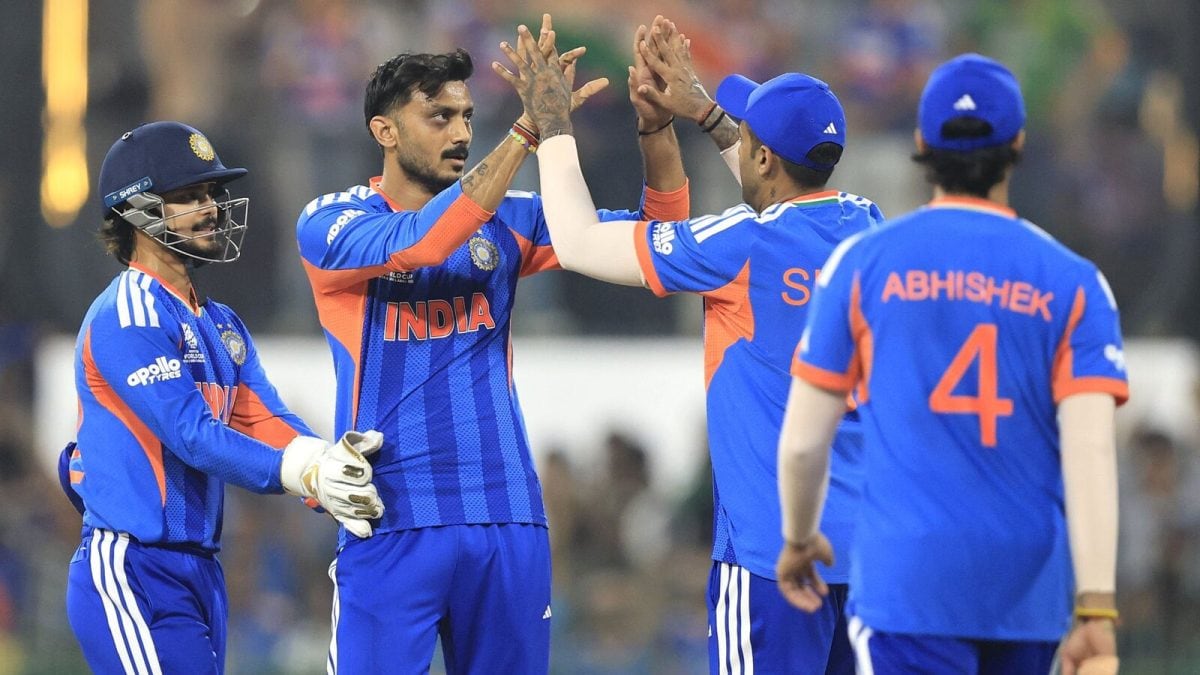
India would have taken 175 at the halfway mark on a surface where timing was a luxury. The bowlers now had to justify it — and they did so with immediate intent, reducing Pakistan to four wickets down. Hardik Pandya set the tone, striking with the fourth ball of the innings to remove Farhan, mirroring India’s own early setback when Abhishek Sharma fell for a duck. But it was Jasprit Bumrah who delivered the defining blows. Salman Ali Agha lost his shape attempting to swing across the line and fell cheaply. The highlight, though, was Bumrah’s dismissal of Saim Ayub. It was a yorker of the highest order – fast, late and unerring – crashing into the back pad and trapping him in front. It was stone dead, a delivery that combined menace with perfection, and it firmly tilted the contest India’s way in the early stages of the chase. As if pace and bounce had not caused enough trouble, the introduction of spin compounded Pakistan’s woes. Axar Patel removed Babar Azam – arguably the batter best equipped for these conditions – as he attempted a slog sweep and instead lost his stumps, leaving Pakistan in dire straits of 38-4 at the end of the powerplay.
– Shankar Narayan





 English (US) ·